

Starting a blog in Nigeria is more accessible than ever. But most beginners waste months/years figuring out what actually matters.
This guide cuts through that. You’ll get a clear, step-by-step process for setting up a blog in Nigeria, choosing the right tools, attracting readers, and earning money from it.
This promise is based on 14+ years of hands-on practical blogging experience, not theory.
Whether you’re starting from zero or restarting after a failed attempt, this guide covers what works in 2026 and beyond.
What you’ll need:
A domain name, web hosting, and about 2–3 hours to get your blog live. Total starting cost: as low as $20–$30 (roughly ₦30,000–₦45,000).
What You Need to Start a Blog in Nigeria
Before you set up anything or write a single post, you need four things in place:
1. A Domain Name
A domain name is your blog’s address on the internet. For example, cybernaira.com and facebook.com are domain names for their respective websites. Without a domain name, your website is inaccessible.
A domain name is not free; you must register it to claim ownership. Regular domain names can cost between $10 and $15/year (roughly ₦15,000–₦23,000), depending on the registrar and extension (.com, .com.ng, .ng).
NOTE:
Namecheap runs regular promo offering domain name discount for up to 90% off. Check availability for your domain nname of choice.
2. Web Hosting
Web hosting is the server that hosts your blog’s files. Without it, your blog has no address to load from.
Shared hosting, the most common hosting type for beginners and new blogs, starts at around $2–$10/month (₦3,000–₦15,000/month). More on picking the right host in Step 3.
3. A Content Management System (CMS)
This is the software that powers your blog. WordPress.org is the most popular and the right choice for many people.
It powers approximately 43% of all websites on the internet and gives you full ownership and control. It’s free to install.
4. A Theme
The design layer of your blog. Free themes work for start, but a premium theme like Astra Pro and Kadence gives you better speed, SEO optimization, and design flexibility from day one.
Total estimated startup cost: $20–$50 (₦30,000–₦75,000) for your first year. This covers domain and hosting. WordPress and a starter theme cost nothing.
Now, let’s get into the full details of starting a blog in Nigeria, with clear explanations.
Step 1: Choose a Profitable Niche
Your niche is the specific topic your blog covers. Getting this right from the start saves you months of wasted effort.
The common advice is to blog about your passion. That’s partially correct, but passion alone doesn’t pay bills.
The better approach is to find the overlap between what you know, what people are actively searching for, and what they’re willing to spend money on.
Three questions to guide your niche decision:
Niches that work well for Nigerian bloggers:
The focus rule:
Don’t start a blog that covers everything. A blog about “Nigerian health issues” is too broad. A blog focused on “managing diabetes in Nigeria” is more focused, findable, and far easier to monetize.
The narrower your starting focus, the faster you build authority.
You don’t need to be an expert to start. Basic knowledge of your topic is enough. Your expertise grows as you research, write, and engage with your readers.
Step 2: Register a Domain Name
As I have discussed earlier, your domain name is your blog’s permanent address on the internet. Choose it carefully because changing it later means rebuilding your SEO from scratch.
What makes a good domain name:
How to choose between .com and .com.ng:
If your target audience is primarily Nigerian, .com.ng signals local relevance and can help with geo-targeted search results. If you’re targeting a global audience, including the Nigerian diaspora, go with .com.
Where to register your domain in Nigeria:
| Registrar | Best For | Accepts Naira Payment |
|---|---|---|
| Namecheap | Global reach, competitive pricing | No (card in USD) |
| Whogohost | Local support, Naira billing | Yes |
| QServers | Nigerian businesses, .com.ng | Yes |
| Verpex | Budget option, performance | Yes |
Cost: A .com domain costs $10–$15/year. A .com.ng domain costs around ₦5,000–₦10,000/year depending on the registrar. However, you can secure free 1-year domain registration if you purchase an annual hosting plan from these web hosts.
One practical tip:
Check if your preferred domain name is available on social media platforms too – Twitter/X, Instagram, Facebook. Consistent handles across your blog and social profiles make your brand easier to find and remember.
Step 3: Get Web Hosting
Web hosting is the server that stores your blog’s files and makes them accessible to anyone visiting your domain.
Your choice of hosting directly affects your blog’s speed, uptime, and user experience, all of which impact SEO and reader retention. This means you should consider hosting your blog with a reputable web host with a proven track record.
Types of hosting and what they mean for a new blogger:
| Hosting Type | Best For | Monthly Cost (USD) |
|---|---|---|
| Shared Hosting | Beginners, low-traffic blogs | $2–$5 |
| Managed WordPress | Bloggers who want better speed without technical management | $10–$30 |
| VPS Hosting | Growing blogs with consistent traffic | $20–$80 |
| Cloud Hosting | Scaling blogs needing flexibility | $10–$40 |
| Dedicated Server | Enterprise-business with complete server control | $50-$300 |
As a beginner, start with shared hosting. Upgrade to managed WordPress or cloud hosting once your blog hits consistent monthly traffic.
Best hosting options for Nigerian bloggers:
How to pay for hosting from Nigeria:
This is a practical barrier many Nigerian bloggers hit. Your options include:
What to look for in a hosting plan:
Step 4: Install WordPress
As mentioned earlier, WordPress is the world’s most popular content management system (CMS), powering over 43% of all websites on the internet.
It’s free, open-source, and built specifically to make publishing content straightforward for beginners and professionals alike.
There are two versions of WordPress blogging software. WordPress.org vs WordPress.com – know the difference:
| WordPress.org | WordPress.com | |
|---|---|---|
| Hosting | You provide it | Included |
| Cost | Free software, pay for hosting | Free to paid plans |
| Ownership | You own everything | WordPress owns the platform |
| Monetization | Full freedom | Restricted on free/lower plans |
| Plugins & themes | Unlimited access | Limited on free plans |
| Best for | Serious bloggers | Casual/hobby bloggers |
Always go with the self-hosting WordPress.org. It gives you complete ownership and control. No platform can shut down your blog or restrict how you monetize it.
Here is how to install WordPress:
Most hosting providers, including Namecheap, Whogohost, and Verpex, offer one-click WordPress installation through their control panel. Here’s how the general process works:
1. Log in to your hosting control panel (cPanel or custom dashboard). After purchasing hosting, you’ll receive login details via email.
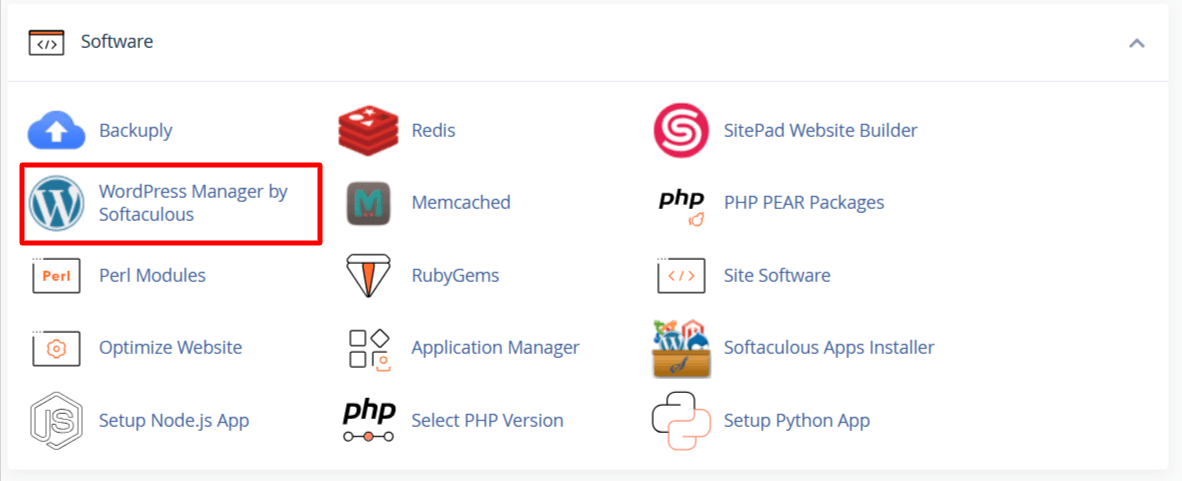
2. Find the WordPress installer. Look for “WordPress” or “Softaculous Apps Installer” in your cPanel. Most Nigerian-friendly hosts display this prominently on the dashboard.
3. Click “Install” on the top navigation menu, and fill in your blog details on th next screen.
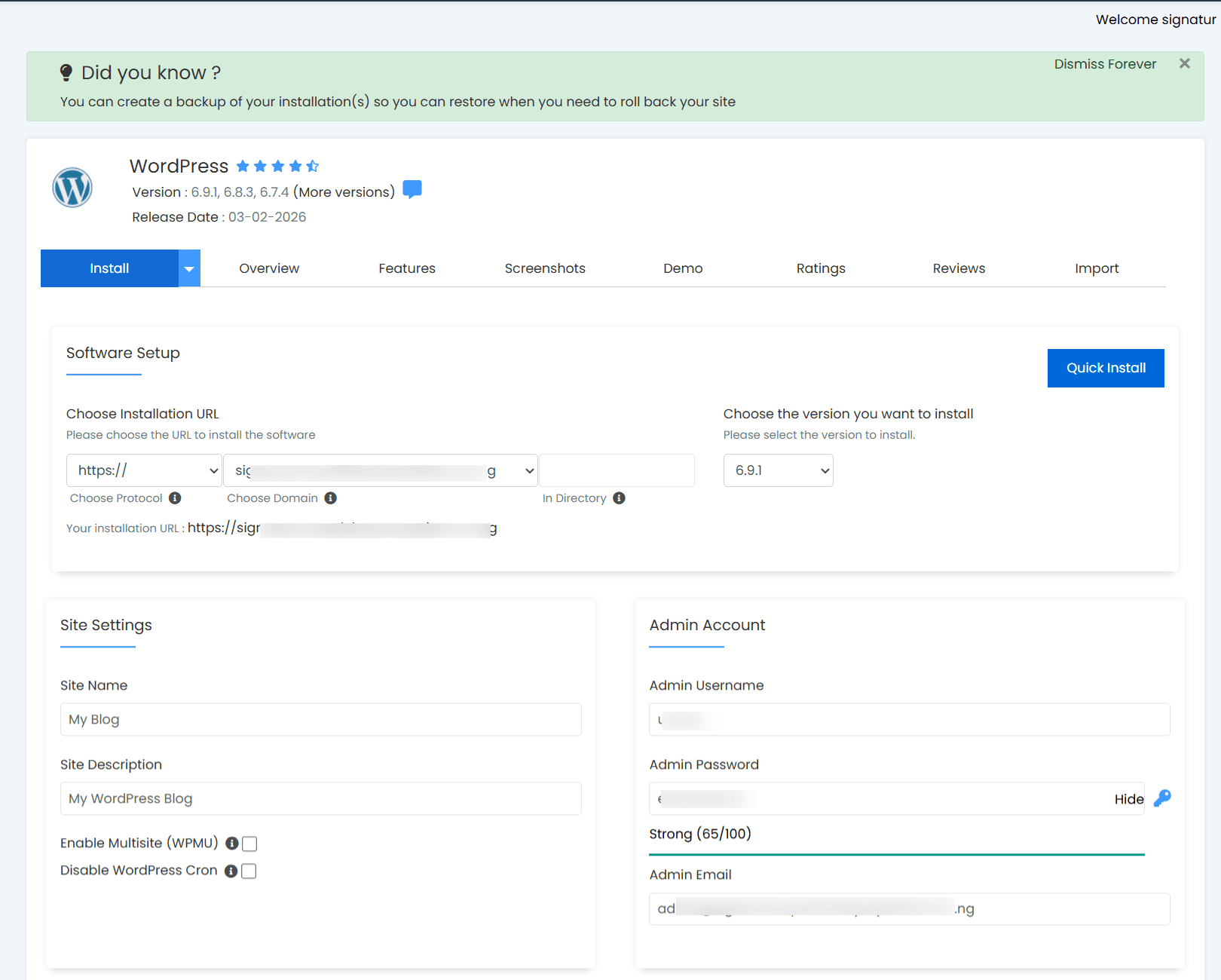
4. Click Install. The process takes under 2 minutes. Once complete, you’ll get two URLs via email notification:
5. Log in to your WordPress dashboard. Go to yourdomain.com/wp-admin url, enter your credentials, and you’re inside your blog’s control center.
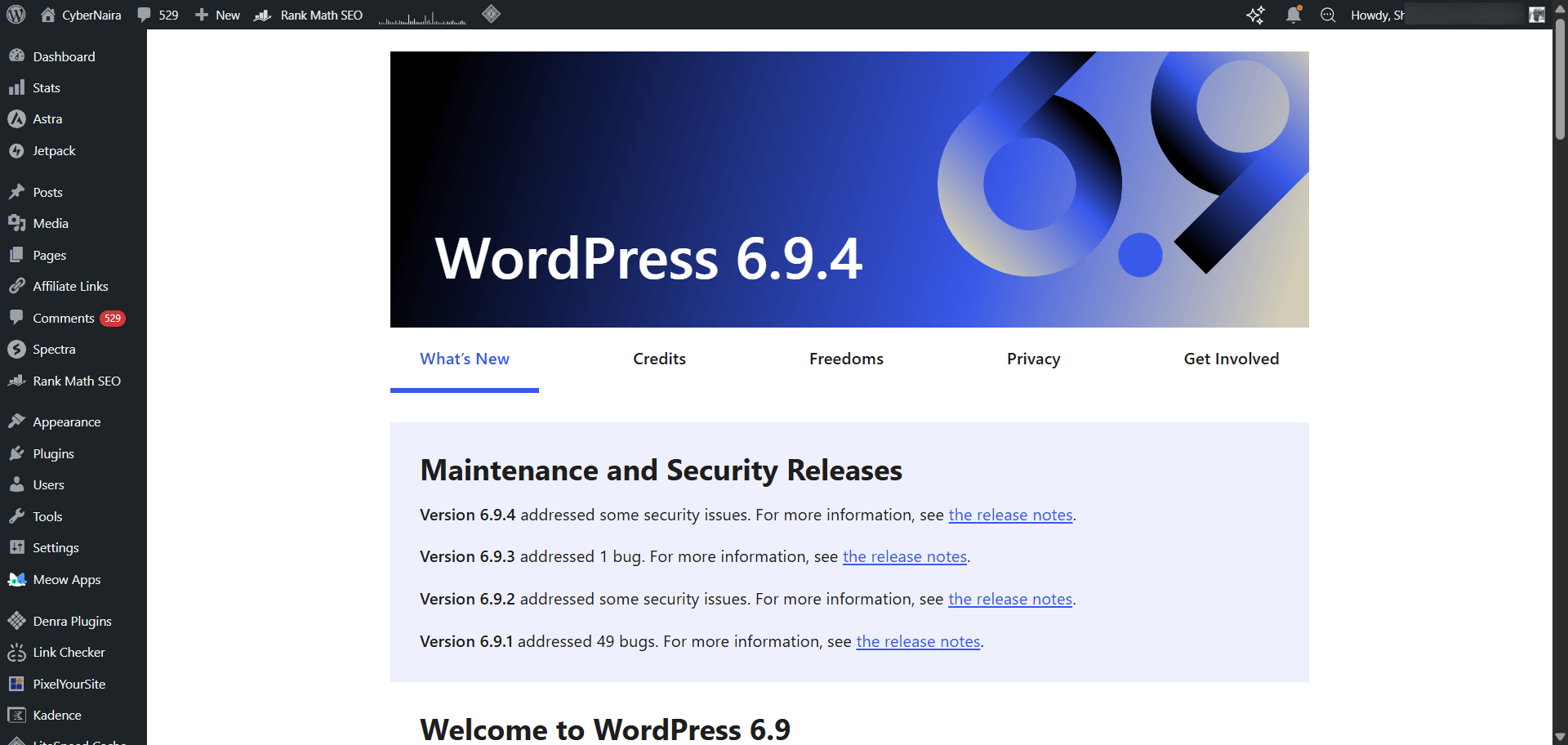
Here are some essential settings to configure immediately after installation:
Three essential plugins to install on day one:
| Plugin | Purpose |
|---|---|
| Rank Math SEO | On-page SEO optimization and schema markup |
| LiteSpeed Cache or WP Rocket | Page speed and caching |
| Wordfence Security | Basic security and firewall protection |
These three cover the most critical technical foundations – SEO, speed, and security – without overloading a new WordPress installation.
Step 5: Choose a Theme and Install Essential Plugins
Your theme controls how your blog looks and feels. It affects your site speed, mobile experience, and how easily readers navigate your content.
A bad theme choice early on can cost you traffic and create technical headaches later.
What to look for in a WordPress theme:
There are free and paid themes. Here is how they compared:
| Free Themes | Premium Themes | |
|---|---|---|
| Cost | ₦0 | $30–$300 one-time or yearly |
| Support | Limited or none | Dedicated support |
| Customization | Basic | Advanced |
| Speed optimization | Varies | Usually optimized |
| Updates | Inconsistent | Regular |
| Best for | Testing and starting out | Serious, long-term blogs |
Start with a free theme if your budget is tight. Upgrade to premium once your blog starts generating income.
Recommended themes for Nigerian bloggers:
How to install a theme:
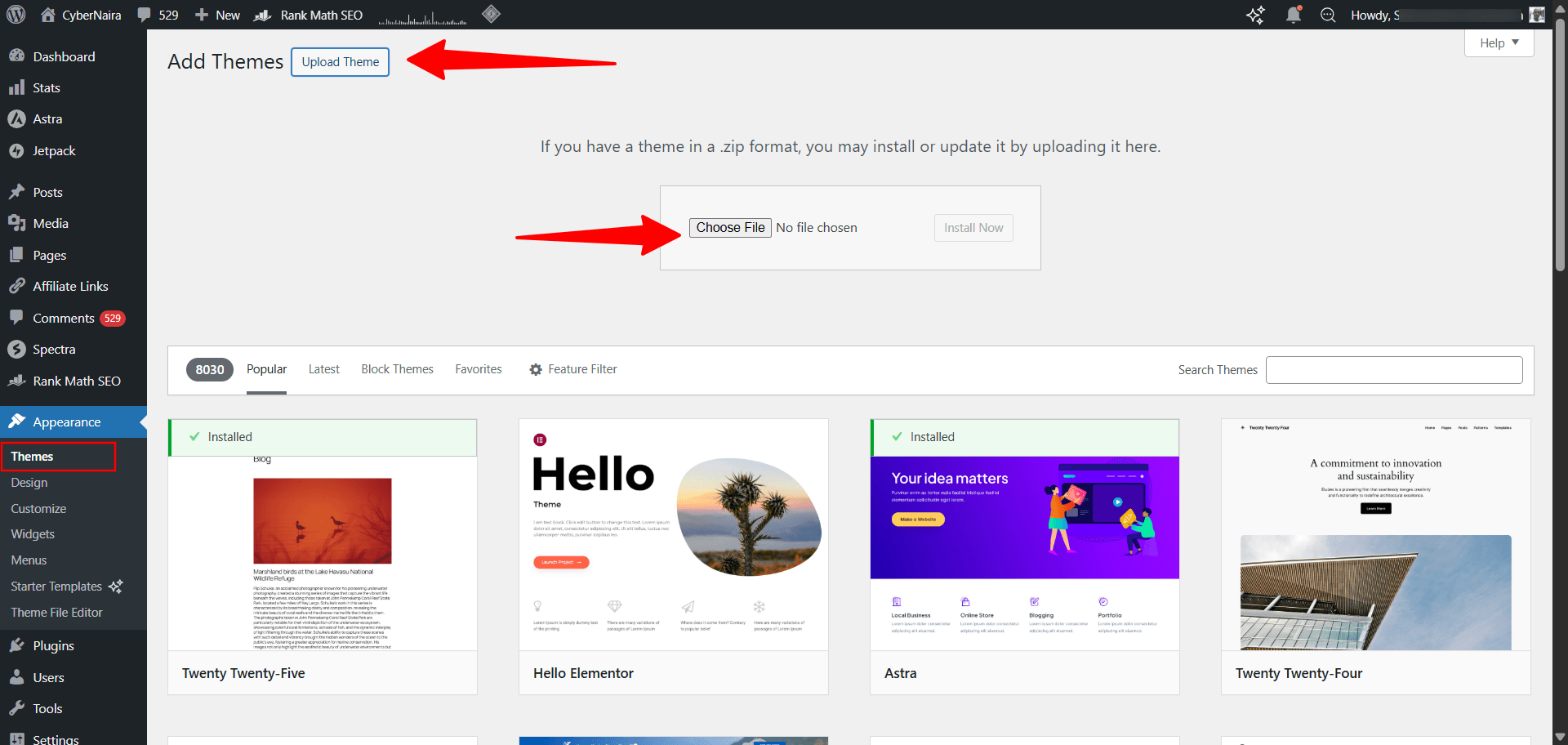
For premium themes, you’ll download a .zip file from the theme developer’s website and upload it via Appearance > Themes > Add New > Upload Theme. Then select the zip file from your computer to upload it to WordPress.
There are some essential plugins you might need to consider beyond the day-one list:
You already installed Rank Math, a caching plugin, and Wordfence in Step 4. Here are the additional plugins worth adding as you set up your blog:
| Plugin | Puropsoe |
|---|---|
| Akismet Anti-Spam | Blocks spam comments automatically |
| UpdraftPlus | Automated blog backups to Google Drive or Dropbox |
| WPCode | Adds custom code snippets without editing theme files |
| Broken Link Checker | Identifies and flags broken links across your content |
| MonsterInsights or Site Kit by Google | Connects Google Analytics to your WordPress dashboard |
One important rule on plugins:
Every plugin you install adds weight to your site. Only install plugins that serve a clear, specific purpose.
Aim to keep your total plugin count under 15 for a new blog. More plugins mean more potential conflicts, security vulnerabilities, and slower load times.
Step 6: Write and Publish Your First Post
Your first post sets the tone for your entire blog. It doesn’t need to be perfect, but it does need to be useful, readable, and optimized for search from day one.
Before you write, you must understand search intent. This is very important.
Every post you publish should target a specific keyword your audience is actively searching for. Writing without keyword research is like opening a shop on an empty street. The product might be great, but no one will find it.
Use free tools like Google Keyword Planner, Ubersuggest, or the free version of Rank Tracker to find:
For a new blog, target long-tail keywords that are specific, lower-competition phrases like “how to start a food blog in Nigeria” rather than broad terms like “blogging.”
Long-tail keywords are easier to rank for and attract readers with clear intent.
How to structure a blog post for readability and SEO:
How to publish a post in WordPress:
What your first few posts should cover:
Don’t start with random topics. Your first 5–10 posts should establish what your blog is about and who it’s for. Here is a useful framework:
This creates a basic content cluster from day one. A structure that helps Google understand your blog’s topic focus and improves your chances of ranking faster.
Here are some basic on-page SEO checklists before hitting publish:
| Element | What to Do |
|---|---|
| Title tag | Include primary keyword, under 60 characters |
| Meta description | 150–160 characters, include keyword naturally |
| URL/permalink | Short, keyword-focused, no dates or numbers |
| H1 | Matches or closely mirrors your title tag |
| H2/H3 subheadings | Include secondary and related keywords naturally |
| Images | Add alt text describing the image content with keywords where relevant |
| Internal links | Link to at least one other page on your blog |
| External links | Link to one credible source to support key claims |
| Word count | Aim for 1,000–2,000 words for most beginner posts |
| Mobile preview | Check how the post looks on mobile before publishing |
Step 7: Promote Your Blog
Publishing a post is the starting point, not the finish line. In a competitive environment where 6 to 7 million new posts go live every day, content promotion determines whether your content gets read or ignored.
A practical rule:
Spend 20% of your time creating content and 80% promoting it. This ratio feels counterintuitive at first, but it reflects how content actually gains traction, especially on a new blog with no existing audience.
Start with these four promotion channels:
1. Search Engine Optimization (SEO)
SEO is the most valuable long-term traffic channel for any Nigerian blogger. Unlike social media, where content disappears within hours, a well-optimized post can drive consistent organic traffic for years.
To begin, here are core SEO actions for a new blog:
2. Social Media Marketing
You don’t need to be on every platform. Pick two channels where your target audience is most active and focus your energy there.
Platform guide for Nigerian bloggers:
| Platform | Best For | Content Format |
|---|---|---|
| Broad Nigerian audience, community building, paid ads | Posts, groups, reels | |
| X (Twitter) | Tech, finance, and digital marketing niches | Short takes, threads |
| Business, career, and professional topics | Articles, posts | |
| Lifestyle, food, fashion, and health niches | Images, reels, stories | |
| TikTok | Young audience, entertainment, and education | Short videos |
| Direct audience engagement, content distribution | Broadcast lists, status |
WhatsApp is underutilized by Nigerian bloggers. A broadcast list of even 50–100 engaged contacts who genuinely want your content will consistently outperform a Facebook page with 5,000 passive followers.
Build it early.
3. Guest Posting
Guest posting means writing an article for another blog in your niche in exchange for a byline and a link back to your blog. It remains one of the most effective traffic- and authority-building strategies for new bloggers.
Why it works:
How to start with guest posting:
4. Email Marketing
Every visitor who leaves your blog without subscribing is likely gone forever. An email list converts casual readers into a loyal, returnable audience you own. No algorithm can take it away.
How to start building your list from day one:
Recommended email marketing tools for Nigerian bloggers:
| Email Tool | Free Plan | Best For |
|---|---|---|
| Brevo (Sendinblue) | 300 emails/day, unlimited contacts | Beginners, simple campaigns |
| MailerLite | 1,000 subscribers, 12,000 emails/month | Growing blogs, automation |
| GetResponse | 30-day free trial | Advanced features, sales funnels |
| Mailchimp | 500 subscribers, 1,000 emails/month | Most beginner-friendly interface |
| SendPulse | 500 subscribers, 15,000 emals/month. | Beginners, easy to use |
Start with Brevo or MailerLite. Both offer generous free plans and accept international sign-ups without requiring a credit card upfront. GetResponse is ideal if you need advanced email marketing features and budget is not a problem.
NOTE:
Your audience is your best marketing channel. Ten loyal readers who share your content consistently will outperform a one-time spike from a viral post. Build for loyalty, not just traffic. Your email list is the starting point.
Step 8: Monetize Your Blog
Monetization is not something you add later; it’s something you build toward from day one. The earlier you understand how your blog will make money, the better your content, traffic, and audience-building decisions will be.
That said, realistic expectations matter. A new blog with low traffic will earn little regardless of the monetization method.
Focus on building a targeted audience first. Revenue follows attention. The four monetization methods that work for Nigerian bloggers include:
1. Affiliate Marketing
Affiliate marketing means promoting other companies’ products or services and earning a commission for every sale or action generated through your referral link.
It is the most accessible monetization method for Nigerian bloggers. You don’t need to create a product, handle payments, or manage customer service.
Here is how affiliate marketing works:
PRO TIP:
Read my beginner’s guide to affiliate marketing to learn more about how to start, find relevant affiliate programs, and get people to buy from your recommendations.
Some affiliate programs that work for Nigerian bloggers:
| Program | Niche | Commission | Pays to Nigeria |
|---|---|---|---|
| Namecheap Affiliates | Web hosting, domains | 20–35% | Yes (Payoneer/bank) |
| Whogohost Affiliates | Web hosting | 10–15% | Yes (local bank) |
| HostPapa Affiliates | Web hosting | $75 per sale | Yes (PayPal) |
| Rank Math Affiliates | SEO tools | 30% recurring | Yes (PayPal) |
| Semrush Affiliates | SEO tools | $200 per sale | Yes (wire transfer) |
| Amazon Associates | Physical products | 1–10% | Yes (gift cards/bank) |
| Jumia Affiliate | Nigerian e-commerce | 3–9% | Yes (local bank) |
| Expertnaire | Nigerian digital products | 30–50% | Yes (local bank) |
Expertnaire and Jumia are particularly relevant for blogs targeting a Nigerian audience. Both pay in Naira directly to local bank accounts, removing the payment barrier that makes international programs difficult.
How to collect affiliate earnings in Nigeria:
2. Display Advertising
Display advertising means placing ad banners on your blog and earning money based on impressions (views) or clicks. It requires consistent traffic to generate meaningful income, but it’s passive once set up.
Google AdSense is the most common starting point. It’s free to apply, automatic in operation, and pays via wire transfer to Nigerian bank accounts.
Realistic AdSense earnings for Nigerian blogs:
AdSense pays based on your audience’s location. A Nigerian audience generates lower CPM (cost per thousand impressions) than a US or UK audience. Typically $0.50–$2.00 CPM compared to $5–$20 CPM for Western or tier-1 country traffic.
This means traffic volume matters more for AdSense income if your primary audience is Nigerian.
Alternatively, creating content that attracts international readers in high-CPC niches (finance, tech, health) significantly improves AdSense revenue.
Some AdSense alternatives worth considering:
| Network | Minimum Traffic | Best For |
|---|---|---|
| Google AdSense | None specified | Any niche, beginners |
| Ezoic | 10,000 sessions/month | Growing blogs, higher RPM |
| Mediavine | 50,000 sessions/month | Established blogs, premium RPM |
| AdThrive | 100,000 pageviews/month | High-traffic blogs |
Start with AdSense. Move to Ezoic once you hit 10,000 monthly sessions. The RPM improvement is significant.
3. Sponsored Content
Sponsored content means brands pay you to write posts, reviews, or mentions featuring their products or services on your blog.
This becomes a realistic income stream once your blog has an established audience, decent traffic, and domain authority.
Nigerian brands, particularly in fintech, telecoms, e-commerce, and FMCG, actively pay bloggers for sponsored coverage.
However, your blog’s monthly traffic, domain authority, social media following and engagement, and niche relevance to the brand determine how much the advertiser will be willing to pay.
A Nigerian blog with 10,000–20,000 monthly visitors in a relevant niche can realistically charge ₦50,000–₦200,000 per sponsored post, depending on the brand and deliverables.
FTC and advertising compliance:
Always disclose sponsored content clearly to your readers. Label it as “Sponsored” or “Paid Partnership.”
This is both an ethical obligation and a requirement under advertising guidelines. Undisclosed paid content damages reader trust permanently.
4. Selling Your Own Products or Services
Selling your own digital or physical products gives you the highest profit margin of any monetization method. No middleman, no commission splits.
However, you need credibility, authority, and industry knowledge to successfully create and sell your products.
That said, here are some products and services Nigerian bloggers sell successfully:
When you start selling products or services, you need a system to collect payments. Here are some payment processors and platforms that work well for Nigeria:
| Platform | Best For | Accepts Naira |
|---|---|---|
| Selar | Nigerian digital products | Yes |
| Paystack | Online payments, subscriptions | Yes |
| Flutterwave | International + local payments | Yes |
| Gumroad | Digital products, global audience | No (USD) |
| Expertnaire | Nigerian info products marketplace | Yes |
Selar and Paystack are the most practical starting points for Nigerian bloggers selling products or services. Both are built for the Nigerian market, support Naira transactions, and have straightforward setup processes.
One critical question among Nigerian bloggers is when to start monetizing their blogs.
My advice: start from day one, but match your method to your traffic level:
| Traffic Level | Recommended Method |
|---|---|
| 0–1,000 monthly visitors | Affiliate marketing (no traffic minimum) |
| 1,000–10,000 monthly visitors | Affiliate marketing + AdSense |
| 10,000–50,000 monthly visitors | Affiliate + Ezoic + Sponsored content |
| 50,000+ monthly visitors | All methods + own products/services |
How Much Does It Cost to Start a Blog in Nigeria?
Starting a blog in Nigeria does not require a large upfront investment. Your two non-negotiable costs are a domain name and web hosting.
Everything else can start free and upgrade as your blog grows.
Year one cost breakdown:
| Item | Free Option | Paid Option | Est. Cost (USD) | Est. Cost (Naira) |
|---|---|---|---|---|
| Domain name | None | .com via Namecheap | $10–$15/year | ₦15,000–₦23,000 |
| Web hosting | None | Shared hosting | $24–$60/year | ₦36,000–₦90,000 |
| WordPress CMS | ✓ Free | — | $0 | ₦0 |
| WordPress theme | Free theme | Astra Pro / Kadence Pro | $0–$69/year | ₦0–₦99,000 |
| SEO plugin | Rank Math free | Rank Math Pro | $0–$59/year | ₦0–₦89,000 |
| Caching plugin | LiteSpeed Cache (free) | WP Rocket | $0–$59/year | ₦0–₦89,000 |
| Email marketing | Brevo / MailerLite free | GetResponse | $0–$180/year | ₦0–₦270,000 |
| Security plugin | Wordfence free | Wordfence Premium | $0–$119/year | ₦0–₦179,000 |
Minimum starting cost: approximately $34–$75/year (₦51,000–₦113,000) – covering domain and hosting only, with free versions of everything else.
Realistic first-year budget for a serious blog: $100–$200 (₦150,000–₦300,000) – covering domain, hosting, a premium theme, and one or two essential premium plugins.
NOTE:
Naira estimates are based on an approximate exchange rate of ₦1,500 to $1. Actual costs may vary depending on the current bank’s exchange rate and the registrar or host you choose.
FAQs
Can I make money blogging in Nigeria?
Yes, you can earn income from blogging as a Nigerian or living in Nigeria. The income potential is real but not immediate. Most blogs take 6–18 months of consistent effort before generating meaningful revenue. Nigerian bloggers with international audiences in high-value niches like finance, tech, and digital marketing earn in USD, significantly increasing their earning power relative to local costs.
How long does it take to start a blog in Nigeria?
You can have a blog live on the internet in 2–3 hours. That covers domain registration, hosting setup, WordPress installation, design, and basic configuration. Writing your first post and setting up essential plugins adds another 2–4 hours. The technical setup is the easy part; building an audience and generating income takes months of consistent effort.
Which hosting provider accepts Naira payment in Nigeria?
Whogohost, QServers, Verpex, and HostNowNow all accept Naira payment directly via local debit cards. For international hosts like Namecheap and Hostinger, you need a USD-enabled debit card from banks like GTBank, Access Bank, or Zenith Bank, or a Payoneer account.
Is WordPress free in Nigeria?
WordPress.org software is completely free to download and use. You pay for web hosting and a domain name – the server where your WordPress blog lives. WordPress.com offers a free hosted plan but with significant restrictions on monetization, plugins, and customization. For a blog you intend to monetize, always use self-hosted WordPress.org.
Which blogging niche is most profitable in Nigeria?
The most consistently profitable niches for Nigerian bloggers are personal finance and investment, digital marketing, web hosting and tech reviews, health and wellness, and online business. These niches attract readers with purchase intent and command higher AdSense CPCs. Entertainment and news blogs can generate high-traffic volume but typically earn less per visitor due to lower advertiser demand and CPM rates.
How do Nigerian bloggers receive payments internationally?
Payoneer is the most widely used payment collection method among Nigerian bloggers. It’s accepted by most international affiliate programs and links directly to local bank accounts for Naira withdrawal. Wise is a strong alternative for lower conversion fees. PayPal is available in Nigeria but has withdrawal limitations that make it impractical as a primary collection method. Nigerian-focused programs like Expertnaire and Jumia pay directly to local bank accounts.
Conclusion
Starting a blog in Nigeria is straightforward when you follow the right steps in the right order.
You need a domain name, reliable web hosting, WordPress, and a focused content strategy built around what your target audience is actively searching for.
The technical setup takes a few hours.
Building a blog that generates consistent traffic and income takes longer, typically 6–18 months of consistent publishing, promotion, and audience building.
That timeline is not a reason to delay. Every week you wait is a week behind on the learning curve.
One final piece of advice: most Nigerian blogs fail not because of poor content or a wrong niche, but because the blogger stops too early.
Consistency over 12 months will put you ahead of the majority of bloggers who quit within the first 90 days.
If you have questions about any step in this guide, drop them in the comments below. And if you’re ready to go deeper, download the free PDF guide for a more detailed walkthrough of the entire process.


Thanks so much, Shamsudeen for sharing this huge information about starting a blog in Nigeria. Even as I’ve been blogging for 3 years, I still find this guide useful.
There’s no need repeating what’s on the content. I’m going home with a hand full of ideas and things to get fixed on my blog.
I suggest you add a table of content for this post to allow quick navigations.
Bytheway, Thanks for sharing. Do have a wonderful weekend
Hi John,
Glad you find the information useful. And thanks for sharing your thought with us.
Excellent explanation about blogging! Well executed and helpful article for every beginner or newbie blogger living in nigeria ! Thanks for sharing such an valuable article!
Hi Kevin,
Thanks for stopping by and sharing your thought. Have a nice day.
This is an excellent, succinct and yet thorough guide to starting a blog. Thank you.
Thanks Qeemat, glad you like it.
Hi Shamsudeen,
This is one of the best post I have ever read about making money online. You really gave a detail explanation on how one can make money online by blogging. I really love this post. This is like a tutorial.
Thanks a lot.
Hi Samson,
I’m glad you find the information very useful.
Making money online is not an easy thing but with a clear road map, consistency, implementing what works…success is achievable.
Thanks once again.
Excellent explanation about blogging! Well executed and helpful article for every beginner or newbie blogger living in nigeria ! Thanks for sharing such an valuable article!
Glad you find the information useful, Duncan. Thanks for reading through.
Thanks so much, Shamsudeen for sharing this huge information about starting a blog in Nigeria. Even as I’ve been blogging for 3 years, I still find this guide useful.
There’s no need repeating what’s on the content. I’m going home with a hand full of ideas and things to get fixed on my blog.
I suggest you add a table of content for this post to allow quick navigations.
Bytheway, Thanks for sharing.
Hi Acha,
Thanks for reading through, and I’m so glad you find the information useful. If you need help with anything related to this, don’t hesitate to let me know.
Thanks.
I really appreciate am new into blogging and I want to connect with bloggers forum to learn more
Hi Collins,
Thanks for reading through, glad you find the information useful.
Thanks for sharing this information with us it really helped me understand
You’re welcome. Glad you like it.
Thanks much
Wow ? thank really much.
This should rather be how to start a blog – be it on the moon or in the remotest village and not just in Nigeria. Mr Shamsudeen you are such a wonderful and articulate writer that knows what to say when to say it. Thanks for this article. I really learnt a whole lot from this post.
Hi Emma,
Thanks for visiting, and I’m so glad you find this information useful. Remember, stay safe, stay home.
This post is not just about starting a blog but it also covers everything about blogging, thanks a lot as it was a very informative post…
Thanks Newton,
I’m glad you find it very informative. I hope to see you around here often.
Hello Shamshudeen, this is really insightful and in-depth content, keep it up!
Thanks, Benny,
I’m glad to read you like this.
This is a very informative and comprehensive post.
Thanks for this.
Hi Kingsley,
Thanks for reading through.
This is really helpful
Glad you like it, Ajayi.