

You spend hours writing a post and about 30 minutes promoting it, then you wonder why no one reads it.
Publishing is not the finish line; it’s the starting gun. A well-written post with no promotion strategy is a tree falling in an empty forest.
The content exists, but it reaches no one.
The good news is that promotion doesn’t have to be chaotic or exhausting. The bloggers consistently driving traffic to every post they publish aren’t working harder; they’re working from a system.
The same repeatable workflow, applied to every post, every time.
That’s what this guide gives you: a step-by-step blog post promotion checklist built for 2026.
Not a list of 35 tactics to pick and choose from. Instead, you get a sequenced workflow that tells you exactly what to do before you hit publish, on the day you publish, during the first week, and in the weeks after.
Follow this system consistently, and two things happen.
First, every post you publish gets a proper distribution push from day one. Second, the promotional effort compounds; each post builds your presence in communities, grows your email list, and signals to Google that your content earns engagement.
A few things to note before we get into it.
You don’t need to execute every step on this checklist for every post. Prioritize based on the content type and the time you have.
And you don’t need to be on every platform. The goal is a system you’ll actually run, not an exhaustive ritual that collapses under its own weight.
Let’s dive in.
Step 1: Pre-Publish Prep — Set Up the Promotion Before You Hit Publish
The biggest mistake bloggers make with blog promotion is treating it as something that happens after publishing.
By the time most posts go live, they’re already behind. The groundwork for effective promotion is laid before the post is published, and it takes less time than you think.
Identify Your Distribution Channels Before You Write
Before the post goes live, decide where it’s going. Not in a vague “I’ll share it on social media”, instead be precise. Ask yourself:
This matters because the channel shapes the content. A post you plan to promote on LinkedIn benefits from having a strong data point or counterintuitive angle in the opening; that’s what gets shared there.
A post you’re pitching to a specific community needs to address that community’s language and concerns directly.
Deciding the distribution channel after writing means you may have written the wrong version of the post for the audience you’re trying to reach.
Make a short list — three to five channels — before you finalize the post. Then write with those channels in mind.
Mention and Tag People Who Will Care
If your post references tools, quotes industry leaders, cites a study, or links to another blogger’s content, make a note of every person and brand mentioned. These are your first promotion partners, and they didn’t ask to be.
When someone is mentioned in a post, they have a natural incentive to share it. You’ve given them something — visibility, a citation, a recommendation.
A short, genuine message after publishing (“Hey, I referenced your research on X in a post about Y, thought you’d want to know”) earns shares at a significantly higher rate than cold outreach asking for promotion with no prior relationship.
Make the list before you publish so the outreach happens on day one, not two weeks later when the post has gone cold.
Prepare Your Social Media Assets in Advance
Post-publish promotion stalls most often because of friction. You’ve published, you’re tired, and now you have to figure out what to write for five different platforms. Eliminate that friction by preparing assets before you hit publish.
For each post, prepare in advance:
A short-form social caption: two to three sentences that lead with the most interesting insight from the post, not the title.
For example, “I just published a post about blog promotion” will get ignored. But “Most bloggers spend 10 hours writing and 10 minutes promoting; this checklist fixes the imbalance” will always get clicks.
A pull quote or key stat: identify one sentence from the post that stands alone as a shareable insight. This becomes your Twitter/X post, your LinkedIn hook, or your Instagram caption without additional writing.
A one-line email subject line: write it before you’re in promotion mode. Subject lines written under pressure tend to be generic. Written while the post is still fresh in your mind, they’re more specific and compelling.
These three assets take 15 to 20 minutes to prepare and remove the friction that causes promotion to be skipped entirely.
Submit for Indexing Before You Announce
The moment your post goes live — before you share it anywhere — go to Google Search Console and submit the URL for indexing via the URL Inspection tool. This puts the page in Google’s priority crawl queue immediately.
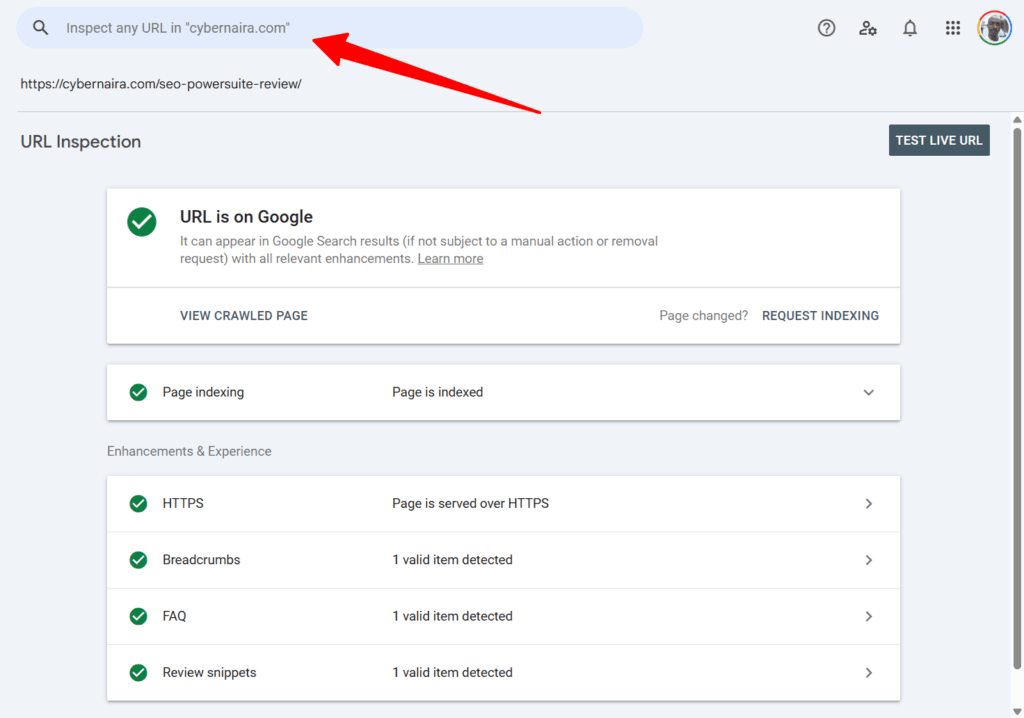
Why does this matter for promotion? Because social shares, community links, and email clicks all drive traffic to the post on day one.
If Google hasn’t crawled the page yet when that traffic arrives, it misses the engagement signals those visits generate.
Getting the page indexed before the traffic hits means Google sees the full picture — a fresh page with immediate engagement — which is a positive ranking signal.
It takes sixty seconds. Make it the first step after hitting publish, before anything else.
Step 2: Day 1 Actions — The First 24 Hours After Publishing
The first 24 hours after a post goes live are the most important for promotion.
Engagement signals generated in this window — clicks, shares, time on page, return visits — tell Google this content is worth paying attention to. Miss this window, and you’re playing catch-up.
Here’s exactly what to execute on day one.
Send Your Email Newsletter
Your email list is your most reliable day-one traffic driver. Subscribers have already opted in to hear from you.
They’re the warmest audience you have, and they’re the most likely to read, share, and link to your content.
The email doesn’t need to be long. In fact, shorter emails consistently outperform longer ones for driving blog traffic.
PRO TIP!
The format that works best is simple: one or two sentences of context about what the post covers and why it matters right now, followed by a direct link.
What to avoid: don’t summarize the entire post in the email. Give enough to create curiosity and a reason to click, but not enough to satisfy it.
If the email answers the question the post is built around, there’s no reason to click through.
Subject line matters more than body copy for this type of email. Write it around the most specific, compelling insight in the post, not the title.
A subject line that mirrors your post title is a missed opportunity. The person who opens based on the subject line has already decided the topic is interesting; your job is to make the specific angle irresistible.
Share on Your Primary Social Platform
On day one, share the post on whichever social platform is most active for your audience, not all of them.
Spreading one piece of content thinly across five platforms on the same day produces weaker results than a single, well-crafted post on the platform where your audience actually engages.
The format for each platform differs:
LinkedIn: write a standalone post, not just a link share. Lead with the most counterintuitive or data-backed point from your article.
Build three to four short paragraphs that expand on that point, then close with a question to drive comments.
Drop the link in the first comment, not in the post body. LinkedIn’s algorithm deprioritizes posts with external links in the caption.
Twitter/X: lead with a pull quote or bold claim from the post. Keep it under 240 characters. Link directly in the tweet.
If the post includes a numbered list of strategies, consider turning it into a thread—one tweet per strategy—with the final tweet linking to the full post.
Facebook: organic reach for blog post links is low, but a personal, first-person framing performs better than a direct link share.
Write two to three sentences or a short report about why you wrote the post and what you personally found most interesting about the topic, then link. The more human the framing, the better the reach.
Here is me using the same strategy after a short experiment I did on Vibe-coded AI site builders and SEO.

The link I dropped in the comment brought in a few targeted traffic, engagement, mostly from new readers.
Pinterest: create a vertical image (1000 x 1500px) using Canva, write a keyword-rich description, and pin it to your most relevant board.

Pinterest drives long-tail traffic for weeks and months after publishing. Not immediate spikes but sustained referral traffic for visual and how-to content.
Pick one or two of these on day one. Save the others for days two through seven.
Share in One Relevant Online Community
Find one community where your target reader already spends time. This could be a subreddit, a Facebook Group, a Slack community, a Discord server, or a niche forum, and share the post there.
One community that does well outperforms five communities that do poorly.
The rules for community sharing are non-negotiable:
Don’t drop a link with a one-line pitch. That reads as spam and gets ignored or removed. Instead, write a genuine post in the community’s native format, and share the core insight from your article as a standalone contribution, then reference the post as a “full breakdown” for those who want more detail.
You’re adding value first, sharing the link second. If you’re not already an active member of the community, this approach requires more groundwork.
Spend time contributing before sharing your own content. Communities built on trust don’t respond well to accounts that appear to drop links only.
For blogging and marketing content, strong communities include r/blogging, r/SEO, r/juststart, and niche-specific Facebook groups relevant to your topic.
Pick the one where the post is the most natural fit, not the one with the most members.
Do Your Mention Outreach
Pull the list you made during pre-publish prep and everyone you’ve referenced, quoted, linked to, or mentioned in the post, and send each of them a brief and personal message.
The format is simple:
“Hey [name], I published a post today on [topic] and referenced your [article/tool/research] on [specific point]. Thought you’d want to know — [link]. No ask, just wanted to share it with you.”
Don’t ask for shares such as, “Would you mind sharing this?” Or “I’d love it if you could retweet.”
Just give a genuine heads-up, and the share or link comes naturally when the person feels informed rather than solicited. Pushy outreach gets ignored, but a genuine notification will always get read, and often shared.
Ensure the message stays under five sentences and personalize each one. Never send the same template twice.
Add Internal Links From Existing Posts
Before the day is out, go into two or three of your existing published posts that are topically related to the new one and add a contextual internal link pointing to the new post.
Internal links from established pages pass authority to new pages and help Google understand the topical relationship between your content.
A new post with no internal links pointing to it is an isolated page. Google has to find it on its own.
Internal links from older, already-indexed pages indicate where the new post sits in your content structure and provide an immediate authority signal.
The link anchor text matters, so use descriptive, keyword-relevant phrases rather than generic “click here” or “read more” links.
If the new post is about blog post promotion, the anchor text from a related post should say something like “blog post promotion checklist”, not “this article.”
Step 3: Week 1 Actions — Days 2 Through 7
Day one creates the initial push. The rest of the first week is about extending the reach of that push into new audiences and formats, without duplicating what you already did on day one.
Most bloggers stop promoting after the first day. This is where consistency creates a compounding advantage.
Day 2: Share on a Second Social Platform
Whatever platform you led with on day one, pick a different one for day two, with a different angle and different framing.
You’re not reposting the same caption. You’re finding a different entry point into the same content for a different audience.
If day one was a LinkedIn standalone post built around a data point, day two might be a Twitter/X thread that breaks the post’s framework into a step-by-step sequence.
If day one was a Pinterest pin, day two might be a Facebook post with a personal story angle. The content source is the same; the execution is platform-native.
This matters because different people on different platforms respond to different formats. The reader who scrolled past your LinkedIn post may have stopped at a well-structured Twitter thread.
Varying the format and platform throughout the first week maximizes reach without requiring new content.
Day 3: Create and Share a Short-Form Video
Take the single most valuable insight from the post and record a 30–60-second vertical video that delivers it directly to the camera. No production setup required — a phone, decent lighting, and a quiet room are enough.
The script is simple: open with the problem or question the post addresses, deliver the core insight in two to three sentences, close with a CTA pointing to the full post via link in bio. The video doesn’t need to cover everything; it needs to make the viewer want to read the full post.
Where to publish it depends on where your audience is:
YouTube Shorts: indexes in Google search results, giving the video SEO crossover potential. A Short on “how to promote a blog post” can appear in search and drive clicks to the full article independently of your social following.
Instagram Reels: strong discovery reach for marketing and blogging content. The link-in-bio CTA works if it’s specific: “Full promotion checklist linked in bio” outperforms “link in bio.”
LinkedIn native video: significantly underused for blog promotion. A 60-second video on a blogging or marketing insight consistently outperforms text posts in organic reach on LinkedIn, especially in B2B-adjacent niches.
One platform, one video, day three. Don’t overthink the production. Imperfection and published video beats polished and delayed video every time.
Day 4: Answer a Relevant Question on Quora or Reddit
Search Quora and Reddit for questions that your post directly answers. Find one where the existing answers are outdated, thin, or generic, and write a thorough, genuinely useful answer from scratch.
The answer should stand entirely on its own without the link. Cover the core points, give real detail, and then reference the post at the end as a resource for readers who want the complete breakdown. The link is a footnote, not the point.
This approach works for two reasons. First, it drives direct referral traffic from people who find the answer helpful. Second — and more valuable long-term — Quora answers and Reddit threads rank in Google for long-tail informational queries.
A well-written answer on “how to promote a blog post after publishing” can appear in search results for months or years, consistently sending traffic back to your post.
The key is choosing the right question: one with enough existing traffic to be worth answering, but with answers that are weak enough that yours will stand out.
Aim for questions with 500+ existing views and answers that haven’t been updated in over a year.
Day 5: Repurpose Into a Newsletter or Email Sequence Section
If you publish a regular newsletter, the new post is content for your next issue, but not in the way most bloggers use it.
Don’t just paste a headline and link. Extract the single most useful framework, checklist, or insight from the post and write it out natively in the newsletter.
Make the newsletter section valuable enough to read on its own. Then close with: “I went deeper on this in this week’s post — [link] if you want the full breakdown.”
This approach does two things that the standard “new post” email doesn’t. First, it delivers immediate value to subscribers who may not click through, which keeps your open rates healthy and your list engaged.
Second, for subscribers who do click through, they arrive at the post already primed with context, which increases time on page and reduces bounce rate.
If you don’t publish a regular newsletter but have an email list, day five is the right time for a second, shorter follow-up email to non-openers from day one with a different subject line and a one-line reframe of the post’s angle.
Day 6: Pitch the Post to a Relevant Newsletter or Blog in Your Niche
Most bloggers never do this, and it’s one of the highest-leverage content promotion actions available.
Identify two or three newsletters or blogs in relevant niches that regularly curate or link to content their audience would find useful. Write a short, personal pitch email — three sentences maximum — explaining what the post covers and why it’s relevant to their specific audience.
No generic “I thought your readers might enjoy this.” Be specific: “Your audience is building affiliate blogs; this promotion checklist covers the community and email steps most guides skip, which I thought might be worth sharing in your next roundup.”
Niche newsletter curators are actively looking for good content to share. Most of what gets pitched to them is self-serving and generic. A specific, well-framed pitch on a genuinely useful piece of content gets read and often included.
One inclusion in a well-followed niche newsletter can drive more targeted traffic than weeks of social media posting, because the newsletter audience is already interested in exactly what you write about.
Day 7: Review Early Performance and Double Down
By the end of the first week, you have enough data to make your first informed promotion decision.
Open Google Search Console and check the new URL:
Those are signals about how Google is reading the page and where there may be optimization gaps worth addressing early.
Open your analytics and check which traffic sources are generating the most engaged visits — lowest bounce rate, longest time on page.
That tells you which promotion channel is sending the highest-quality audience for this specific post. Double down there in the ongoing promotion phase.
Check the comments section and any community threads where you shared the post:
Those questions are content ideas for follow-up posts, and if the same question comes up repeatedly, it may be worth adding a dedicated section to the post itself to address it, then re-indexing.
Week one doesn’t end with a full picture, but it gives you enough signal to stop guessing and start directing your ongoing promotional effort toward what’s actually working.
Step 4: Ongoing Promotion — Weeks 2 and Beyond
Most blog posts are promoted heavily for seven days and then abandoned. The blogger moves on to the next post, and the previous one is left to rank or not rank on its own.
This is the single biggest missed opportunity in content marketing.
The posts that generate compounding traffic over months and years aren’t just better written, they’re actively maintained and re-promoted on a rolling basis.
Ongoing promotion is what separates a post that spikes and fades from one that builds momentum over time.
Here’s how to build that into your workflow.
Re-Share With a New Angle Every 4–6 Weeks
Evergreen content has a longer promotional shelf life than most bloggers use. A post published today is still relevant in six weeks, but most of your social audience didn’t see the day-one share, and those who did have likely forgotten it.
Re-sharing works when it doesn’t feel like re-sharing. The key is finding a new entry point into the same content each time, such as a different insight, a different framing, a different audience segment.
For example, a blog promotion checklist post can be re-shared as:
Each re-share you pull from the same source material feels new because, for most of the people seeing it, it is new.
You also need to rotate platforms and formats across each re-share cycle to reach different segments of your audience without fatiguing any single channel.
Add Internal Links From Every New Post You Publish
Every time you publish a new post, scan it for opportunities to link back to older relevant posts. This is a habit, not a one-time action.
As your content library grows, so does the opportunity for internal linking. A post about blog promotion can receive links from posts about content creation, SEO strategy, email list building, social media marketing, and content repurposing.
Every one of these posts is a legitimate contextual link that passes authority and keeps the page in Google’s regular crawl cycle.
Maintain a simple running document — a spreadsheet or a note — that tracks your most important posts and the keywords they target.
When writing new content, check the list for internal linking opportunities before publishing. Over six months, a consistently internally-linked post accumulates significantly more authority than one that was only linked at the time of publishing.
Update and Re-Promote When the Content Becomes More Relevant
Some posts have natural seasonal or topical re-promotion moments. A blog post promotion checklist becomes more relevant every time a major platform changes its algorithm, a new social channel gains traction, or a new tool emerges that changes how bloggers distribute content.
When something in your niche shifts that makes your post more timely, that’s a re-promotion trigger, and a reason to update the post itself.
Add a short section addressing the new development, update the publish date, re-index in GSC, and treat it like a new post promotion push across email and social.
This approach keeps evergreen content feeling current without requiring a full rewrite. A targeted update to one section — plus a re-promotion that leads with the new angle — can drive a significant traffic spike months after the original publish date.
Build Backlinks Through Ongoing Outreach
A post published a month ago is still linkable, and in many cases, more linkable than a post published yesterday, because it has had time to accumulate social proof, comments, and search visibility that make it a more credible reference.
Two ongoing link-building approaches that work for established posts:
Broken link building: Use a tool like SEO Powersuite or SE Ranking to find pages in your niche that link to outdated or dead resources on the same topic as your post.
Reach out to the page owner with a brief, specific note: “Found a broken link on your [page] pointing to [dead URL]. My post on [topic] covers the same ground and might be a good replacement.”
This works because you’re solving a problem for the recipient, not just asking for a favor.
Competitor backlink prospecting: find the top-ranking posts for your target keyword and check who links to them using Semrush or SE Ranking.
Any site linking to a competitor’s post on the same topic is a candidate for outreach to link to your version. If your post is more current, more comprehensive, or covers an angle they miss, make that the pitch.
Neither approach produces instant results, but a consistent outreach habit of five to ten emails per week compounds into meaningful link equity over a three to six-month period.
Repurpose Into a Long-Form Content Asset
Three to four weeks after publishing, when you have a clear sense of what the post’s audience responds to most, consider repurposing it into a longer-format asset that reaches a different audience entirely.
The formats with the most distribution leverage:
A YouTube video: a ten to fifteen-minute tutorial based on the post’s framework reaches the second-largest search engine in the world and drives referral traffic back to the post for years. The post becomes the script; the video becomes a standalone distribution channel.
A downloadable PDF checklist: Condense the post’s action steps into a one or two-page printable checklist and offer it as a content upgrade inside the post in exchange for an email address. This turns a traffic-generating post into a list-building asset at the same time.
A guest post on a related topic: use the research and framework from your post to pitch a related angle to a high-authority blog in your niche.
The guest post establishes you as an expert on the topic, links back to your original post as a reference, and reaches an entirely new audience.
A podcast pitch: identify podcasts in your niche that cover content creation, blogging, or marketing and pitch yourself as a guest to discuss the post’s topic.
Podcast appearances drive warm, engaged referral traffic — listeners who seek out your content after hearing you speak are among the most likely to subscribe and return.
Each repurposed format extends the post’s effective lifespan and creates new entry points for audiences who might never have found the original.
Track Performance Monthly and Adjust
Ongoing promotion without performance tracking is an effort without direction. Once a month — ideally on the same day each month — pull the data for your top ten posts and review three metrics for each:
Impressions trend in GSC: Is the page gaining or losing search visibility month-over-month?
A declining impressions trend on a post that was previously growing is an early warning sign; either a competitor has overtaken you, or Google has downgraded the page’s relevance.
Both are fixable, but only if you catch them early.
CTR against position: Is your click-through rate in line with what you’d expect for your average position?
A page ranking position 3 with a 1% CTR has a title tag problem. Catch it in the monthly review and fix it before the low CTR further suppresses the ranking.
Referral traffic sources: which of your ongoing promotion channels is sending the most engaged traffic?
Double down on what’s working and deprioritize what isn’t. Promotion efforts should flow to the channels that generate the highest-quality audience for each post, and that varies by post.
This monthly review takes 30 to 45 minutes and ensures your promotional efforts are always guided by data rather than habit or assumption.
Conclusion
Blog promotion isn’t a burst of activity after publishing; it’s a system that runs consistently on every post, across four phases: pre-publish prep, day one, week one, and ongoing.
The system in this guide isn’t complicated. What makes it effective is the consistency.
Pre-loading your distribution channels before you publish, executing the day-one sequence within the first 24 hours, extending reach across platforms and formats through the first week, and maintaining the post’s momentum with monthly re-shares and performance reviews — each phase builds on the previous one.
Over time, the habit compounds. Posts that are consistently promoted build more backlinks, generate stronger engagement signals, rank higher, and drive more traffic than equally well-written posts that were published and forgotten.
The difference between a blog that grows and one that stagnates is rarely the quality of the writing; it’s almost always the consistency of the distribution.
Run this checklist on your next post. Then the one after that. The results won’t be dramatic on day one, but six months from now, the gap between a promoted archive and an unpromoted one will be impossible to ignore.



Hey Shamsudeen,
These are great free alternatives to paid advertising. I never been to live events to talk about my blog but it’s a good option. Especially for the fact that it’s targeted.
I’ve done guest posting but I didnt get to the level of traffic I wanted despite the fact my blog was exposed to a lot of other bloggers. I still see it as a great way to get more exposure.
Thanks for sharing these tips! Have a great upcoming weekend!
Hi Sherman,
There are more benefits to attending niche relevant live event than exposure, you get to meet with people from different diverse business background, sectors, experience and from there, you can even get some business deal.
Who knows?
Thanks Sherman, nice having you on the blog.
Hi Adeshokan,
This is one of the most detailed and compacted guide to massive traffic. Wondering if I’ve seen you in Serious Bloggers Only community, smart blogger or some forums because you know I tend to identify members by their awesome writing style…
Thank you, you did well
Hi Charles,
Thanks for the kind words. I’m not sure if we’ve met anywhere online before, but that’s all in the past. Now we’ve known each other, nice meeting you.
I frequent NairaLand, Inbound.org, Growth hackers, and some Facebook groups.
Thanks.
Nice and interesting article
thank you.
You’re welcome, Abel.
Hi Shamsudeen. Thanks for this incissive masterpiece. I agree with the fact that submitting guest post to blogs, whose content are related to your blog’s niche could attract tremendous traffic. Though I have not treaded this path, but I’ve read some tips from other bloggers saying the same thing. That makes it an effective blogging strategy that knows no bound. Nevertheless,can you recommend any software that can be used to edit a blog post.