

The rules of SEO have fundamentally changed.
When this article was first written, AI was a novelty. A shiny tool that helped you brainstorm keywords faster or draft a content outline.
The advice made sense at the time. But that moment is gone. In 2026, AI is the search environment.
ChatGPT processes over 2.5 billion prompts every day. Google AI Overviews now appear in more than 55% of searches. Perplexity exceeded 780 million monthly queries, a 239% jump in under a year.
Traditional search traffic is projected to drop 25% by the end of 2026 as AI-powered answer engines absorb it.
Here’s what that means for you as a blogger, marketer, or business owner: The game has shifted from ranking in a list of links to being cited inside an AI-generated answer.
That’s a completely different objective, and it requires a different strategy.
This guide covers both dimensions: how to use AI tools to sharpen your SEO workflow, and how to optimize your content to appear inside AI search responses from ChatGPT, Gemini, Perplexity, and Google AI Overviews.
What Is AI SEO in 2026?
AI SEO is the practice of using artificial intelligence tools and strategies to improve your website’s visibility, both on traditional search engines and inside AI-generated responses.
In the traditional sense, AI SEO means using tools like ChatGPT, Surfer SEO, Claude, or SEO Powersuite’s AI features to research keywords, generate content ideas, optimize pages, and analyze data faster than any human team could do manually.
But in 2026, AI SEO will have a second, equally important dimension: Generative Engine Optimization (GEO).
GEO is the discipline of optimizing your content to be cited, quoted, or recommended by AI-powered platforms when users ask questions in your niche.
When someone asks ChatGPT or any other AI-powered search engine, “What’s the best way to start a blog?” GEO determines whether your content is part of the answer.
Think of it this way:
Both matter today. This guide will show you how to execute both.
Why AI Is Now Central to SEO Strategy
Here’s the reality of search in 2026 that most content marketers haven’t fully absorbed yet:
PRO TIP!
The implication is straightforward: if your content isn’t structured to be cited by generative AI engines, you are becoming invisible to a rapidly growing segment of your potential audience.
This doesn’t mean abandoning Google. It means expanding your SEO strategy to serve both traditional search engines and AI answer engines simultaneously.
8 Ways to Use AI for SEO in 2026
1. Keyword Research With AI Context
Keyword research hasn’t disappeared; it’s evolved.
Traditional keyword tools provide everyone with the same data. You enter a seed keyword, and every competitor using the same tool gets the same list.
That’s not a competitive edge; it’s a starting point.
AI-powered keyword research lets you go further. You can describe your exact audience, specify their intent, explain the context of your content, and get keyword suggestions tailored to a specific angle.
The output is more relevant, more targeted, and harder to replicate.
How to use it in practice
Start with ChatGPT, Claude (or your choice) to generate a list of 30–50 semantically related search terms around your core topic.
Give it full context — your audience, the stage of the buyer’s journey you’re targeting, and the angle of your content.
Then import those terms into a dedicated keyword tool, such as Rank Tracker from SEO Powersuite, Ahrefs, or SE Ranking, to check search volume, keyword difficulty, CPC, and trend data.
This two-step approach combines AI’s contextual intelligence with traditional tools’ hard data. The result is a keyword strategy that’s both data-backed and strategically differentiated.
For AI search visibility specifically: Include conversational, question-based keywords alongside head terms.
AI users tend to ask full questions (“What’s the best SEO strategy for a new blog?”) rather than entering short keyword phrases.
AI search queries average 23 words, compared to just 4 words for traditional Google searches.
2. Content Ideation and Topical Authority
A list of keywords is just raw material. What separates sites that dominate a niche from those that don’t is topical authority — comprehensive, interlinked coverage of an entire subject area.
AI is your best tool for mapping that coverage fast.
Use ChatGPT, Claude, or Gemini to generate full topic clusters around a core subject.
Ask for subtopics, related questions, audience pain points, and content gaps that competitors might not be covering.
Cross-reference this with your keyword tool to validate search demand.
This approach does two things:
LLM citation tip:
AI engines like Perplexity and ChatGPT tend to cite content from sites that demonstrate deep, consistent coverage of a topic — not one-off articles. Building topical clusters is a GEO strategy, not just an SEO one.
3. Scaling Content Production Without Sacrificing Quality
One of AI’s most practical contributions to SEO is its ability to accelerate content production.
For solopreneurs and small publishing operations, volume has always been a limitation.
With AI writing assistants, you can produce first drafts faster, expand thin content, repurpose existing articles into new formats, and maintain a consistent publishing cadence without burning out.
But the most important word in that sentence is first draft.
AI-generated content that goes straight from prompt to publish without human editing, firsthand experience, or a unique perspective is increasingly easy to spot, and increasingly offers low value.
Google’s helpful content guidance explicitly rewards Experience, Expertise, Authoritativeness, and Trustworthiness (E-E-A-T), and AI engines use the same signals to decide what to cite.
The right AI content workflow in 2026:
Use AI to generate structure, surface talking points, and draft the base. Then add your own experience, real data, specific examples, and original perspective.
That combination — AI speed plus human depth — is what produces content that ranks on Google and gets cited by AI search engines.
Useful tools for AI-assisted content production include ChatGPT, Claude, Jasper, WriteSonic, and SurferSEO AI (which combines drafting with real-time optimization data).
4. On-Page Content Optimization
Publishing content is one thing. Another is making sure it’s optimized for the right queries, structured clearly, and positioned to rank.
AI-powered on-page optimization tools analyze your content against hundreds of SERP signals and tell you exactly what to improve.
This includes keyword density, semantic coverage, readability, heading structure, internal linking opportunities, and content length benchmarked against top-ranking competitors.
Surfer SEO remains one of the strongest tools for this. Its content editor scores your page in real time against live SERP data and gives specific, actionable recommendations.
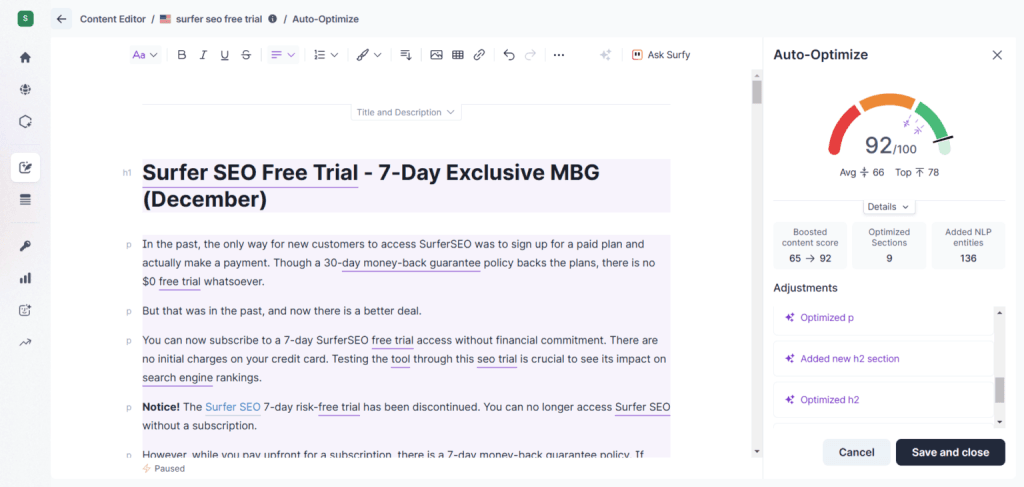
Rank Math’s AI features handle on-page optimization directly in WordPress, streamlining the workflow considerably.
For GEO optimization specifically, on-page structure matters in a different way than for traditional SEO:
5. Optimizing for Generative Engine Optimization (GEO)
This is the section that most “AI for SEO” guides from 2023 and 2024 are missing entirely. And it’s where a significant portion of your future search visibility will be determined.
What is GEO?
Generative Engine Optimization (GEO) is the practice of structuring your content so that AI-powered platforms, such as ChatGPT, Gemini, Perplexity, Google AI Overviews, and Microsoft Copilot, are more likely to cite it when answering questions in your niche.
The term was formalized by researchers at Princeton University, who found that targeted optimization techniques can boost a source’s visibility in AI-generated responses by up to 40%.
How AI platforms decide what to cite:
Different platforms have different preferences. Understanding this matters:
Key GEO optimization tactics:
6. Technical SEO Auditing and Site Health
Technical SEO — the stuff that happens beneath the content layer — remains as important as ever.
AI platforms rely on well-structured, fast-loading, crawlable websites to access and index your content. Where AI now adds value is in the auditing and analysis side.
Instead of manually reviewing technical issues across hundreds of pages, AI-powered SEO tools can scan your entire site, identify problems, and prioritize fixes by impact.
Tools like Semrush’s Site Audit, Ahrefs’ Site Explorer, SEO Powersuite’s Website Auditor, and SE Ranking’s Website Audit use AI to flag issues, including broken internal links, missing schema markup, slow Core Web Vitals, duplicate content, crawl errors, and missing metadata — then give you an ordered list of what to fix first.
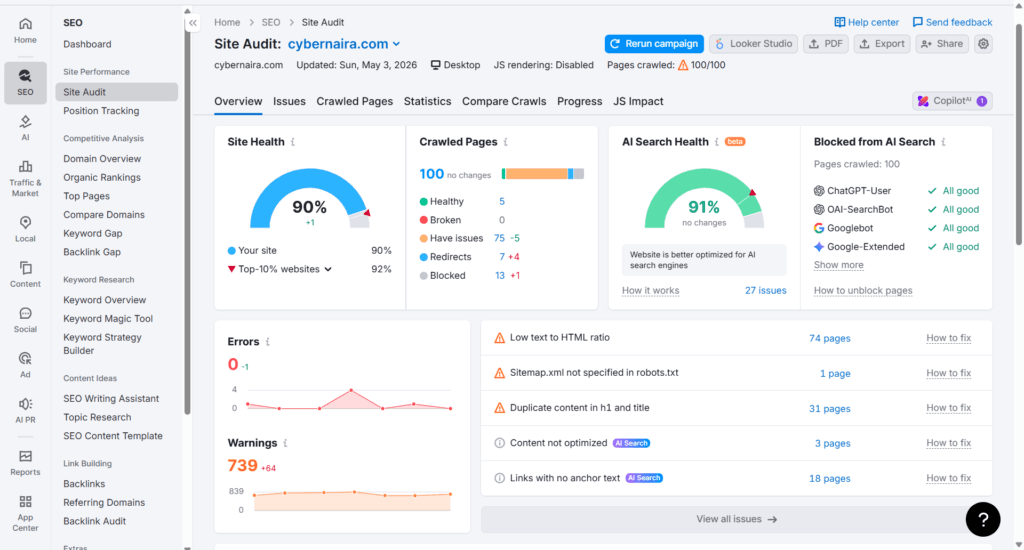
For AI search specifically, technical factors that matter for GEO include:
7. Competitive Analysis and Content Gap Identification
Understanding what your competitors are doing — and more importantly, what they’re not doing — is where AI analysis earns its keep.
AI-powered competitive tools can analyze your competitors’ content coverage, identify topics you’re missing, benchmark your keyword portfolio against theirs, and surface link-building opportunities you might not have spotted manually.
The content gap analysis is particularly valuable.
Feed a competitor’s URL into SE Ranking or SEO Powersuite, and you’ll get a list of keywords they’re ranking for that you aren’t.
Run that through an AI tool to identify which of those gaps align with your content strategy and audience intent, and you have a prioritized content backlog with real search demand behind it.
For GEO-specific competitive analysis: Start paying attention to which pages in your niche get cited in ChatGPT, Perplexity, and Google AI Overviews responses.
Ask AI platforms direct questions about your topic and note which sources appear in the answers.
Those are your real GEO competitors — and studying their content structure will tell you a lot about what’s working.
8. Data Analysis, Reporting, and SEO Insights
The final, often underutilized application of AI for SEO is in analytics and reporting.
AI can process traffic data, ranking fluctuations, user behavior patterns, and conversion data far faster than any manual review.
Tools like Google’s Search Console AI insights, Semrush’s AI recommendations, and standalone analytics tools like Metrics Watch or DashThis use AI to surface meaningful patterns from large datasets and recommend specific actions.
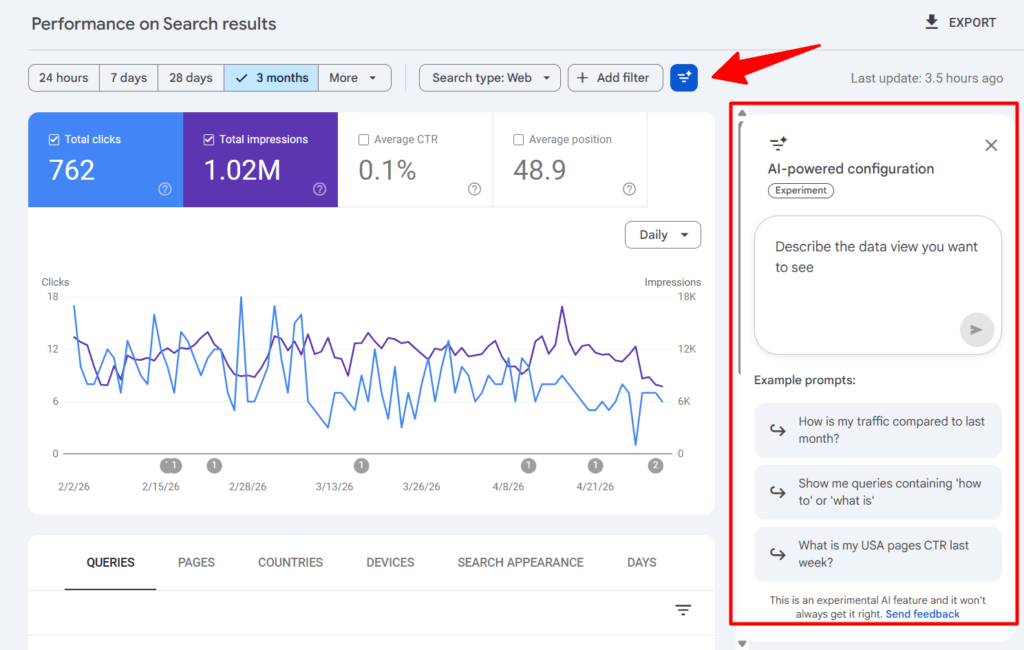
For content marketers, this means:
How to Structure Content for LLM Citation (Practical Checklist)
If you want AI search platforms to cite your content, here’s the structure that my research and real-world data consistently validate:
Opening (first 200 words):
Body:
End of article:
Schema markup:
What AI for SEO Does NOT Replace
AI accelerates your SEO workflow. It does not replace the things that actually build long-term authority:
Firsthand experience and original perspective.
AI platforms specifically favor content that demonstrates real-world expertise, not rephrased generic advice.
Your personal experience, original data, client case studies, and tested opinions are irreplaceable.
Strategic thinking.
AI tools give you data, recommendations, and outputs. The judgment about which opportunities to pursue, which audience to target, and how to position your content in a competitive market is entirely yours.
Consistent publishing and site maintenance.
No AI tool compensates for inconsistency. Sites that maintain regular publishing cadences, fresh content, and clean technical foundations outperform sites that chase shortcuts.
Relationship and reputation building.
External citations, brand mentions, and community presence are major GEO signals, and they’re built through genuine relationships and reputation, not AI-generated content alone.
FAQs
Final Thoughts
The SEO landscape today is more complex than it was two years ago, but it’s also more clearly defined.
Traditional SEO still matters. Page one rankings on Google remain valuable, and the fundamentals of keyword research, on-page optimization, and technical site health haven’t disappeared.
But they’re no longer sufficient on their own.
The sites that will dominate organic visibility over the next several years are those that learn to operate in both search environments simultaneously — optimizing for Google’s crawlers and structuring content to be cited by AI answer engines.
That means writing with more precision, citing your sources, demonstrating real expertise, structuring your content for extractability, and building your presence beyond your own website.
Use AI to work faster and smarter. But invest in the things AI can’t manufacture: genuine expertise, original perspective, and a consistent, authoritative presence in your niche.
That combination — AI efficiency plus human authority — is what powers SEO in 2026 and beyond.


Great read! The potential of AI in SEO is truly fascinating. The article perfectly outlines six practical ways to leverage AI to improve website visibility. Excited to incorporate these strategies and boost my site’s performance.
Hi, John,
Glad you find the information useful.
Hi Adeshokan,
It really is mind blogging how much can be done now with AI and SEO for your blog or website. If everyone does it, how does one reach the top? Seems the big guys always have more people to do more to accomplish that, no? However, working smarter than harder may just pay off here.
Hi, Lisa,
Sure, the big guys will always have more people and access to more advanced tool, largely due to more marketing budget in the bank. However, with consistency, smart thinking and use of AI tool, and strategic execution, smaller guys and business can compete and get their own share of the market and audience.