

For many years, Google has been the default search engine for SEO professionals, marketers, regular internet users, and everyday users. On average, Google performs over 8.55 billion searches daily.
It has controlled over 91% of the search market share for over two decades.
However, this significant Google search monopoly is about to change, as many alternative search engines are now available to users. From general search engines to chatbots, privacy-focused, and productive search engines, there are plenty of choices today for users.
To combat the emerging search engines, Google rolled out its AI overview feature, providing instant answers to informational search queries.
However, with the introduction of chatbot answer engines like OpenAI’s ChatGPT Search, Perplexity, and Bing Copilot, the battle for the best search engine has just begun.
Here are some search engines better than Google that you can try. Some options on this list are mainstream search engines, popular in certain continents/countries, such as Bing, Baidu, and Yandex.
Review the list and try the one that aligns with your projects.
Top MainStream Search Engines
These mainstream search engines have managed to capture a significant share of the search market from Google. They provide relevant results and advanced search options, making them reliable alternatives to Google search.
1. Bing

Microsoft Bing is a US-based mainstream search engine and the second-most popular search engine after Google. It has a global market share of 8.88% as of July 2025.
It is the most robust Google alternative in the US, with a 7.23% market share. In the UK, Bing holds 9.61% of the search engine user share.
Bing is easy to use and provides relevant results, just like Google. For web admins, optimizing for Bing can be a great additional source of target traffic.
However, since the rise of AI technology, Bing has incorporated AI capabilities into its search features. You can search on Bing using its AI Copilot, making it a versatile AI-powered search engine.
To use Bing Copilot’s search capability, click the “COPILOT” link on the search menu to open a new browser tab, where you can interact with its AI-based search engine conversationally.
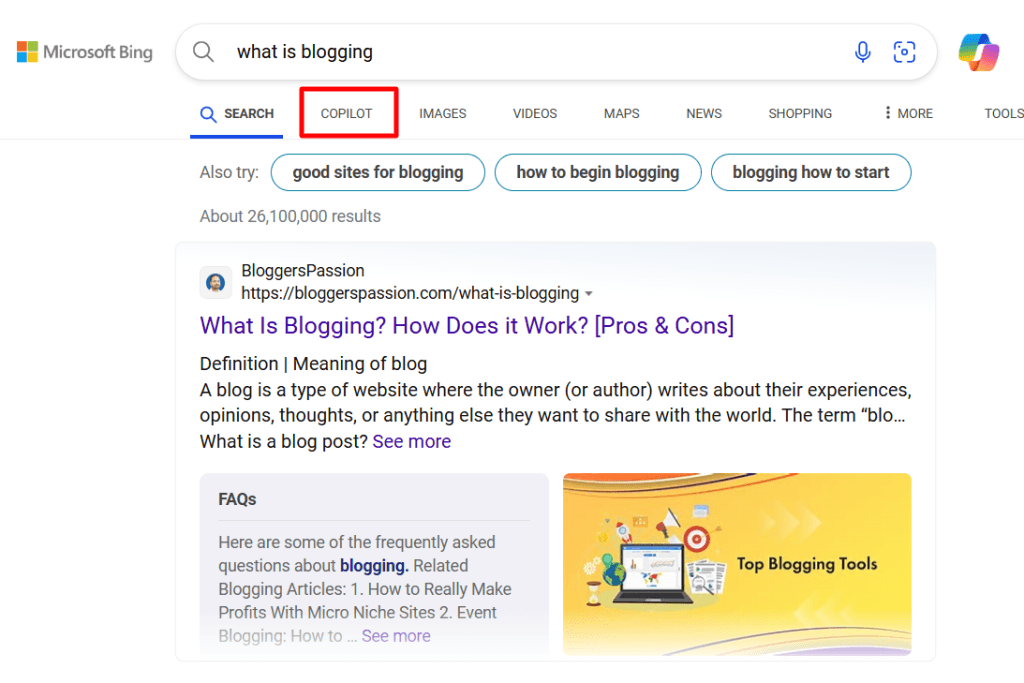
The good part is that optimizing for Bing is no different from optimizing for Google. You’re simultaneously optimizing for both search engines when you do the right thing.
Bing offers important SERP features such as the knowledge graph, currency conversion, auto-complete, rich snippets, related searches, People also Ask, and translation, among others.
If your country is on the selected list, you can earn points or rewards from the Bing browse and reward program.
2. Yahoo Search
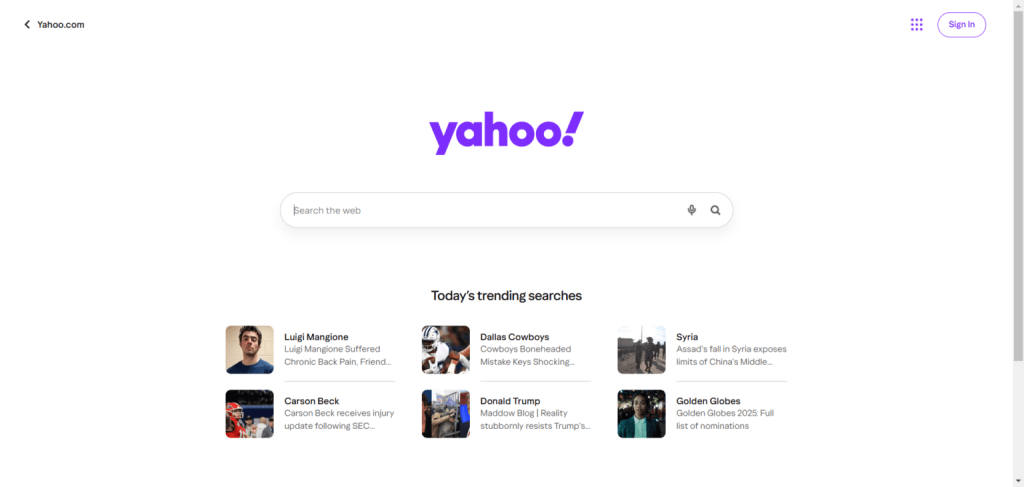
Yahoo, one of the earliest search engines before Google, has a global desktop market share of 2.55%. It is the third-largest search engine worldwide.
The Yahoo search engine is a good candidate if you’re interested in topics like finance, sports, and politics.
The interface is more than just a search engine; it provides an all-around experience for news, entertainment, sports, politics, and email.
You can log in to Yahoo Mail from its web portal, check the weather report, see the scoreboard for current football matches, watch the daily horoscope, etc.
The SERP result also features People Also Ask and related search sections. Overall, the Yahoo search engine offers many visual search options for trending topics.
3. Baidu
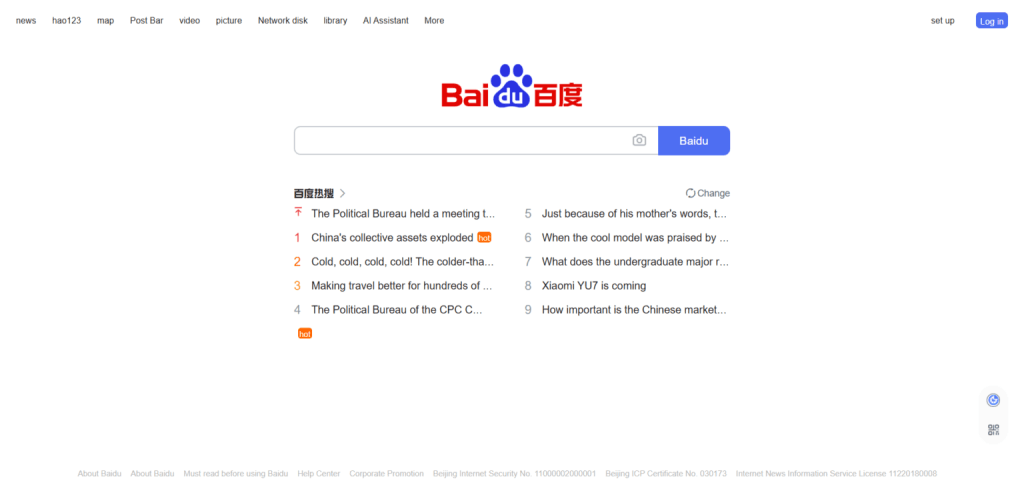
Like Google, Baidu is also monetized through ads, and it’s the dominant search engine in China, with a market share of over 70%.
Baidu cannot show results for some images and websites, especially pro-democracy sites.
However, Baidu might be a good choice if your audience is mainly Mandarin-speaking or if you need to use alternative search engines outside English.
As China’s major search engine, it is a smart move to optimize for Baidu if a large portion of your audience is from China.
4. Yandex
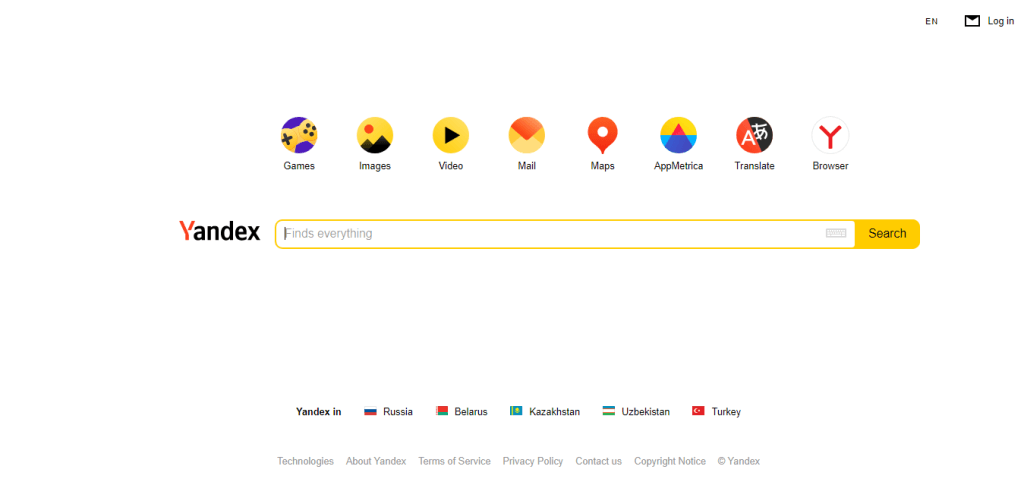
Yandex is a Russian search engine and one of the best alternatives to Google Search.
It is a significant search engine in Russia, holding a 47.15% share as of July 2025, according to StatCounter.
The search results are not too far off what you get from searching on Google.
You can use the Yandex search operator to refine your desired search result.
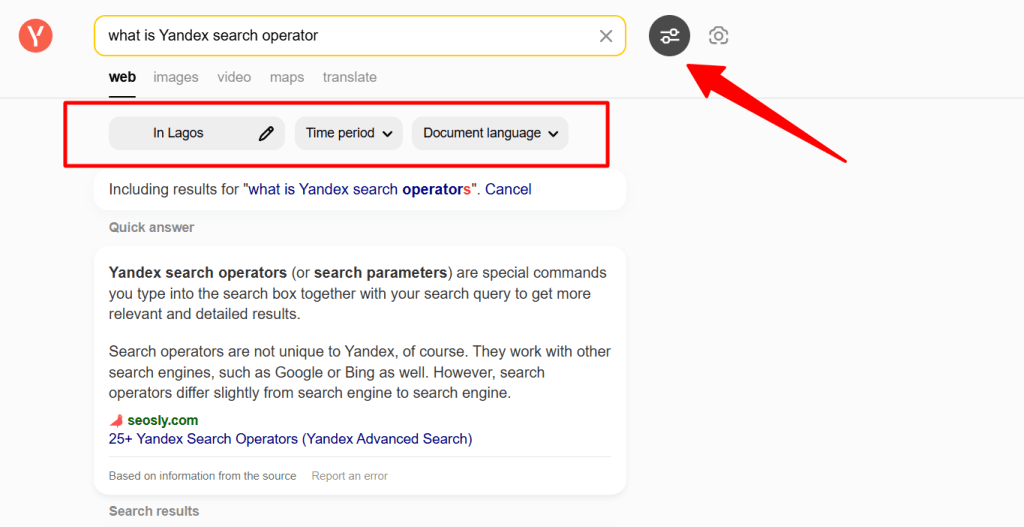
The search engine offers features such as mobile apps, cloud storage, and translation services.
The feature allows you to translate into Russian and listen to native speakers and translators.
AI-Based Search Engine
5. Perplexity AI
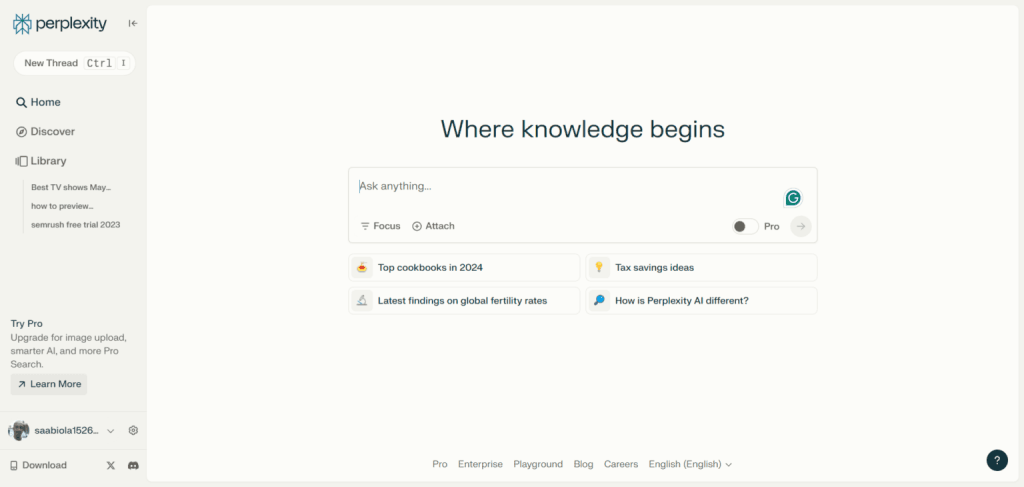
Unlike traditional search engines, Perplexity is an AI-powered answer engine algorithm. It uses natural language processing (NLP) to better understand your query and deliver conversational answers.
It cites its sources to provide more in-depth and comprehensive information if you want to dig deeper into the results.
It is more of a conversational AI answer engine that allows you to ask follow-up questions. Instead of the traditional list of blue links SERP results, Perplexity gives you an AI overview answer to your query.
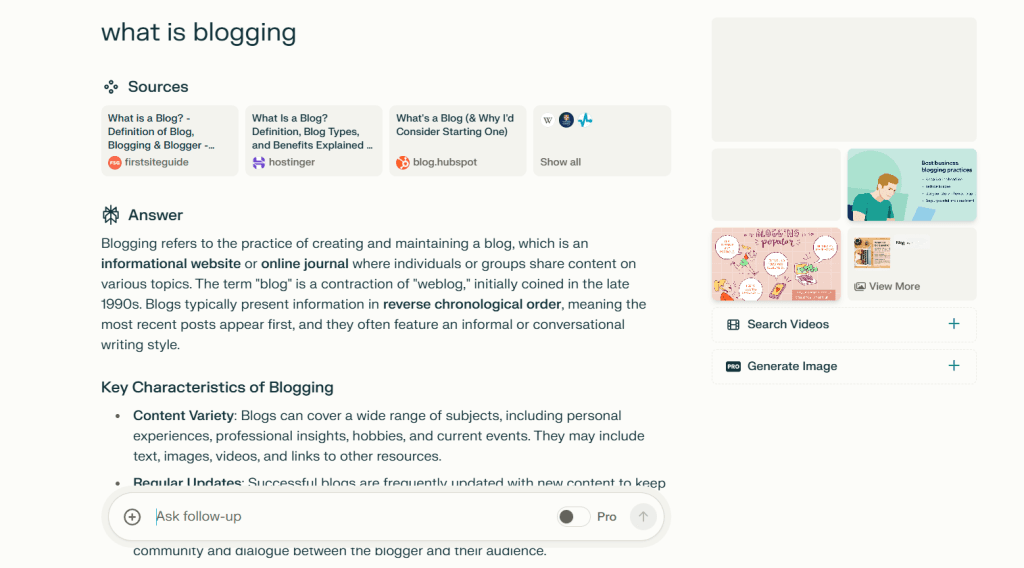
However, unlike Google and other notable search engines, Perplexity is only partially free. There are free and Pro versions of the AI search engine.
The free version offers unlimited daily quick searches, access to the standard Perplexity AI model, 5 Pro searches per day, and the ability to create a profile and personalize your search experience.
The Pro model gives you access to 600 Pro searches daily and the option to choose your preferred AI model (ChatGPT-4o, Sonar Large (LLaMa 3), Claude-3, and more.
The Pro model also allows users to upload and analyze files and visualize answers using DALL-E, AI playground, SDXl, etc. Developers can use the Perplexity APIs for custom development and use cases.
If you prefer an AI answer engine in a conversational style that lets you ask follow-up questions, analyze visual content and citations, and write code, try Perplexity AI.
6. SearchGPT
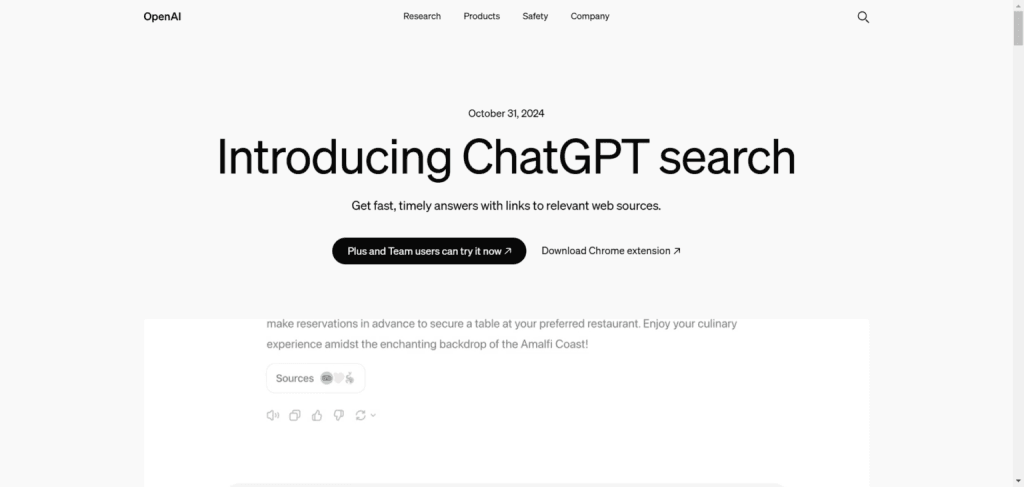
In late 2024, OpenAI released its early version of ChatGPT Search, the prototype of SearchGPT. It functions as a live web search engine and chatbot, allowing users to add follow-up questions or prompts.
Unlike the main ChatGPT, Search GPT gives citations for its sources, making it an ideal traffic source for marketers and website owners.
However, as of writing, Search GPT is not publicly available; it’s only accessible to users on Plus, Team, and those on the waitlist.
One cool feature of Search GPT is that publishers can choose to change how their content or data appears in the results. This gives you some level of control over how ChatGPT accesses the server content from your web asset.
Though the word about Search GPT is very limited for now, I will update this post as more information and usage stats become available.
If you’re on the Plus or Team subscription and have used Search GPT, we love to hear about your experience in the comment box.
Best Privacy-Focused Alternative Search Engines
The search engines in this section are privacy-focused and unbiased, and they don’t track user activity as Google and Bing do.
In a rare case where first-party cookies are set by any of these conservative search engines, the terms and conditions are provided for review and approval or rejection.
With that said, let’s explore the list…
7. Brave Search

Brave Search is an independent search engine that pulls results (up to 92%) from its database.
It is a privacy-preserving search engine that doesn’t track users’ clicks or search terms, and it doesn’t store search history.
It primarily focuses on user privacy, an ad-free experience, encryption, no user profiling, and personalized or targeted ads. This makes Brave one of the best conservative search engines for a complete privacy search world.
You can perform searches on the Brave distraction-free. It also has the People Also Ask section and knowledge graph panel, which you can find elsewhere.
Find elsewhere is a Brave feature that lets you run the search from another search engine.
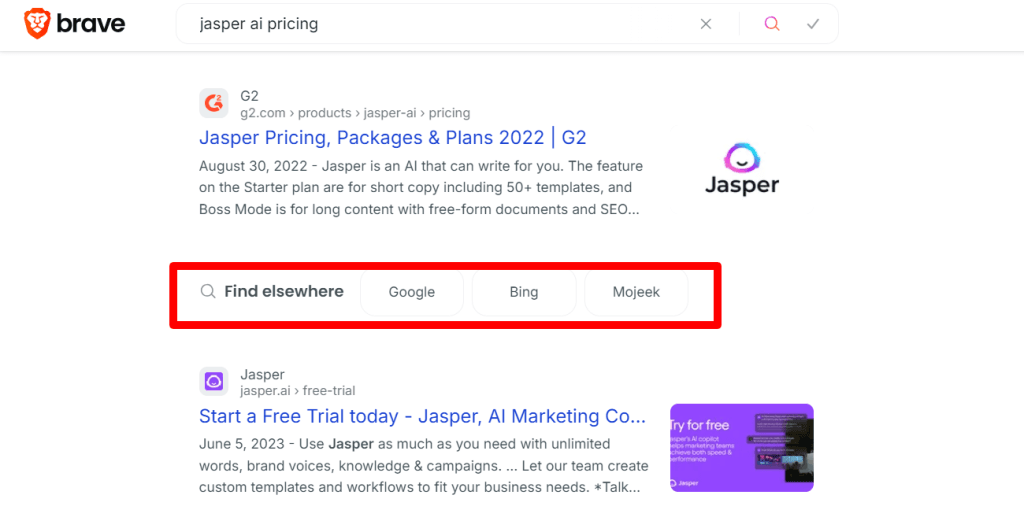
There are a few settings you might want to toggle off or on in the Brave Search engine.
Anonymous Local Search
If you need 100% privacy, you can toggle the Anonymous local Search off. This will allow you to search without revealing your IP or other helpful information.
Brave Search will use your device’s IP address to perform more relevant searches, without storing the information, if enabled.
Discussion
This new search feature in Brave now includes results from communities such as Reddit.
If you don’t want your search results to come from online communities, you need to toggle it off.
Anonymous Usage Metrics
If you leave this on, you consent to Brave Search using specific user, query, and device information to learn more about the usage and performance of its products.
Brave Search states that this information is collected anonymously and never tied to you or your device, but it is still good to know.
If Brave Search is your default browser search engine, you can set the Google fallback Mixing option.
If Brave Search can’t pull the result, your browser will go back to Google anonymously and remove the result from its index.
8. DuckDuckGo
DuckDuckGo is leading the campaign for the entire private search engine world, and it’s the direct opposite of Google. In fact, for many users, DuckDuckGo is associated with anonymous searching.
Though DuckDuckGo does make money from its search engine, it does not collect or use users’ profiles to display targeted ads.
Ads are displayed on its search engine based on search keywords. It makes sense that companies don’t need to track users’ profiles or data to make money through ads.
DuckDuckGo is one of the best private search engines and a Google alternative. This is the reason millions of people use search engines.
If you’re looking for better online privacy, where your activities are not tracked, and your IP is not tied to your browsing history, DuckDuckGo is the conservative search engine of choice.
I ran a short test to see how relevant Google’s search results are. The results were not too far off.
Search result for “What is a car insurance premium” in Google…

And search results for the same query in DuckDuckGo…
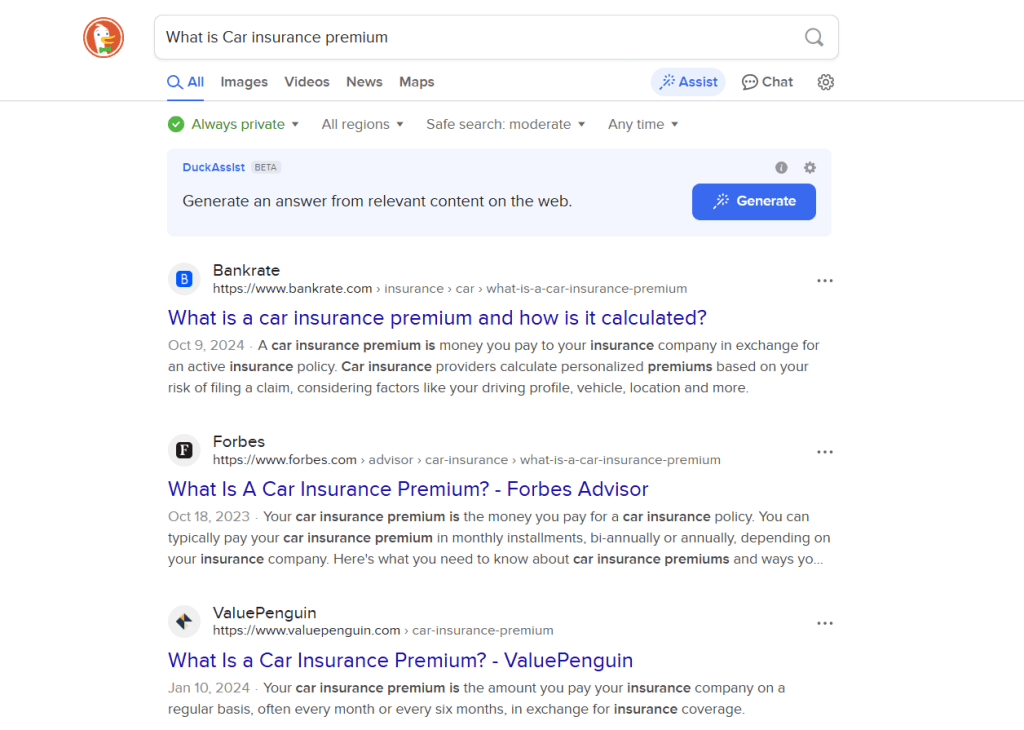
The top 10 results were almost identical, but a few web pages lost their Google position in DuckDuckGo. Overall, the result was about 90% similar.
9. Ecosia
Ecosia is one search engine worth discussing – its impact on tackling climate change is commendable. For every 45 searches on its search engine, Ecosia commits to planting a tree.
Ecosia is not a private search engine; it uses cookies and collects anonymous user data to improve search results and show personalized results.
You can turn this setting off, but if you leave it on, Ecosia collects and shares a unique, anonymous identifier, such as IP address and search history, with its search partner, Bing.
It claims that this information is not permanently stored and will be automatically deleted by Bing after 18 months, in accordance with its policy.
If this does not bother you, Ecosia is an excellent alternative search engine to Google.
I searched Ecosia for the exact keywords to see what it pulled off; again, the top ten results were not too far off Google.

10. Start page
Startpage pulls results from third-party search engines such as Google, so, in essence, Startpage is your favorite Google without tracking.
It runs contextual ads on its SERPs, but claims these ads are not based on your search history or online activity.
From my test, ads are displayed on the Startpage based on the keyword you searched.
For example, I searched the exact keywords “what is car insurance premium,” and three ads were above the organic results.

Then, I did another search for web hosting; here is the result with the ads above.
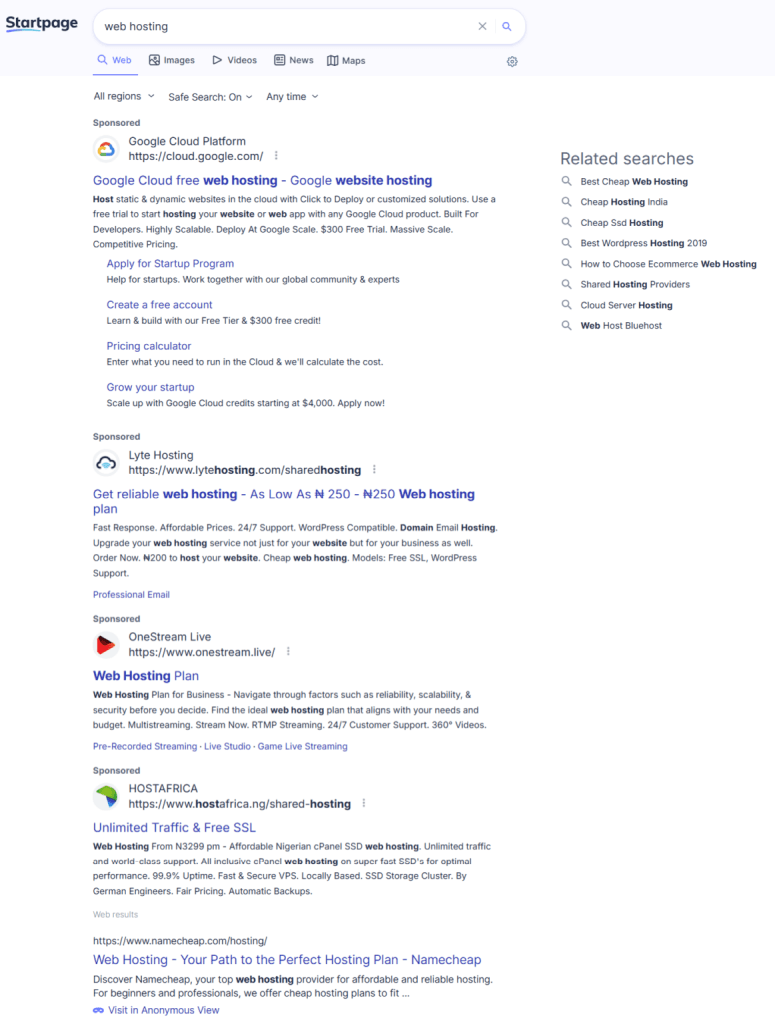
As you can see, these display ads are based on the search keywords.
According to the search engine (Startpage), users’ identifying information is stripped from the first server layer before their queries are sent to its partner’s sites.
So, users’ data, such as IP addresses, search history, and location, is removed and never stored in their internal databases.
It then returns an unprofiled, non-personalized search result based solely on your search queries.
Based on these factors, Startpage is one of the best alternative search engines
if you don’t want companies like Google and Facebook following you with targeted ads.
But you still want the best search results from Google.
11. SwissCows

Suppose you want to keep family, friends, and children away from pornography and violent content online. In that case, Swisscows is one of the best search engines for internet privacy, family use, and child-safe content.
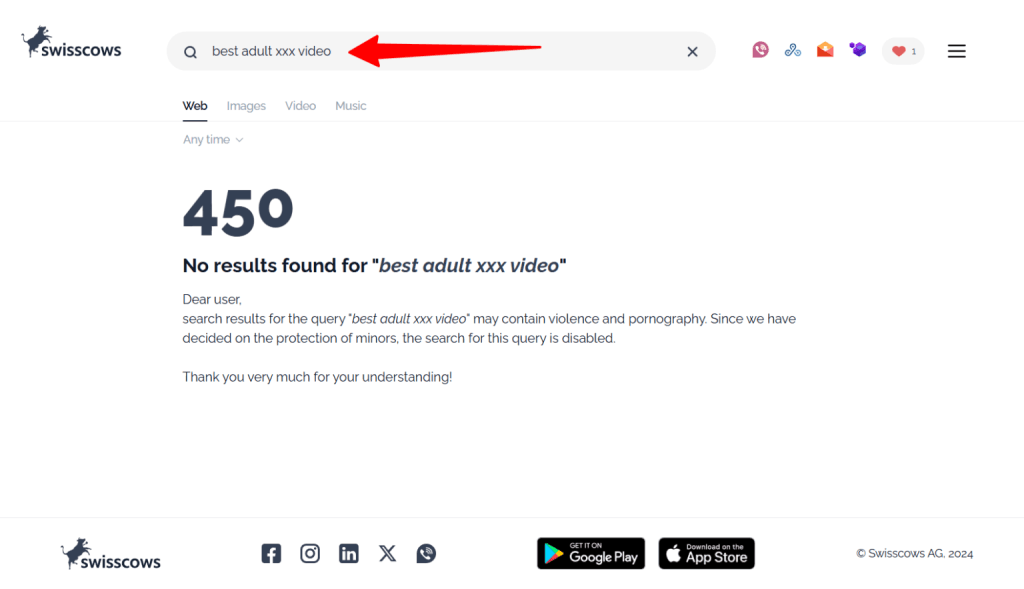
Violent and pornographic content is automatically disabled on the Swisscows search engine.
It is not a matter of choice; it is a law enforced by the state.
To be sure, I tried a couple of search terms related to porn, and here is the result.
SwissCows does not use tracking cookies to track your search activity.
Using its search engines means you’re a visitor without any profile, and your activities remain anonymous.
However, you can search by location and filter results for the last 24 hours, week, month, or year.
However, Swiss cows use their own index for German queries, while other-language search queries are pulled from Bing. So, you should expect similar results to those you get from Bing.
Bing also powered the ads displayed on the SwissCows search engine.
This way, search engines (such as SwissCows) earn revenue by maintaining their services. Ads are served based on keywords in your search terms.
12. You.com
Note:
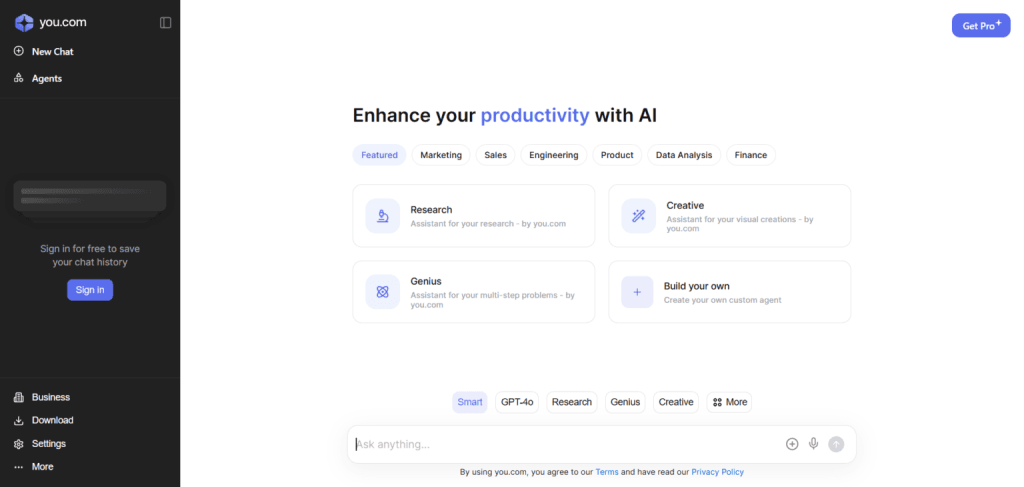
You.com has transitioned from a traditional search engine to a more AI-powered productivity assistant. It uses several AI models, such as GPT-4 and Claude, to let users interact with its platform.
You.com is a private search engine that offers a user-friendly and customizable search experience.
You can rearrange the appearance of your search based on your preferences. The search result is on one side of the page.
It also offered the People Also Ask and related search section.
If you sign up for an account, you can further customize your apps, which are the sources of information.
You can perform a location-based search and filter by hour, week, month, and year.
13. Qwant
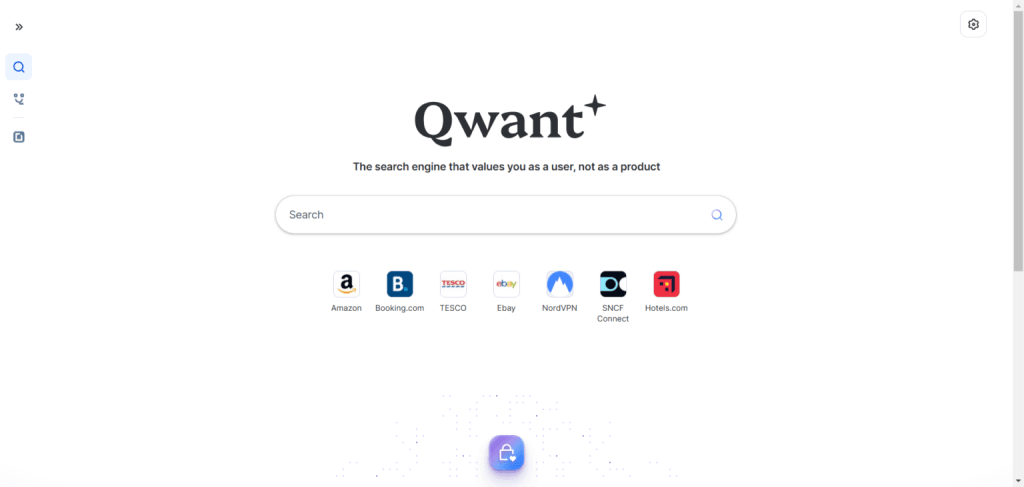
Qwant is another privacy-oriented search engine; it is designed to keep your search activity cookie-free.
This search engine does not use cookies on its website; therefore, no information about you or your device is stored. It emphasizes user privacy over its data collection and does not track search history.
But, if you modify your search settings on Qwant, “proprietary” cookies will be set on your device to perform the following:
Adapt the Qwant website to remember device preferences such as language, themes, and search location.
Save your search preferences for the next session.
Stored information about form filling, search filters, settings, trend activation on the home, etc.
Remember your choices for specific actions on the website – e.g., closing a pop-up, reading messages, etc.
These cookies remain on your devices for up to 6 months unless you delete them manually. And they are only active when you use the Qwant website.
However, Qwant does use IP addresses for fraud detection, and you can perform a location-based search by selecting your target country from the SERP options.
Bing and the Qwant search engine crawler power its search results.
Ad Revenue Sharing Search Engine
14. Yep
Yep is a search engine focusing on user privacy and a revenue-sharing business model for content creators. It was developed by Ahrefs, a well-known SEO software company with years of experience crawling and collecting data on the Internet.
The Yep search engine prioritizes user privacy by collecting minimal data and not building user profiles for targeted advertising. The aim is to provide a more anonymous search experience.
The ad revenue-sharing model is still in the pipeline, but Yep promises to give 90% of its ad revenue to content creators when launched—the people who create the content for its search engine.
After using Yep for a couple of searches and comparing the results with Google and other search engines like Bing and Yahoo, I think Yep is still in its early stages and needs more time to grow.
For example, I searched for phrases that should trigger video results, but Yep is not currently serving video content. Here is one of those queries: “How to make shawarma.
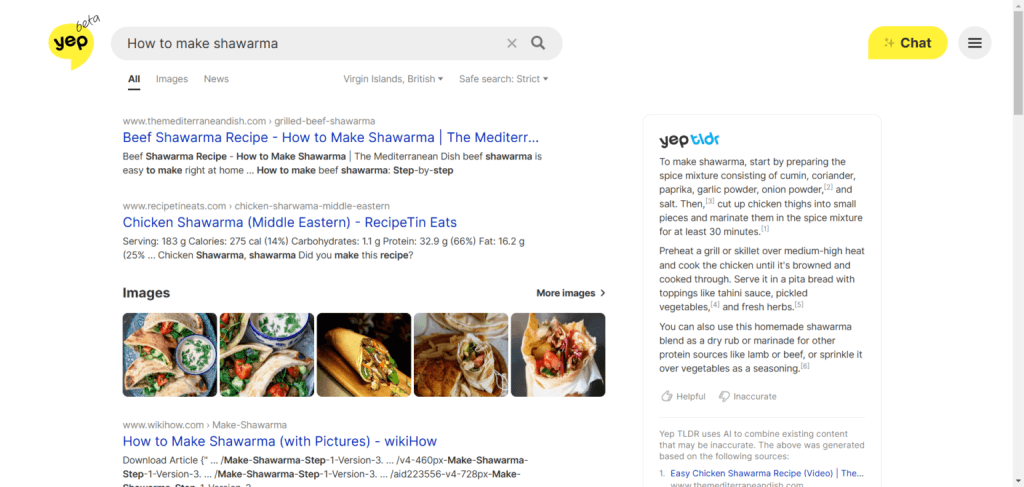
The top result on Google for this query is a video, which is most relevant and expected for such a question.

However, Yep lets you continue your search on Google, Bing, DuckDuckGo, and Mojeek if you think the results are irrelevant to your query.

FAQ – Best Search Engine Alternatives to Google
What is the best alternative search engine to Google?
The best Google alternatives are Yahoo, Bing, and Yandex. Bing is more suitable if you are in the English market. It is the second-most-used search engine globally. If you want to download music, movies, and torrents, then 1DM Browser is a powerful alternative to Google.
It allows users to easily search for media on the web while also providing features such as advanced filtering, fast downloads, and automated download scheduling.
Is There a Better Search Engine Than Google?
Many search engines besides Google can be used for Search. If privacy doesn’t bother you, Google is the best search engine. But if data privacy is important to you, search engines like Swisscows, DuckDuckGo, and Brave are the best options.
Does Google own DuckDuckGo?
Google or any other search engine does not own DuckDuckGo. It is an independent search engine that holds its search index. Gabriel Weinberg founded DuckDuckGo and is its CEO.
He is an American businessman and entrepreneur who takes online data privacy seriously and aims to help his users achieve unbiased search engine results.
Which Search Engine is Best For Privacy?
No single search engine is best for privacy, but some prioritize user privacy and data protection more than others. DuckDuckGo is the most popular search engine, known for not tracking or storing users’ personal information. Other privacy-focused search engines include StartPage, Qwant, and Brave.
What Search Engine Does Not Spy on You?
Search engines that do not track your searches or web activity history or store personally identifiable data are best for privacy and don’t spy on you. DuckDuckGo is built to work this way: it doesn’t spy on user activity or store personal data. However, some level of tracking and storing personal or device data might still occur even while you use DuckDuckGO; your ISP and the website you visit might still track you, and cookies might be used to store personal data.
Can I be Tracked if I Use DuckDuckGo?
You can still be tracked if you’re browsing the internet using DuckDuckGo. By itself, DuckDuckGo doesn’t track you, but the websites you visit and the links you click on a webpage do. Your internet service provider might still track and monitor your browsing activities and history. Many websites partner with ad technology companies like Google, which use tracking and analytics tools to track user behavior and browsing history. Consider browsing in incognito or private modes to minimize tracking by the websites you visit.
Conclusion…
Undoubtedly, Google Search is the largest and most widely used general search engine. It is the most powerful and advanced search algorithm today.
So, it makes sense to think that Google’s dominance in Search is not a coincidence.
However, all its unique features and benefits come at a cost – privacy concerns for users, retargeted advertisements, data sharing with third parties, etc.
If alternative search engines will protect your online data and give you the quality of search results you’d want, try some of the unbiased and privacy-focused search engines on the list.


Crazy how many search engines there are!
I always use bing if google doesn’t give me the results I’m after or is supressing their results (happens a lot!)
Hi, Lewis,
There are lots of options out there besides Google. Bing is my second choice, but recently, I’m starting to use Brave search more often. Thanks for your comment.
I love using Brave, you get crypto rewards for using it as well. I didn’t know there were so many different search engines. I wonder if one will one day take over Google? Thanks for sharing.
Hi Lisa,
Brave is now my second favorite to Google. I love the simplicity and non-personalized search result. And you could also search on Google through Brave, that’s one thing I love about the search engine. Making it easy to search on Google in ghost mode.
I didn’t take notice of the crypto reward, but I do see the ads but never pay attention to it. Thanks for mentioning it, I will go check it out now.
Thanks, Shamsudeen. I didn’t know you could search on Google through Brave, but why would you?
Brave said it makes your search data anonymous on Google.
Now that is interesting, thank you Shamsudeen.
I remember using Altavista at the end of the 90s, but it was deleted in 2013 I believe.
From the list above I only use duckduckgo sometimes, mostly out of curiosity to compare results.
Damn! I didn’t know we have so many search engine options available. I was solely relying on google to get answers of all my queries. Surely going to give a shot to duck duck go.
Everyone thinks so initially until someone shows a list like this. Thanks for reading through.
Hi Shamsudeen! It’s very impressive to me that besides Google some search Engines are taking their way. Thank you very much for this informative article.
Hi, Nargis,
Glad you learn about other search engines besides Google. Let me know your favorite from the list.
Hello, Shamsudeen,
I am also using Brave as it comes with excellent privacy features. I also use duckduckgo search Engine after the Google. Thanks for sharing this list of search Engines.
Regards,
Vishwajeet Kumar
Hi, Viswajeet,
Brave and DuckDuckgo are anow part of my daily marketing tool. I use them for research, especially when comparing ranking across several locations, search engines, and platforms. Thanks for reading through.
Damn! I didn’t know we had so many search engine options available. I was solely relying on Google to get answers to all my queries. Surely going to give a shot to duck duck go.
Hi, Manish,
You’re not alone, I once thought the same. Glad you could learn about other search engines from this post.