
SEO PowerSuite is a desktop-based all-in-one SEO toolkit that covers rank tracking, site auditing, backlink analysis, and link building, all under a single license.
I have been using it on my sites for years, and the honest summary is this: it is one of the most cost-effective SEO tools available, but it comes with real trade-offs you need to understand before buying.
The suite has grown since I first picked it up. Prices have gone up, a new Max plan has been added, and there is now a standalone AI tool called RankDots sitting alongside the traditional four-app bundle.
None of the competing reviews I have seen accurately reflects the current pricing or feature set, so this SEO Powersuite review is based entirely on my firsthand experience and the most recent product data.
Bottom line upfront:
If you run one or two sites, do your own SEO, and want to avoid paying $100+ per month to a SaaS platform, SEO PowerSuite is hard to beat. If you need real-time cloud access, team collaboration, or the deepest keyword database on the market, you’ll be frustrated.
SEO Powersuite

Read our in-depth SEO PowerSuite review to learn how it can optimize your website rankings and improve your SEO strategy. Pros, cons, pricing, and features.
Price: 29.10
Price Currency: USD
Operating System: Windows, macOS, Linux
Application Category: BusinessApplication
4.2
What is SEO Powersuite?
SEO PowerSuite is a suite of four desktop applications — Rank Tracker, Website Auditor, SEO SpyGlass, and LinkAssistant. Developed by Link-Assistant.com, a company founded in Belarus in 2004.
Unlike Ahrefs, Semrush, or SE Ranking, it is not cloud-based. You download and install each tool on your Windows, macOS, or Linux machine and run everything locally.
That distinction matters more than it sounds. It affects speed, access, collaboration, and cost.
The upside is that you pay a flat annual fee instead of a recurring monthly subscription. The downside is that the software runs on your hardware, not theirs.
SEO Powersuite is available in nine languages: English, Spanish, French, Dutch, German, Polish, Russian, Japanese, and Portuguese. A genuine advantage for non-English-speaking SEO professionals who want a tool in their native language.
Here is what each of the four tools does:
SEO PowerSuite also recently launched RankDots, a separate AI-powered tool for topic clustering and content generation. It is not part of the core suite but is worth knowing about. More on that later.
The Desktop Experience: What No One Tells You
Most reviews skip this part, but it is one of the first things you will notice. SEO PowerSuite is a heavy install.
The Windows version alone is around 600MB, and that is before you have run a single project.
Each of the four tools is a separate application. You do not open one dashboard and navigate tabs; instead, you open each application you want to use.
When you first launch any of the tools and start a project, expect to wait. In my experience, generating the initial report after opening the app takes around 1 to 3 minutes, sometimes longer.
Website Auditor is the slowest of the four. A full site crawl on a medium-sized site can run for several minutes before you start seeing data.
This happens because the software uses your own computer’s processing power and network connection speed rather than a cloud server.
On a decent machine (I run it on a Dell Inspiron with a 12th Gen i7 and 16GB RAM), it is manageable. On older or lower-spec hardware, LinkAssistant, in particular, can make your fans spin and your machine run warm.
None of this makes SEO PowerSuite bad. It just means you need to set expectations.
Cloud tools like Semrush or SE Ranking return data almost instantly because they process data remotely. SEO PowerSuite does it locally, which is why you save money on the subscription but invest more in wait time.
If you are evaluating SEO PowerSuite vs. a cloud-based competitor, factor in the time required to wait for reports. For solo SEOs doing deep, focused SEO sessions, this is not a dealbreaker. For agencies running dozens of reports daily, it may be.
1. Website Auditor
Website Auditor is the technical SEO and on-page analysis tool in the suite. It crawls your site the way search engine bots do.
You can choose between the SEO Powersuite-bot, Google, Google Mobile, News, Image, and Video bot, Bingbot, or Yandexbot. There is an option to set custom robots.txt instructions for the audit. You can select to crawl the entire site or a list of URLs/folders.
Several other settings exist:
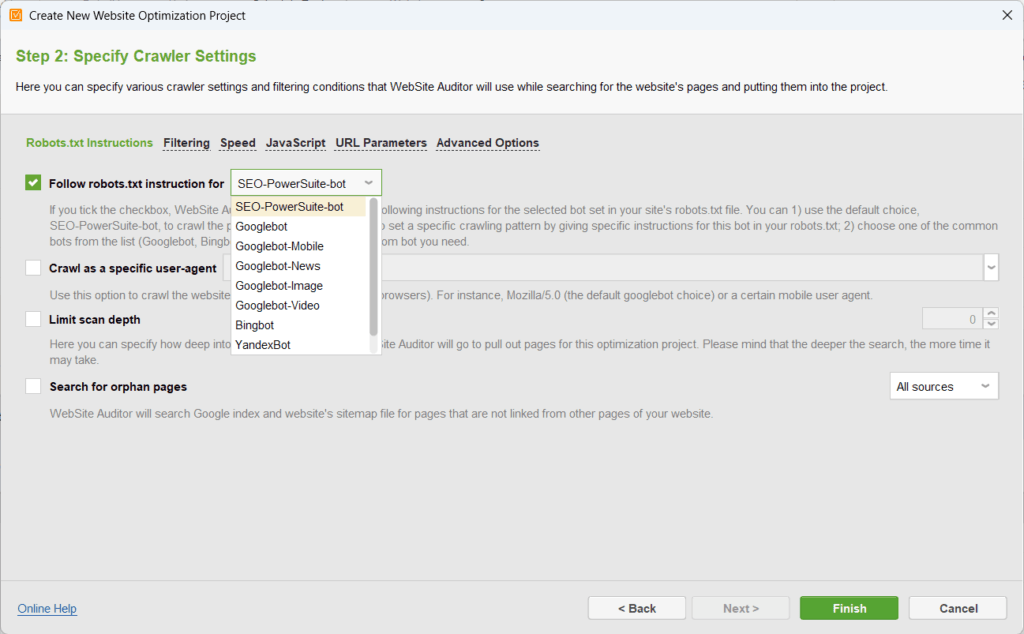
Click finish to begin the audit, and Website Auditor will surface every issue it finds across indexing, redirects, page speed, content, internal links, and user experience.
What I appreciate most about it is the how-to-fix layer. Most audit tools dump a list of errors and leave you to figure out what to do.
Website Auditor groups issues by priority and provides step-by-step instructions for each. That makes it genuinely useful for site owners who are not technical SEO specialists.
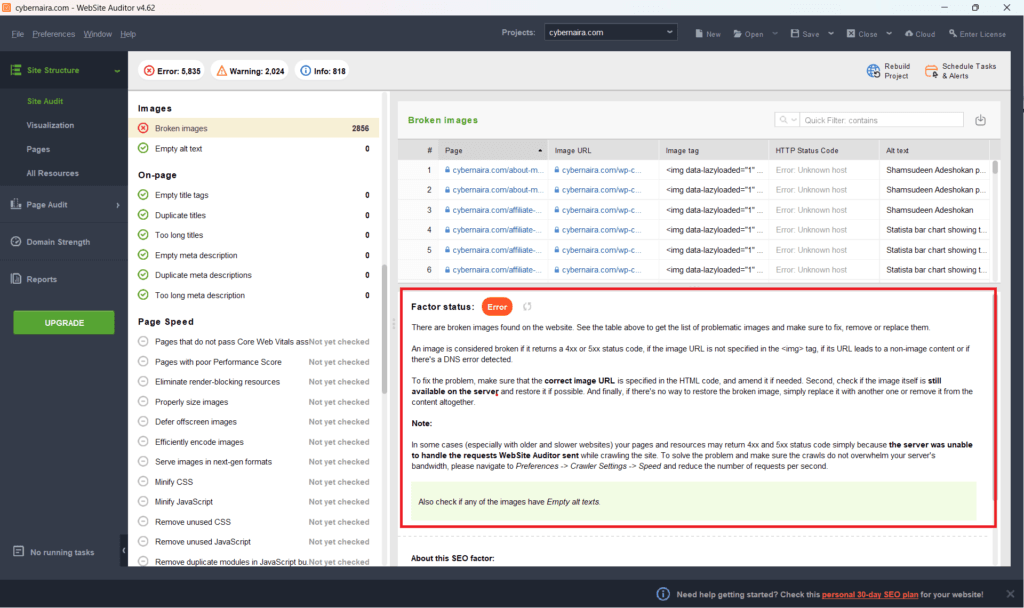
Technical Audit Coverage
The audit checks for a wide range of issues, including:
The Core Web Vitals module deserves a specific mention. Connect your PageSpeed API key, and Website Auditor runs a bulk assessment of your entire site, flagging every URL that fails the performance threshold.
Getting that at a glance, rather than checking pages one by one in PageSpeed Insights, is a real time-saver.
Site Structure Visualization
One of my favorite features is the internal link visualization map. It renders your entire site’s link structure as a visual graph, showing which pages are well-connected and which are isolated.
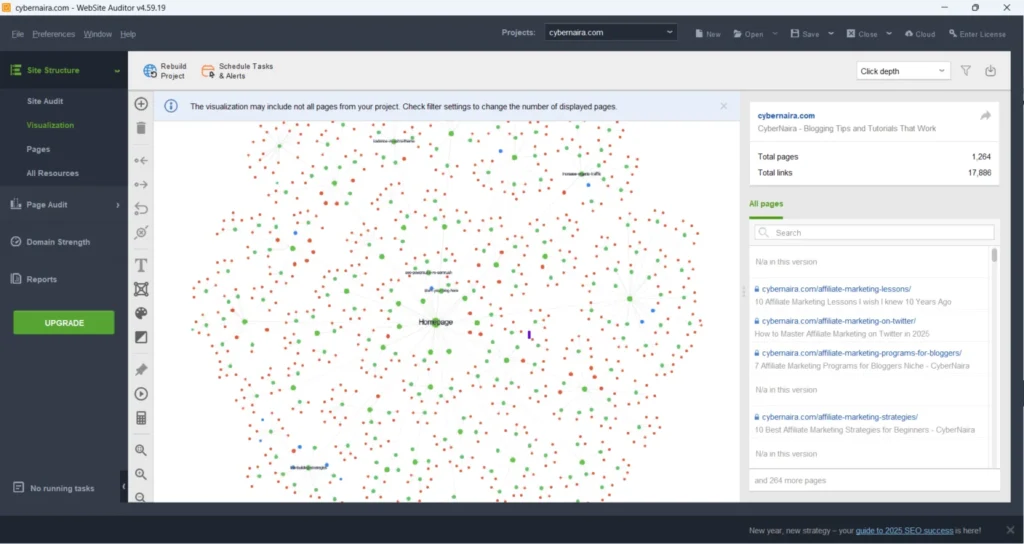
You can spot orphan pages, identify pages receiving too much or too little internal link equity, and plan improvements without digging through spreadsheets.
Content Editor
Website Auditor doubles as a content optimization tool. The built-in content editor analyzes the top 10 ranking pages for your target keyword and gives you NLP-based recommendations — related terms, FAQs, content length, keyword density — as you write or edit.
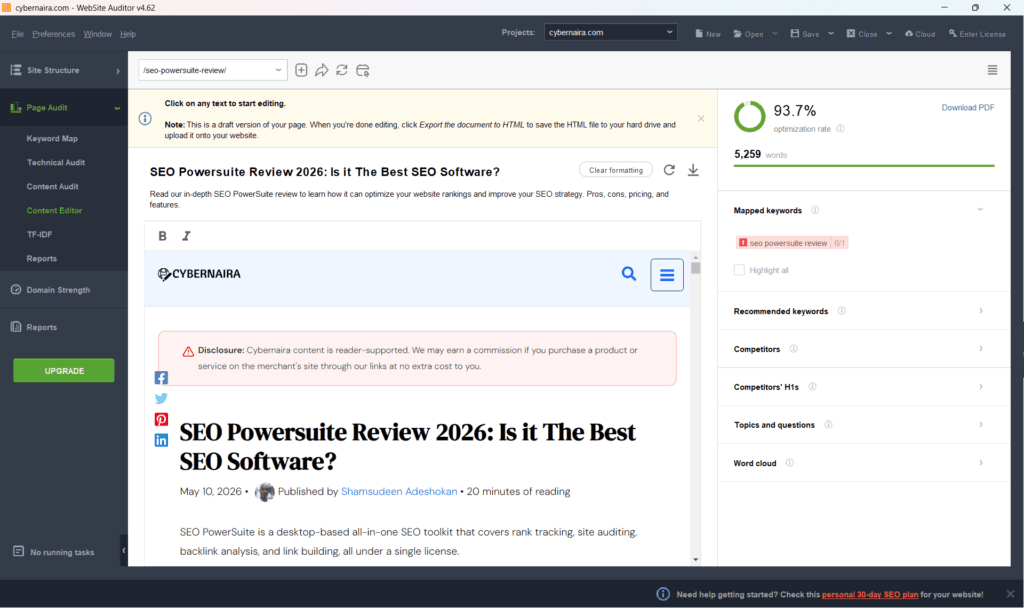
It is similar in concept to Surfer SEO or Frase, though less sophisticated than either tool.
You can also generate and edit your robots.txt file and XML sitemap directly within the app and upload changes via FTP without leaving the software.
What I Like About Website Auditor
What I Don’t Like About Website Auditor
2. Rank Tracker
Rank Tracker is where SEO PowerSuite is strongest and where most users spend the most time.
The core promise, which is unlimited keyword tracking across any number of projects, actually holds up. The competitor analysis layer makes it more useful than a simple position-checking tool.
Rank Tracking
You can track keyword positions on desktop and mobile across 597+ search engines, including Google, Bing, Yahoo, YouTube, and local variants for nearly any country or city.
There are no keyword tracking limits on paid plans. A significant advantage over tools like Ahrefs Lite (750 tracked keywords) or even Semrush’s entry plan.
Rank Tracker also tracks Google AI Overviews, a genuinely new and relevant feature in 2026 and beyond.
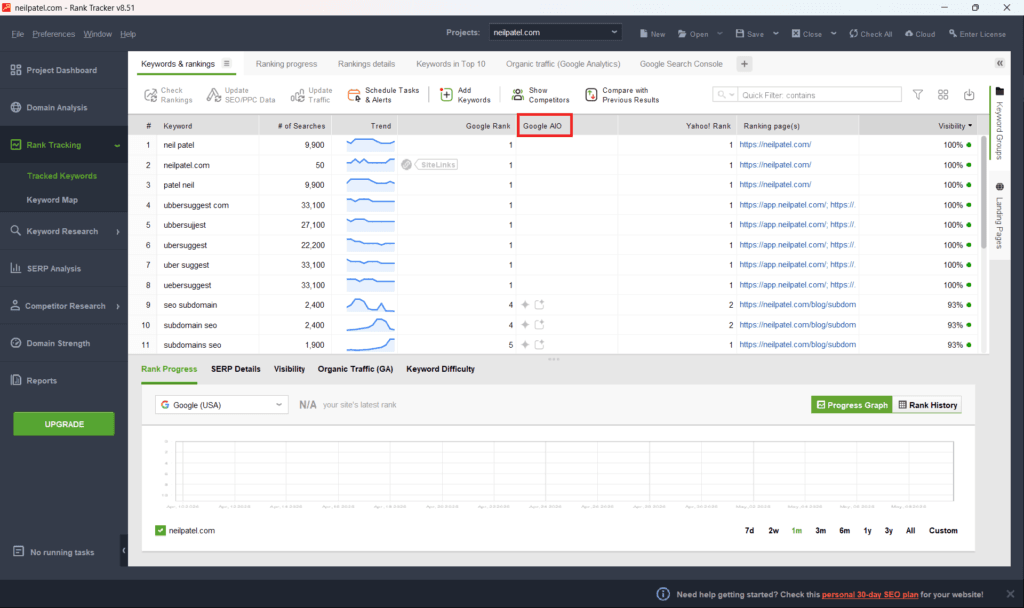
With AI Overviews now appearing for a growing share of queries, being able to monitor whether your content appears in them (or is displaced by them) is valuable intelligence that most standalone tracking tools are still catching up on.
You can schedule automated rank checks daily, weekly, or at custom intervals, and set up email alerts when keyword positions change beyond a threshold you define.
Combined with auto-publishing reports, this handles the monitoring work without you having to log in manually.
Keyword Research
Rank Tracker pulls keyword suggestions from over 24 sources, including Google Keyword Planner, autocomplete, related searches, competitor ranking terms, People Also Ask, Search Console data, and TF-IDF Explorer.
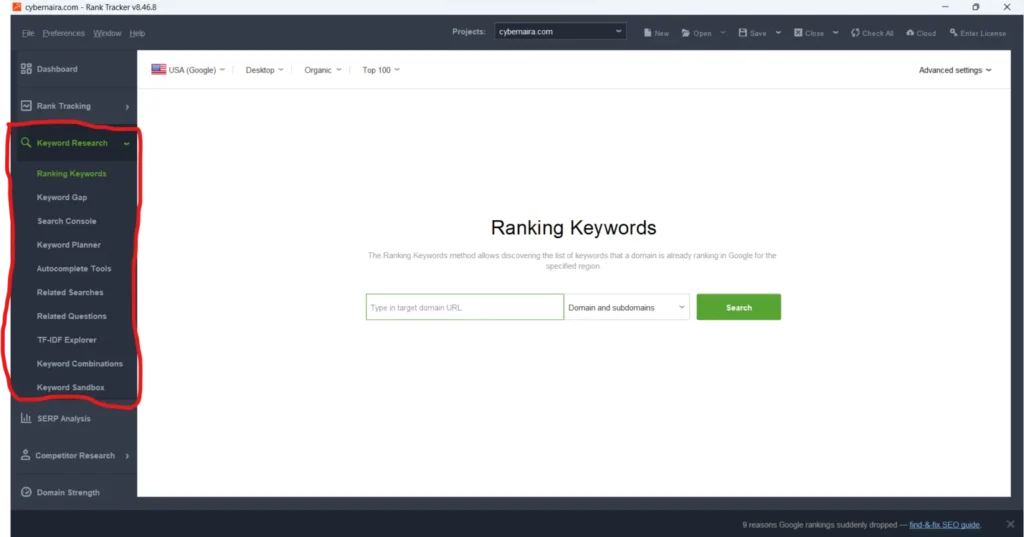
The breadth of keyword sourcing is genuinely useful for building out keyword lists.
The tool also connects to SEO PowerSuite’s own keyword database of 216 million keywords. That is a real proprietary database, not just an API relay.
However, it is considerably smaller than what you get with Semrush (roughly 28 billion keywords) or Ahrefs (27+ billion).
For most solo bloggers and small business owners, 216 million is more than sufficient. In competitive research and saturated niches, you may hit a ceiling.
One feature I genuinely use is competitor keyword research.
You enter a competing domain, and Rank Tracker shows you every SERP feature it ranks for, such as featured snippets, image packs, video results, local pack, knowledge graph, Google Shopping, and site links, alongside its ranking history.
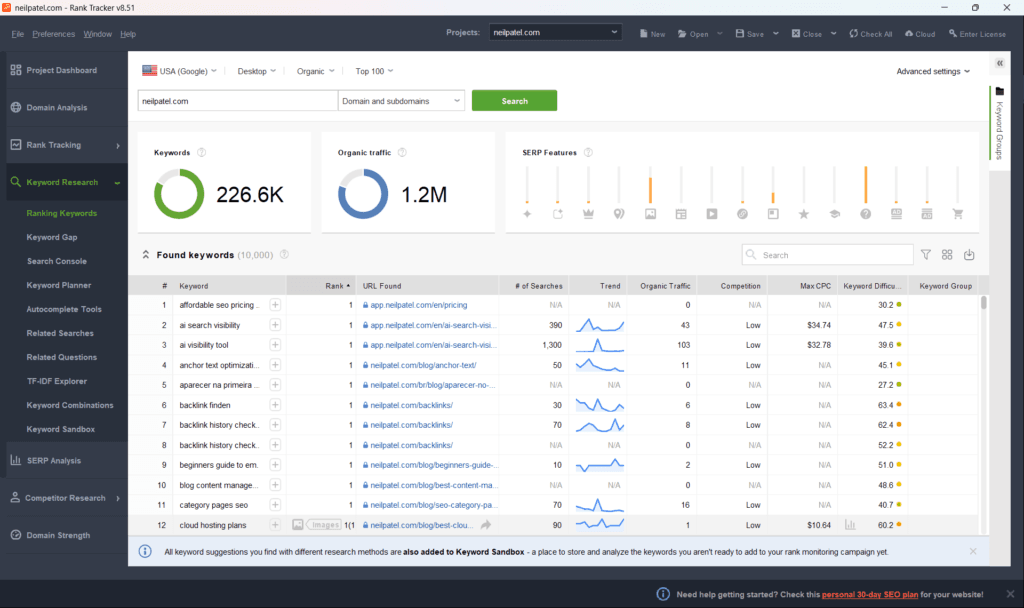
That gives you a clear picture of which SERP enhancements are worth optimizing for in your niche.
The one feature I keep waiting for is search intent classification. Knowing whether a keyword is informational, commercial, navigational, or transactional helps enormously when deciding what type of content to create.
Rank Tracker does not yet offer this. It is a noticeable gap compared to SE Ranking and Semrush.
PPC Integration
Rank Tracker includes a PPC module that lets you manage and analyze paid search campaigns alongside your organic tracking.
You can research paid keywords, analyze competitor ad strategies, and distribute budgets across campaigns.
This is a surprisingly deep feature for a tool primarily known for organic rank tracking. It’s useful for anyone running both SEO and PPC simultaneously.
What I Like About Rank Tracker
What I Don’t Like About Rank Tracker
NOTE!
For a thorough analysis and a standalone first-hand experience, read my Rank Tracker review.
3. SEO SpyGlass
SEO SpyGlass is a backlink analysis and audit tool. It handles everything from checking your own link profile to auditing competitors, identifying toxic links, and tracking link growth over time.
It helps find gaps between your profile and those of competing domains.
Backlink Index
The tool draws on SEO PowerSuite’s proprietary backlink index of 6.5 trillion links across 400 million domains. That number sounds enormous, and it is, but context matters.
Ahrefs indexes around 35 trillion links, Semrush around 43 trillion, and Moz around 45 trillion.
SEO PowerSuite argues that its index stays fresher by regularly removing dead and inactive links, making the data more reliable even if it has lower raw volume.
In practice, for most sites I have analyzed, SEO SpyGlass surfaces enough linking domains to do meaningful competitive research.
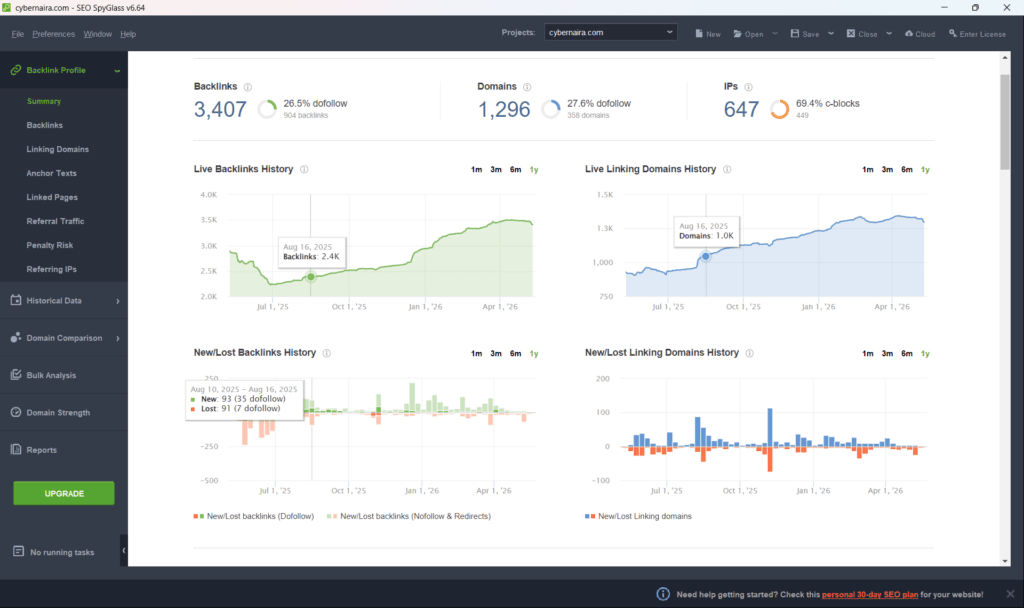
Where the size gap becomes noticeable is when analyzing very large or very competitive sites. You will occasionally miss link sources that Ahrefs would catch.
What the Tool Actually Does Well
Bulk domain analysis is a standout feature.
You can paste up to 200 domain URLs at once and run a simultaneous analysis.
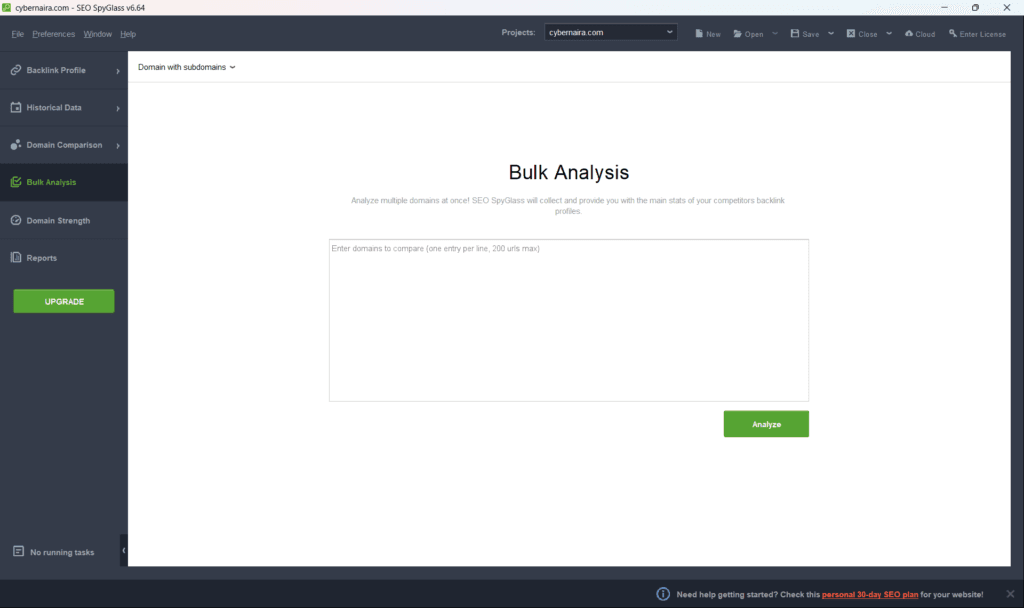
This is useful for batch competitor research, prospect vetting for link outreach, or comparing link profiles across an entire niche at once.
The Link Intersection module (found inside SEO SpyGlass) lets you enter your domain alongside up to 11 competitors and see which sites link to all of them but not to you. Those are your highest-probability link prospects.
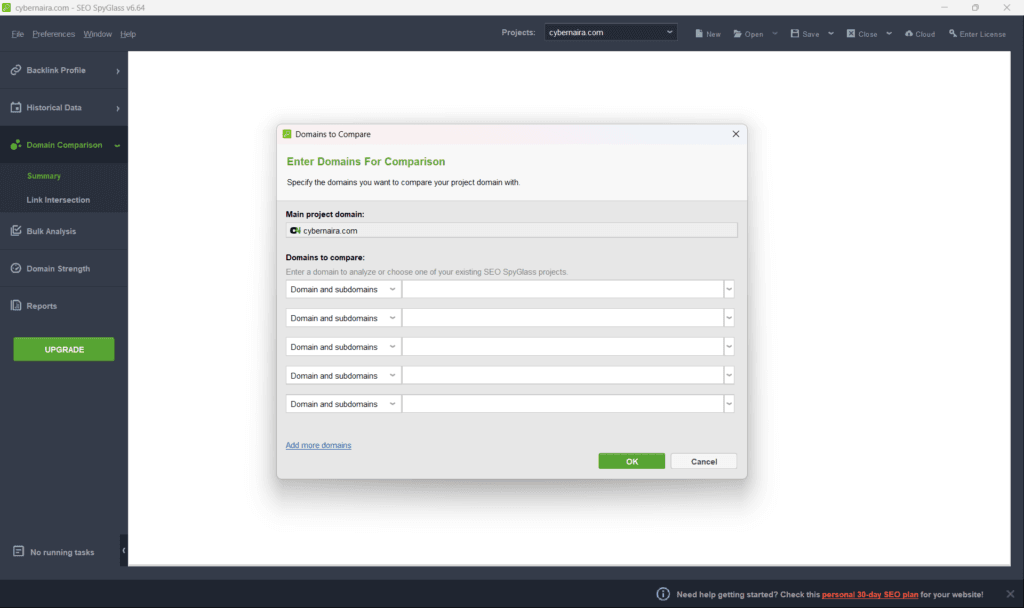
You can compare up to 11 sites simultaneously — more than Semrush or Moz allow on standard plans.
The penalty risk scoring system evaluates each backlink against 50 quality factors and flags links that look manipulative or low-quality.
Combined with the built-in disavow file generator, you can clean up a questionable link profile without needing a separate tool.
What I Like About SEO SpyGlass
What I Don’t Like About SEO SpyGlass
4. LinkAssistant
LinkAssistant is a link-building and outreach tool. The idea is sound: rather than using one tool to find prospects and a separate email platform to reach out, everything happens inside a single application.
You find potential link partners, get their contact details, compose and send personalized email campaigns, track responses, and verify live links, all without leaving the software.
Prospecting Methods
The tool offers 10+ methods to find link opportunities depending on your strategy:
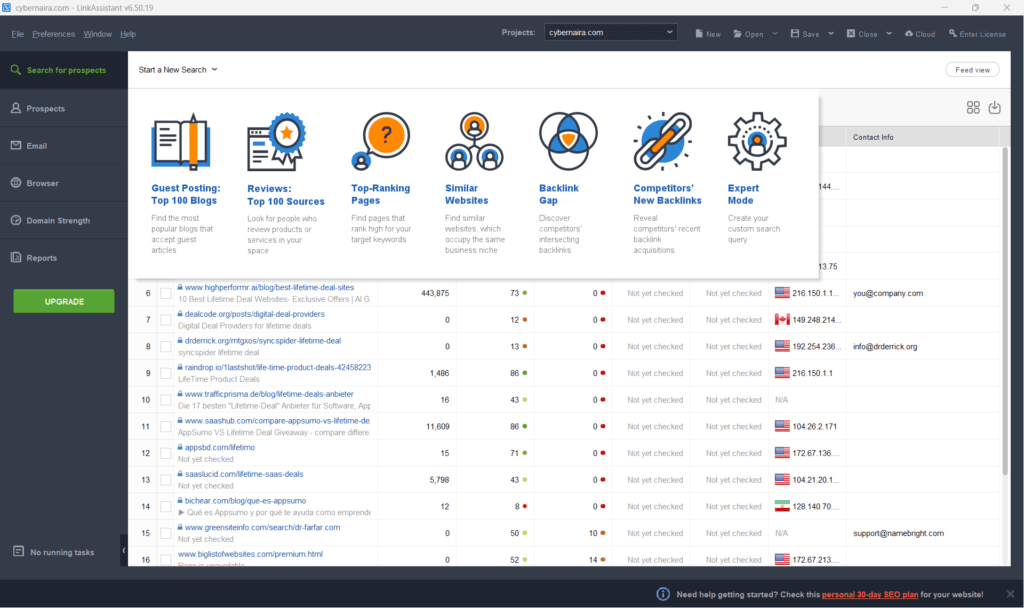
Each prospect gets evaluated on SEO quality factors: domain InLink Rank, organic traffic estimate, indexed page count, domain age, and social media presence. That gives you enough to prioritize prospects by actual value rather than just quantity.
Outreach and Verification
The built-in email client lets you send personalized outreach using variable-based templates, set up automated follow-up sequences, and track open and reply rates.
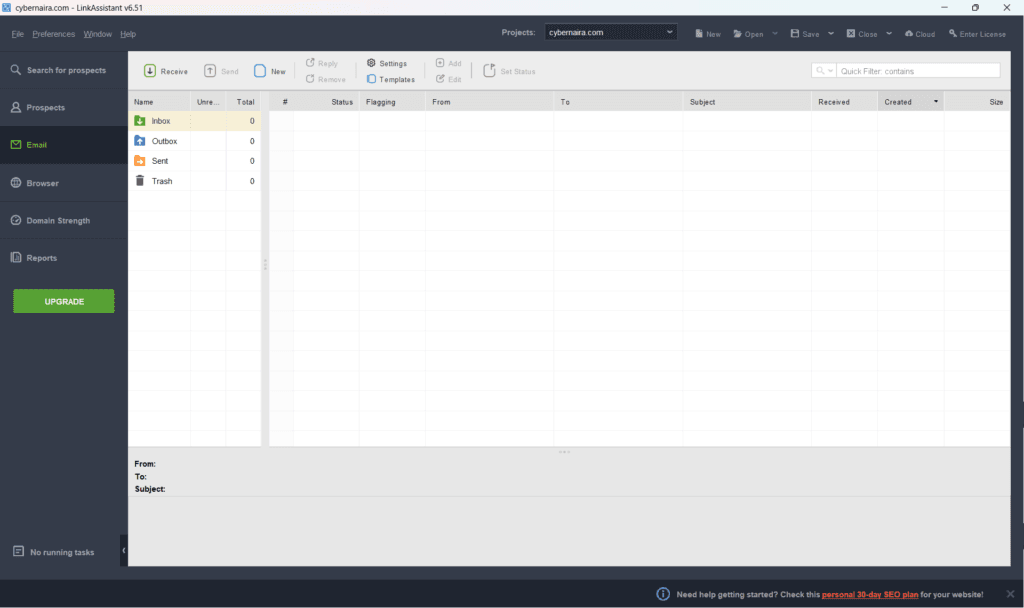
The Link Verification module monitors active links on partner sites and alerts you immediately if a link is removed or changed to nofollow.
The Interface Problem
I want to be direct about this: LinkAssistant has the most intimidating interface in the suite.
The dashboard is dense, the data layout is not intuitive for beginners, and understanding which metric matters for a given task takes time.
You can customize the column layout, which helps, but the initial learning curve is steeper than the other three tools.
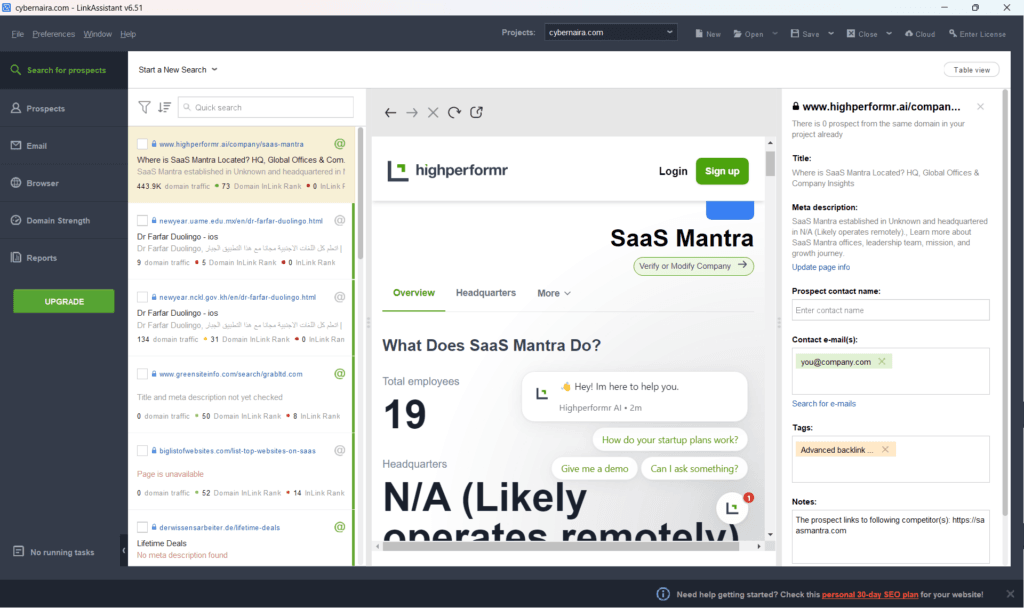
However, LinkAssistant actually loads each prospecting website in the app interface, so you can decide upfront if the site is a good fit.
If you are new to link building, budget extra time to familiarize yourself with how the tool organizes its data before running your first campaign.
The functionality is solid once you understand the layout, but the interface does not do you any favors upfront.
LinkAssistant also puts the most strain on your computer’s resources of the four tools. Running a large prospecting search while the email module is open can noticeably slow things down.
What I Like About LinkAssistant
What I Don’t Like About LinkAssistant
RankDots: SEO PowerSuite’s New AI Tool
In 2025, Link-Assistant launched RankDots. A separate, cloud-based AI SEO tool that sits outside the traditional four-app suite.
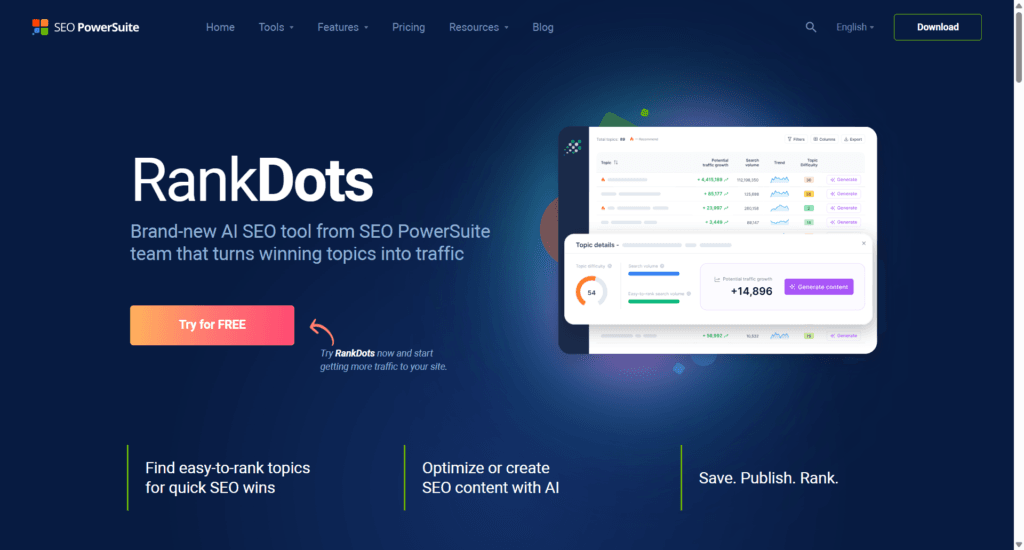
It is aimed at the topical authority and content strategy side of SEO, which the desktop suite has historically handled less well.
RankDots works differently from the suite. You enter a topic or seed keyword, and it analyzes real-time search data to identify low-competition keyword clusters based on actual search intent and ranking patterns.
It then generates SEO-ready content for each cluster using an AI content writer built for search engines.
The tool also decodes ranking signals from the top SERP results — content structure, entity coverage, featured snippet patterns — and uses them to guide what you write. A competitor keyword gap feature is listed as coming soon.
RankDots is not bundled with the desktop suite at the current pricing. It is a separate product with its own subscritpion plan and a 7-day free trial offer.
Whether it is worth using alongside the suite depends on how much of your SEO work involves content planning and creation versus purely technical or tracking work.
For bloggers and content-focused markerters, it is worth evaluating as a complement to Rank Tracker’s keyword research.
Support and Learning Resources
SEO PowerSuite provides multiple support channels and learning resources.
There is a searchable knowledge base, a 30-day SEO plan for beginners, in-app tutorial guidance, and an active Facebook community group.
You can reach the support team by email or live chat directly on the website.
Response times from the email support team have been reliable in my experience, usually within one business day for technical issues.
The Facebook community is genuinely active and useful for troubleshooting edge cases or getting feature tips from other long-term users.
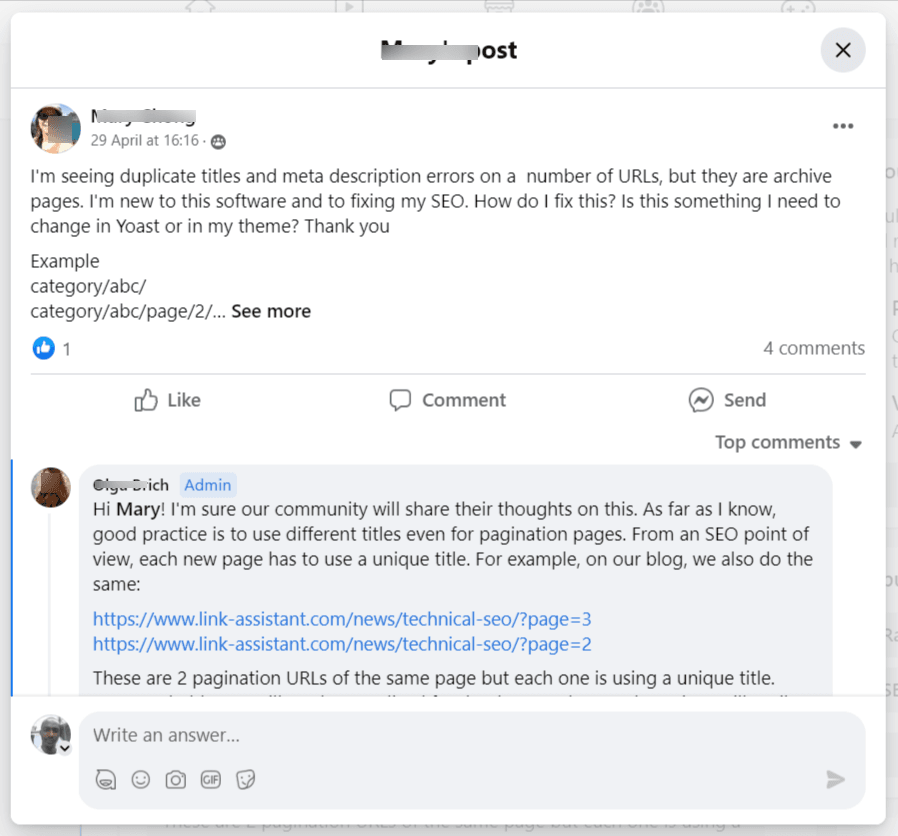
Personalized live onboarding is available exclusively on the Max plan. Enterprise plan users get priority support, which means faster response times, but not the hands-on onboarding session.
SEO PowerSuite vs. The Competition
The comparison that matters most in this SEO Powersuite review comes down to three dimensions: cost, data depth, and workflow.
On cost, SEO PowerSuite wins decisively. The Professional plan at $29.10/month (billed as $349/year) is a fraction of what Semrush Pro costs at $139/month or Ahrefs Lite at $129/month.
Even SE Ranking, widely considered the most affordable cloud alternative, costs $52/month on its annual plan.
On data depth, the cloud tools win. Semrush’s keyword database is roughly 100x larger than SEO PowerSuite’s 216 million keywords. Ahrefs’ backlink index of 35 trillion links dwarfs SEO SpyGlass’s 6.5 trillion.
For most solo operators and small sites, the gap rarely matters in practice. For competitive research in high-volume niches, it does.
In workflow, cloud tools are faster and more accessible. Instant reports from any device, no installation, team collaboration built in. SEO PowerSuite requires patience with load times, runs only on your machine, though collaboration is possible with the cloud storage feature.
| Feature | SEO PowerSuite | Semrush Pro | Ahrefs Lite | SE Ranking |
|---|---|---|---|---|
| Annual cost | $349/yr | $1,668/yr | $1,548/yr | $624/yr |
| Keyword tracking | Unlimited | 500 keywords | 750 keywords | Varies by plan |
| Keyword database | 216M | ~28B | ~27B+ | ~5B |
| Backlink index | 6.5T links | 43T links | 35T links | 3T links |
| Cloud-based | No (desktop) | Yes | Yes | Yes |
| Free plan | Yes (limited) | Yes (limited) | Yes (limited) | Trial only |
| AI features | RankDots (sep.) | Built-in | Limited | Built-in |
| Team seats | Separate license | Included | Included | Included |
For a full deep dive on one key comparison, see the SE Ranking vs. SEO PowerSuite article.
SEO PowerSuite Pricing and Plans (2026)
SEO PowerSuite now offers four plans. Prices below are for the 1-year subscription. 2-year and 3-year plans save an additional 20% and 34% respectively.
Free Forever — $0
The free plan is a permanent download, not a time-limited trial. SEO PowerSuite does not offer a free trial; if you see that claim elsewhere, it is outdated.
The free plan gives you access to all four tools with the following limits:
Best for:
Beginners testing the software or small site owners who only need occasional spot checks.
Professional — $29.10/mo ($349/yr)
The Professional plan removes all the core data limits and adds cloud storage for up to 20 projects.
This is the sweet spot for freelancers, bloggers, and small business owners managing their own sites.
Best for:
Solo bloggers, affiliate marketers, and small business owners are doing their own SEO.
Enterprise — $49.95/mo ($599/yr)
Enterprise adds agency-grade reporting and expanded competitive tracking. It is the plan for anyone managing client accounts or multiple sites professionally.
Best for:
SEO consultants, agencies, and professionals managing client reporting workflows.
Max — $74.95/mo ($899/yr)
The Max plan layers business development perks on top of the full Enterprise feature set. The extras are aimed at agencies that want visibility, structured support, and growth resources.
Best for:
Scaling agencies that want hands-on support, co-marketing opportunities, and structured onboarding.
Note:
Multi-year plans are available. Choosing a 2-year plan saves 20%; a 3-year plan saves 34%. These can meaningfully reduce the per-year cost for long-term users.
Is SEO PowerSuite Right for You?
Use SEO PowerSuite if:
Look elsewhere if:
SEO PowerSuite Pros and Cons
Pros
Cons
FAQ
Conclusion
SEO PowerSuite has been part of my SEO toolkit for years, and the 2026 version is meaningfully better than what I started with.
The addition of Google AI Overview tracking in Rank Tracker, the Max plan’s agency perks, and the launch of RankDots show that Link-Assistant is still developing the product rather than coasting on it.
The core trade-off has not changed: you get a capable, comprehensive SEO suite at a fraction of what cloud tools charge, but you accept a slower, desktop-bound experience in return.
On a good machine, the wait times are tolerable. For a solo operator who does focused SEO work rather than running hundreds of reports per day, the cost savings more than compensate.
If you are serious about SEO, managing your own sites or a small client roster, and want to avoid the $100–$200/month SaaS treadmill, SEO PowerSuite Professional at $349/year is one of the most defensible purchases in this category.
Start with the free plan to test the interface, and upgrade when you hit its limits.