
Do you want to start a Shopify store but need to know which products or niche to venture into?
You’re not alone. This can happen to anyone, regardless of experience in the business. Choosing a profitable eCommerce niche is more challenging than it seems.
There are many factors to consider, from your passion to skills, budget, technical expertise, trends, etc. A lot goes into finding the best niches for your Shopify store.
In today’s guide, I will explore ways to find profitable niches for your Shopify store and the 20 best eCommerce niches to spark your inspiration.
But before that, let’s define a niche in eCommerce marketing.
What is a Niche?
In eCommerce, a niche is a focused market segment with specific needs and interests. Instead of trying to sell to everyone, you tailor your products and brand to cater to this particular group.
Your products address a specific problem and provide a solution to it. This makes it easier to tailor your marketing strategies, advertising campaigns, and tactics to your target market.
Why is a Profitable E-commerce Niche Important for Beginners?
Choosing a profitable eCommerce niche is especially important for beginners because it helps you target the right audience. By focusing on a specific niche, you can attract customers who are genuinely interested in what you offer.
A niche market also allows you to compete with fewer established businesses. By narrowing down on niche selection, you’re more likely to have less competition in the same niche or selling the same products.
Building brand recognition is another reason choosing profitable eCommerce niches is important for your Shopify store. Becoming known as a go-to store within a niche is easier than in a broader market.
Your audience will quickly recognize what your store stands for and the product’s relationships to your store’s overall theme and content strategies.
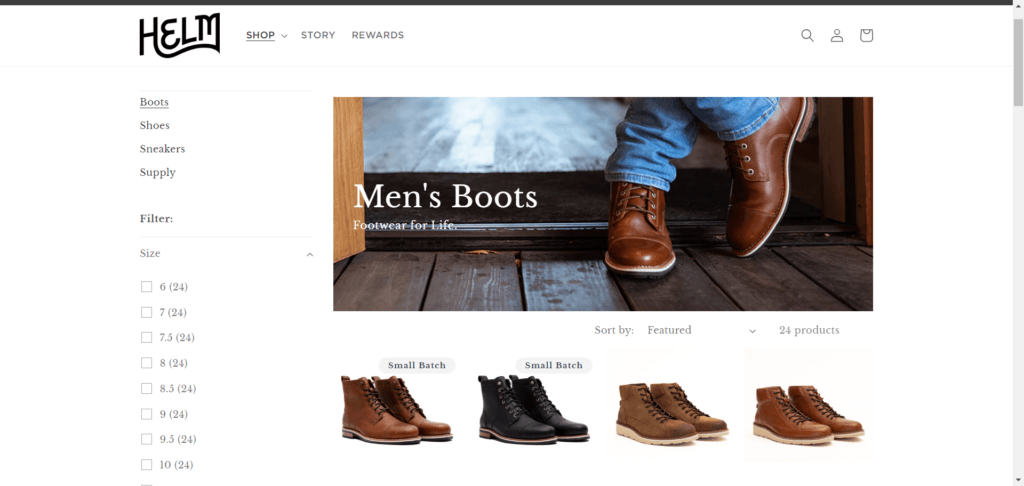
For example, Helmboots is a Shopify store focusing on footwear that matches every occasion. Upon visiting the storefront, you’ll quickly know what type of Shoes you’re getting on the website.
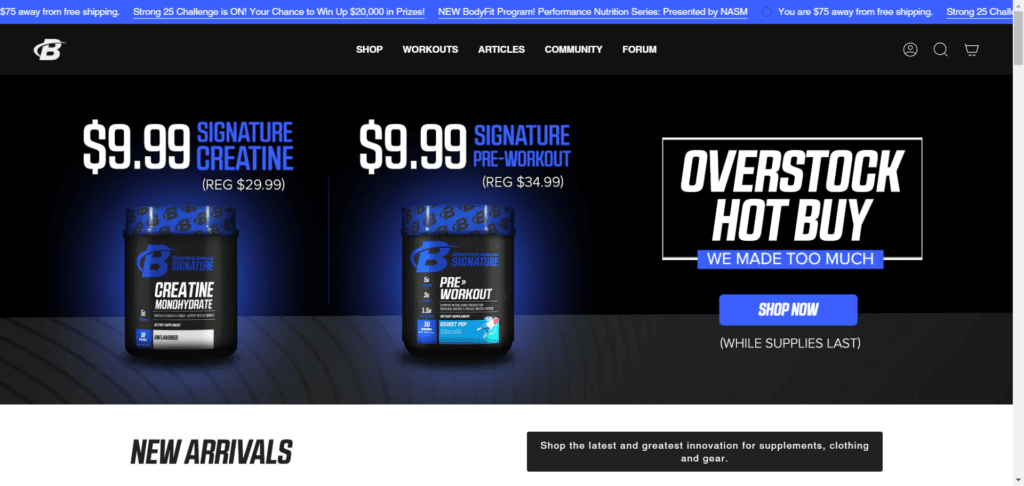
Another good example of why niche selection is important is the BodyBuilding Shopify store. At a glance, a first-time visitor need not be told what they do on the site to get a good idea of what the place is all about.
Focusing on a micro niche eCommerce market is essential for scaling quickly, targeting the right audience, and establishing your brand as a thought leader in the industry.
Identifying Your Interests and Skills
Finding a profitable niche for your Shopify store goes beyond choosing popular products. Ideally, your niche should align with your interests, personality, and skills.
This will make running your online business more enjoyable and allow you to leverage your strengths.
Here are some helpful tips for choosing a profitable eCommerce niche for your Shopify store.
Brainstorm Product Categories You’re Passionate About
Make a list of things you’re genuinely enthusiastic about. Things that naturally resonate with you and passion.
These passions can be the starting point for identifying potential niche markets.
The good thing about starting an eCommerce store around your passion is that it will feel more fun than work. You’re more likely to enjoy every bit of the journey and be eager to show up daily.
Consider Your Existing Skills and Knowledge
In addition to your interests or passion, think about your existing skills and knowledge.
These skills can be valuable assets for creating, marketing, and selling products within your chosen niche.
You can turn your profession into a valuable asset that helps you build unique, profitable products to sell on Shopify.
For instance, as an athlete, you can partner with relevant manufacturers to build your brand line of footwear or clothing.
Though this is built on WordPress, Rafael Nadal’s blog is a classic example of how professionals can leverage their skills to create a thriving online store.

Identify Gaps in the Market Related to Your Interests.
Once you have a general idea of your interests and skills, start researching to see if there are any unmet needs or gaps in the market.
Look for areas where you can offer unique products or services that cater to a specific audience within your niche.
Analyze existing competitors at the Shopify store, research their product offerings, and take notes of product categories and collections.
Do you think there is a gap in the range of products? Maybe a particular product is missing from the collections.
You can capitalize on this opportunity to find a profitable Shopify niche for your next eCommerce project.
There are many possibilities for researching the market to discover your ideal eCommerce niche. The more you dig, the more data you can explore.
Market Research for Profitability
Now that you know how to find your perfect Shopify store niche, it’s time to evaluate its profitability and market demand.
It is crucial to conduct thorough market research to assess the profitability of your niche idea for eCommerce store.
Whatever way or strategy you’ve developed for your Shopify niche idea, it’s important to validate market demand and profit.
Here are some essential tools and techniques to help you with your research:
Keyword Research
Keyword research helps you identify the terms and phrases potential customers use to search for products online.
By understanding these keywords, you can optimize your product listings and website content to rank higher in search engine results pages (SERPs) and attract more organic traffic to your store.
Various free and paid keyword research tools, such as Google Trends, Google Keyword Planner, Rank Tracker, SE Ranking, and Ahrefs, are available online.
Ahrefs is more or less a premium tool, but it is not recommended for beginners. The free plan doesn’t offer much access to its features.
If you want something away from Google products, Rank Tracker is one of the best free keyword research tools for beginners and small business owners.
You can download bundle kits on the Link-Assistant website to use the complete SEO Powersuite suite.
I’ve published an extensive guide on how to use Rank Tracker for keyword research. However, if you need to learn more about the tool, check my review of Rank Tracker.
Social Media Listening
Social media platforms like Facebook, Twitter, TikTok, and Instagram are valuable tools for gauging audience interest and identifying trends within your niche.
By actively listening to online conversations, you can discover what people are talking about, their problems, and what kind of products they want.
Social media is valuable for gathering real-time information and learning about an audience’s interests.
You can be part of a large social media group relevant to your niche to learn about things that resonate with them.
The truth is that if something (related to commerce) is regularly trending on social media, it is worth paying attention to as a business owner.
Competitor Analysis
Researching your competitors in the chosen niche is essential.
Analyze their product offerings, pricing strategies, marketing tactics, and customer reviews. This will give you valuable insights into what’s working well in the market and identify areas for differentiation.
To discover niche competitors using Shopify, go to Google and type “best ____Shopify store” (fill the space with your niche idea). Here are some examples:
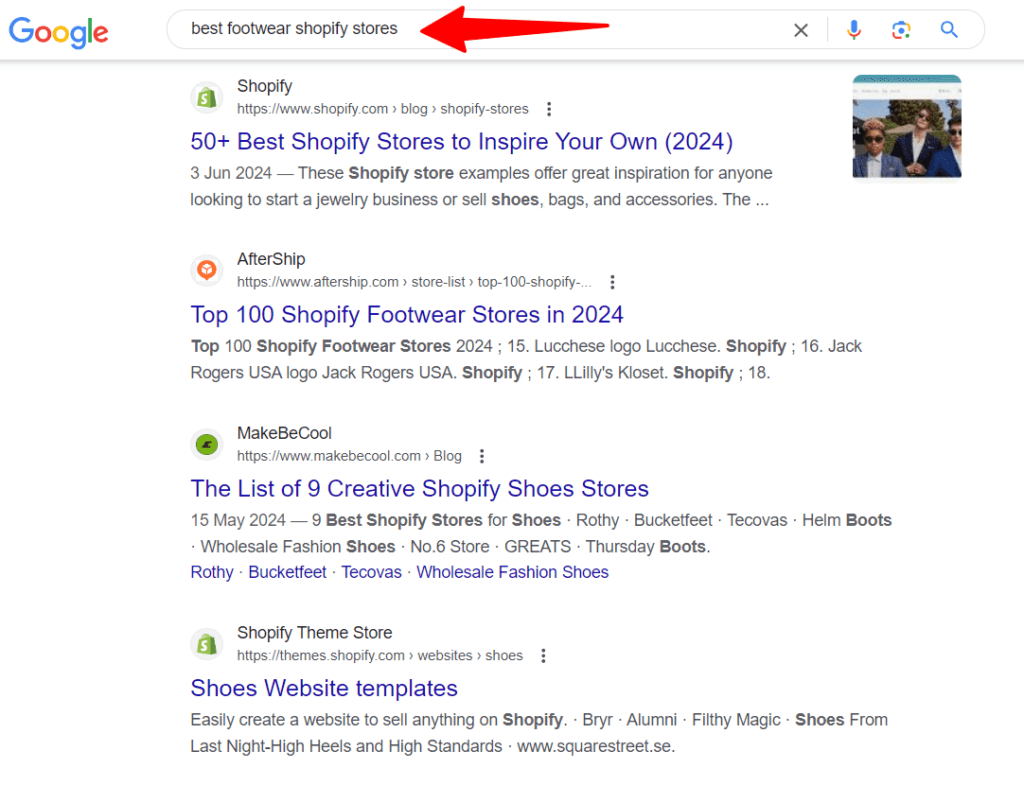
From here, you have 100s of Shopify store examples selling footwear.
Next, go through some of these stores and see what you can learn from their strategies. You can analyze their marketing strategies to inform your decision and validate your niche.
Combining these market research techniques allows you to gather valuable data to assess the following factors that indicate niche profitability.
- Search Volume – How many people search for products related to your niche?
- Competition Level – How many established businesses are already selling similar products?
- Average Order Value – What is the typical price point for products in your niche?
- Customer Engagement – Are there active online communities, audiences, industries, or forums dedicated to your niche?
You must consider these factors to make the right decision.
If you do, you’ll be in a better position to evaluate the potential profitability of your niche and make informed decisions about your Shopify store.
Test Your Niche Ideas for Online Store
Even after conducting thorough market research, it’s wise to test and validate your niche idea with real potential customers before investing significant time and resources into your Shopify store.
Here are three effective ways to validate your niche:
Customer Surveys and Focus Groups
Developing a short survey or conducting focus groups with potential customers within your target niche allows you to gather direct feedback on your product ideas.
Ask questions about their pain points, interests, and buying habits related to your niche.
This feedback can help refine your product offering and ensure it resonates with your target audience.
If you don’t have access to an audience, consider visiting places like Reddit, Facebook groups, and other relevant online communities to get valuable, unbiased feedback.
Analyzing Competitor Stores
Take a close look at existing stores within your chosen niche.
Analyzing your competitors allows you to gain valuable insights into what works well in the market and identify opportunities to differentiate your store.
Running a Test Ad
Consider running a small-scale paid advertising campaign on social media platforms like Facebook, Twitter, or Instagram.
This lets you target your ideal customer demographics and gauge their interest in your product concept. You can collect leads through your ad campaign to launch your store.
Let the ad run for a few days or weeks so you can gather more data and have sufficient information to make the right decision.
Analyzing the ad’s performance metrics, such as click-through rate and engagement, gives you a sense of potential market demand for your niche.
Select a E-commerce Niche with Growth Potential
Beyond immediate profitability, consider your niche’s long-term growth potential. Choose a niche for your Shopify store that has a long history.
Unless you’re selling seasonal products with demand during a special time of the year, you probably want to process orders throughout the day, weeks, and months.
To learn about niche growth potential, consider the following information.
- Long-Term Trends – Is the niche aligned with growing trends or consumer interests? Look for niches that are expected to increase in popularity over time.
- Dedicated Customer Base – Does the niche have a passionate and dedicated customer base? This can indicate a strong market with the potential for repeat business and customer loyalty.
Google Trends is a helpful tool for researching a niche’s growth potential.
Enter your niche primary search term into the tool and analyze the trend history; you can get data from 2004.
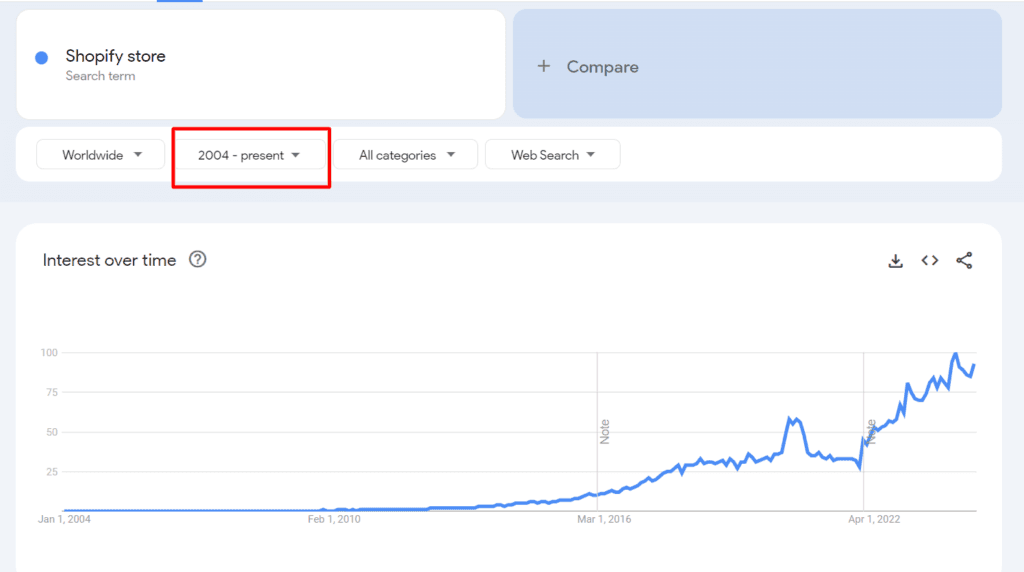
Then, look at the trend trajectory. Is it trending upward or down?
If the graph suggests a consistent upward trend, that’s a good niche. But if the graph is otherwise, you must rethink your niche selection.
A downward trend could signify a niche that might soon fade or lose audience interest.
20 E-commerce Niche Ideas for Shopify Store – Beginners
Here are some eCommerce product ideas you can tap into to start your Shopify store.
- Sustainable Clothing – Eco-conscious consumers demand sustainable clothing from recycled materials or organic fibers. This is a good niche to try if you’re passionate about climate conditions, keeping second-hand clothing to extend its life, or donating to projects.
- Home Office Essentials – With the rise of remote work, there’s a growing need for ergonomic furniture, productivity tools, and home office décor. Moving forward from COVID-19, remote work has been normalized, giving rise to home office equipment.
- Personalized Gifts – People increasingly seek unique and customized gifts for their loved ones. You can offer custom-made jewelry, engraved mugs, or printed phone cases and set up a Shopify print-on-demand store selling these items.
- Subscription Boxes – Subscription boxes offer a curated selection of products delivered to customers regularly. This can cater to niches like beauty products, pet supplies, or coffee beans.
- Vintage Clothing – Vintage clothing is experiencing a surge in popularity. You can sell curated collections of pre-owned clothing or accessories.
- Minimalist Home Decor – The minimalist home decor trend emphasizes clean lines, functionality, and natural elements. You can offer storage solutions, furniture pieces, or decorative items that promote a minimalist aesthetic.
- Activewear and Athleisure – The athleisure trend continues to grow, with people seeking comfortable and stylish clothing for workouts and everyday wear.
- Handmade Crafts – There’s a market for unique and handmade crafts, such as knitted goods, pottery, or jewelry.
- Plant-Based Food Products – As vegan and vegetarian diets gain popularity, there’s a growing demand for plant-based food products.
- Coffee and Tea Subscriptions – Coffee and tea lovers appreciate the convenience of curated subscriptions delivered to their doorstep.
- Natural Skincare Products – Consumers are increasingly interested in natural and organic skincare products free from harsh chemicals.
- Travel Accessories – With the travel industry bouncing back, there’s a demand for functional and stylish travel accessories like luggage organizers, packing cubes, or travel toiletry bags.
- Mobile Phone Accessories – The mobile phone industry constantly evolves, creating a market for innovative phone cases, chargers, and other accessories.
- Pet Supplies – Pet owners are willing to spend on their furry companions. You can offer niche pet products like healthy treats, eco-friendly toys, or personalized pet tags. Read our step-by-step guide for more information on starting a Pet blog.
- Learning Kits and Subscriptions – There’s a growing market for educational kits and subscriptions for children and adults alike. These can cover science experiments, arts and crafts, or language learning.
- Fitness Trackers and Wearables – The fitness wearable market is booming. You can offer fitness trackers, smartwatches, or other wearable tech that cater to health-conscious consumers.
- Gaming Accessories – The gaming industry is massive, demanding high-quality gaming headsets, controllers, and other accessories.
- Arts and Crafts Supplies – There’s a market for speciality arts and crafts supplies for hobbyists and artists. You can offer unique painting mediums, sculpting tools, or high-quality drawing materials.
- Homebrewing and Coffee Roasting Supplies – For passionate hobbyists, you can offer speciality equipment and ingredients for homebrewing beer or roasting coffee beans.
- Sleep and Relaxation Products – With a focus on improving sleep quality, there’s a growing demand for products like weighted blankets, essential oil diffusers, or noise-cancelling headphones.
Conclusion
Choosing a profitable niche is a crucial first step for your Shopify store.
Following the steps outlined above, you can identify a niche that aligns with your interests, has growth potential, and caters to a dedicated customer base.
Niche selection is an ongoing process. As your business evolves, you can explore opportunities to expand your product offerings or refine your target audience.
The most important thing is to start with a solid foundation and be willing to adapt and learn as you go.
So, are you ready to launch your Shopify store?
With a niche in mind and a passion for your products, you’re well on your way to success.