

Are you considering starting a store on Shopify? To get started, you must be familiar with and understand several key Shopify pricing and fees.
First, Shopify prices and fees vary slightly by country.
If you’re visiting Shopify from outside the US, the price you see may not match the one shown in this post.
If you are in Nigeria, the Basic Shopify pricing plan is billed at $24 per month for an annual subscription. In comparison, the annual plan costs $29 in the US.
Shopify US and many EU regions offer features not available in other countries, so the Shopify pricing plan and benefits reflect the full set of features for your country.
Regardless of your country of residence, this post covers everything you need to know about Shopify’s pricing and additional fees.
I will also discuss its features, annual and monthly plans, including any extra credit card fees, and recommend the best plan for you. Likewise, I compare Shopify’s pricing with that of competitors such as BigCommerce, Weebly, Squarespace, and Wix.
And lots more…
Shopify Pricing and Fees Overview
Shopify’s pricing and transaction fees serve individuals and merchants of all sizes, budgets, and needs.
From complete beginners and growing businesses to established e-commerce stores and large companies selling millions, Shopify has plans and features to help you sell.
Here’s a brief overview of Shopify pricing for small businesses and available plans.
Shopify Pricing Explained
The table below shows the monthly price breakdown and the discount for yearly subscriptions for each plan.
| Billing Cycle | Starter | Basic | Grow | Advanced |
|---|---|---|---|---|
| Monthly | $5/mon | $32/mon | $92/mon | $399/mon |
| Yearly | $5/mon | $24/mon | $69/mon | $299/mon |
| Discount | No Discount | 25% | 25% | 25% |
In addition to the above Shopify monthly pricing and plans, there are the Retail ($89/month) and Shopify Plus plans (starting at $2,300/month), geared toward businesses that need advanced eCommerce features.
However, these five standard Shopify plans are ideal for most small- to medium-sized eCommerce business owners.
Retail and Shopify Plus suit businesses that need advanced eCommerce functionality, team access and collaboration features, and high sales volume.
How Much Does Shopify Cost?
There is no single right or wrong answer to the cost of Shopify stores; it depends on a few factors.
We must consider the type of eCommerce store you intend to build, the features you need, free or paid themes and apps, the cost of a custom domain name, resource usage, etc.
Consider these questions before starting a Shopify store. Aside from the platform fee available on the pricing page, these factors also add to the cost of creating a Shopify shop.
Also, when you start to sell, you must consider additional payment processing fees, such as Credit Card and other transaction fees.
Start Free Trial for $1/m.
Use Shopify for 3 days free without paying, then subscribe to a $1 monthly plan for 3 months. That’s 93 days for $3 for using Shopify.

Comparing Shopify Plans
Besides the standard cost of Shopify’s monthly fees, which are a significant factor when deciding which Shopify pricing plan is right for you, features, lower transaction fees, and the number of user seats also make a big difference.
Now, let’s explore the Shopify pricing plan comparison below; all five plans, including Shopify Plus, are ideal for large-scale businesses.
Starter Plan
Shopify’s starter plan costs $5 per month and is ideal for beginners looking to set up a simple online store or for those new to eCommerce who want to learn the trade.
Alternatively, if you want to start selling online via social media platforms like Facebook, Twitter, LinkedIn, TikTok, and email, it provides a quick, straightforward way to sell products.
The Starter plan enables you to market and sell your products anywhere you can share links, including messaging apps, WhatsApp, Facebook Messenger, SMS, and Skype.
You won’t have an online store; you’ll use a Shopify checkout page to process payments.
You can sell in person using the Shopify POS Lite app, which you can download to a mobile device or tablet and configure to accept payments. It includes features such as Tap to Pay for iPhone and card readers.
The Shopify Starter plan, the most affordable option for beginners, includes all the essential features to sell on the go using your mobile phone.
It also provides access to essential features, including abandoned cart recovery emails, marketing automation, Linkpopup, standard 24/7 support, and more.
Starting an eCommerce business with $5 monthly will have some limitations, and you shouldn’t be surprised.
The Starter plan has a 5% + $0.30 online credit card rate, a limit of 2 locations, 5% + $0.00 POS in-person credit card charges, and basic reporting features. This plan is ideal if you need to sell online without a store website or a blog.
Basic Plan
Next is the Shopify Basic plan, which costs $29 per month when billed annually ($39 per month for monthly billing).
If you’re starting a small eCommerce business or want to build a storefront, the Basic Shopify pricing plan, which costs $24 per month, is right for you.
You can create a store website and blog, design and customize your store, and install apps, themes, etc.
The transaction fees are lower than those for the Starter plan.
Online credit card transactions and payment processing fees are 2.9% + $0.30; offline POS payments are 2.7% + $0.00; and third-party payment gateways are 2%. You also pay 1.5% for currency conversion if you sell in other currencies.
That’s a lot of charges.
However, the Basic Shopify plan has a shipping discount of up to 77% from DHL Express, UPS, and USPS.
Two staff account seats, selling in up to 1,000 locations, automatic cart abandonment email recovery, Shopify POS Lite, and the option to upgrade to Shopify POS Pro for selling in a brick-and-mortar business.
Shopify (Now Grow) Plan
As your business grows and needs to expand, the Grow plan provides comprehensive tools to help you sell online, making it a perfect upgrade from the Shopify Basic plan.
It is billed at $79 for the annual 12-month plan and $105 for the monthly plan. There are several fantastic features to discuss in the Grow plan.
First, it allows five staff members, a significant upgrade from the Basic plan, and supports up to 1,000 locations, as in the Basic plan.
That’s not all: merchants receive up to $200 in shipping insurance coverage for eligible Shopify shipping labels, and you can enjoy up to 88% off shipping with DHL Express, USPS, and UPS.
The payment transaction fees are significantly lower: 1.5% for third-party gateways, a 1.5% currency conversion fee, 2.6% + $0.30 for online credit card payments, and 2.5% + $0.00 for in-person POS payments.
Advanced Plan
The Advanced plan is best suited for established merchants with resource-intensive eCommerce storefronts, including fifteen staff accounts for freelancers or other backend team members.
The cost is $299 or $399 per month, depending on whether you choose the annual Advanced plan or monthly billing.
It includes everything in the Grow plan, plus significantly lower transaction fees and in-depth store performance analytics.
The Advanced Plan also contains features to help manage duties and import taxes for international sales.
The online credit Card fee is 2.4% + $0.30. The fee for POS in-person sales is also 2.4% + $0.00. Shipping is discounted by up to 88%. 1% third-party payment gateways and 1.5% currency conversion also apply.
Shopify Plus Plan
Enterprise-level plan and support for large businesses and corporate stores.
You get everything in the Advanced plan, plus additional features to automate your business. It provides broader administrative user access, supports store locations, and consumes more platform resources.
The Shopify Plus plan costs $2,000 per month, but you can pay more based on sales volume and resource usage. Still, you need to contact sales to arrange a Shopify Plus plan.
It offers a customizable checkout feature for businesses with high sales volumes.
This allows you to tailor the checkout process to your needs, enhancing the overall customer experience and effectively supporting high-growth brands.
Read my comprehensive side-by-side analysis to learn more about Shopify Plus and Shopify standard plans.
Shopify Annual Plan vs Monthly Plans
Should you subscribe to a Shopify monthly or annual pricing plan?
It is difficult to determine which option is best without considering specific factors.
All too often, small business owners opt for a month-to-month Shopify plan, which offers flexibility and a more straightforward exit strategy. However, it’s not always the best option for long-term eCommerce businesses looking to reduce costs.
When considering cost savings, subscribing to a 12-month Shopify plan is a sensible option if a one-time payment is not a concern. You save up to 25% on the annual plan.
Shopify has a 4.4-star rating on the review site G2, one of the highest ratings among e-commerce platforms. If you’re unsure if Shopify is right for you, consider taking advantage of the three-month free trial for just $1 per month.
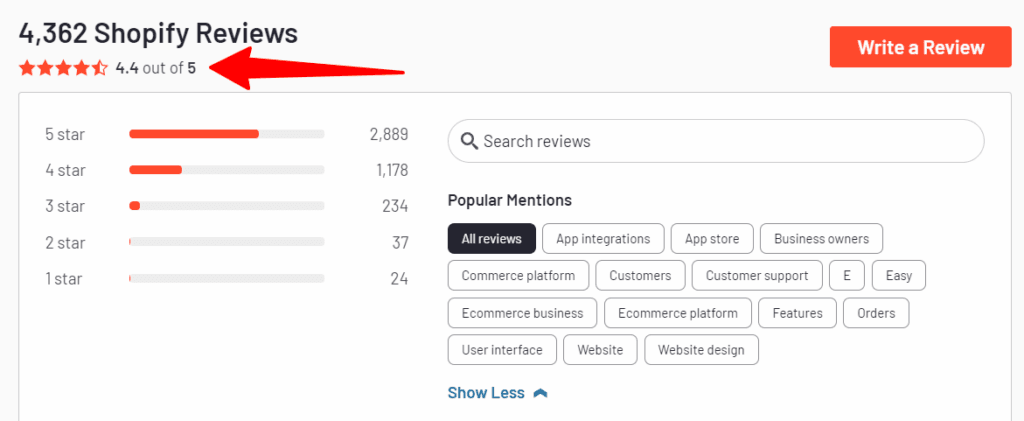
The free trial lets you extensively test Shopify’s essential features and the platform for only $1 after the 3-day free trial expires.
In a nutshell, Shopify’s monthly plan is suitable for you if you don’t have the option for a one-time 12-month payment and can afford to pay month-to-month.
Also, consider monthly billing if you plan to use Shopify to sell seasonal products that are typically purchased during specific periods, such as Black Friday, Christmas, New Year’s, Festivals, and Carnivals.
Consider a yearly subscription if eCommerce is a strong part of your core business, and it’s what you do. Plus, you save 25% on a Shopify annual subscription. Paying yearly saves significantly and offers the financial benefits of annual billing.
Shopify Credit Card Transaction and Processing Fees
I briefly touched on the Shopify credit card processing fee above; it requires more information. Here is a summary of the Shopify cost analysis for the processing fee and in-person charges.
Use the data in the table to calculate how much Shopify will cost you and the possibility of any hidden fees you might not be aware of initially.
Note: Shopify has no hidden fees. The Shopify pricing page provides all the information you need on pricing plans and additional transaction fees.
| Starter | Basic | Grow | Advanced | Shopify Plus | |
|---|---|---|---|---|---|
| Online Credit Card | 5% + $0.30 | 2.9% + $0.30 | 2.6% + $0.30 | 2.5% + $0.00 | 2.15% + $0.30 |
| In-Person POS | 5% + 0.00 | 2.7% + $0.00 | 2.5% + $0.00 | 2.4% + $0.00 | 2.15% + $0.00 |
| 3rd Party Processors | 2.4% | 2% | 1.% | 0.6% | *0.15–0.30% |
| Currency Conversion | 1.5% | 1.5% | 1.5% | 1.5% | 1.5% |
*The 0.15–0.30% transaction fee is paid to Shopify for compliance and security after paying your 3rd-party payment provider’s processing fee.
You don’t pay a transaction fee when you use Shopify Payments, Shop Pay, PayPal Express, and Shop Pay Instalments. However, Shopify Payments isn’t available in all regions, so check your country’s eligibility.
Also, merchant processing manual or offline payments, such as cash, cash on delivery, and bank transfers, are not charged transaction fees.
You need to know that the processing fee for credit card payments, whether domestic or cross-border, and the card type used, are significant factors in determining the cost.
Shopify charges third-party payment providers processing fees to cover integration costs and credit card fees. Again, the amount charged varies depending on the credit card and the customer’s transaction location.
Unlike merchants in Australia, Belgium, and Sweden, those in other countries that use Shopify Payments don’t pay transaction fees.
However, there is one fee that merchants must pay, regardless of the credit card payment collection method: the payment processing fee.
The payment processing fee is charged by payment processors to enable merchants to collect payments from customers’ bank accounts and transfer them to their merchant accounts.
This fee is mandatory to ensure smooth e-commerce and secure online transactions.
The payment processing fee is 0.30 cents, while each Shopify plan charges credit card rates differently. Higher plans typically offer lower credit card rates; see the table above for more details.
Note that the 0.30-cent payment processing fee is per transaction, not per item sold. Whether customers buy 5, 10, or a single item in your store, you pay 0.30 cents to process the payment.
The fee will be charged per transaction if the customer makes separate payments.
Shopify Currency Conversion Fees
This section applies to merchants selling to international markets in currencies other than the store currency.
You’re charged a currency conversion fee when you accept payment in a currency other than your own. The cost is 1.5% for U.S.-based merchants and 2% for all other merchants in the eligible Shopify Payments region.
The customer’s local currency is converted to your store payout currency at the mid-market rate before the currency conversion fee is applied.
In the event of a refund or chargeback, these fees are not refunded to you; however, no additional charges will be incurred. You can read more about the Shopify currency conversion fee and rates on this page.
Shopify Payments
Shopify Payments is a built-in payment processing system that allows merchants to accept credit card payments directly through their Shopify store.
By using Shopify Payments, merchants can manage their payments and orders in one place, simplifying order tracking and fulfilment. This integration eliminates the need for third-party payment providers, reducing the complexity of managing multiple systems and the risk of potential issues.
One of Shopify Payments’ key advantages is its competitive rates. For online transactions, merchants are charged a flat rate of 2.9% + 30¢ per transaction.
For in-person payments, the rate is 2.7% + 10¢ per transaction. These straightforward and transparent rates help merchants understand their costs and manage their finances.
Using Shopify Payments also means merchants can avoid additional transaction fees charged by third-party payment providers. This can result in significant savings, especially for businesses with high sales volumes.
Overall, Shopify Payments offers a convenient, cost-effective solution for managing payments on the Shopify platform.
Shopify POS and Retail
Shopify POS (Point of Sale) is a versatile system that enables you to sell products in person through a physical storefront or on a mobile device.
The system integrates seamlessly with Shopify’s online store, enabling merchants to manage their inventory and orders across all sales channels from a single platform.
This integration ensures that inventory levels are always up to date, reducing the risk of overselling and enhancing the overall customer experience.
The Shopify POS system includes features such as Tap to Pay for iPhone, card readers, and the ability to process payments through the Shopify POS Lite app.
This makes it easy for merchants to accept payments anywhere, whether at a pop-up shop, market stall, or brick-and-mortar store.
For merchants who require more advanced features, Shopify offers the Retail plan.
This plan includes additional tools for staff and inventory management, as well as loyalty programs, helping merchants create a seamless online and offline shopping experience for their customers.
With Shopify Retail, you can efficiently manage your entire business, from the online store to the physical point of sale.
Shopify Shipping and Tax
Shopify Shipping is a powerful feature that allows merchants to calculate and print shipping labels directly from their Shopify admin. This feature integrates with major carriers, including USPS, UPS, and FedEx, providing merchants with access to discounted shipping rates.
With Shopify Shipping, you can streamline your shipping process to save time and money on every order.
In addition to shipping, Shopify offers a comprehensive tax solution with Shopify Tax. This feature enables you to accurately calculate and collect sales tax on customer orders.
Shopify Tax integrates with tax authorities to provide real-time tax calculations, ensuring your store complies with local tax regulations and that any third-party calculated shipping costs are accounted for.
This integration simplifies the often complex process of managing sales tax, allowing you to focus on growing your business.
Extra Shopify Store Cost
So far, I have discussed the platform fees, payment processing fees, and standard plan prices. As you are likely aware, starting an e-commerce business requires additional investments.
Shopify’s plans offer different options to suit various business needs and budgets.
These are associated expenses for running an online business. To create a sustainable, long-term business, you must consider these factors in addition to Shopify’s cost.
Let’s break them down below.
Domain Name
Your store needs a brand or custom domain name to stand out and build a professional online presence.
Purchasing a domain name can cost anywhere from $2 to thousands of dollars, depending on your marketing strategies and expectations.
However, you don’t need a premium domain name to start an online business, unless there is sufficient marketing evidence. Having a unique, short, and memorable name is all you need.
I published an article on choosing a good domain name; check it out to learn more.
You can visit Namecheap to check for name availability and register it. Besides, Namecheap is one of the best domain name registrars to trust.
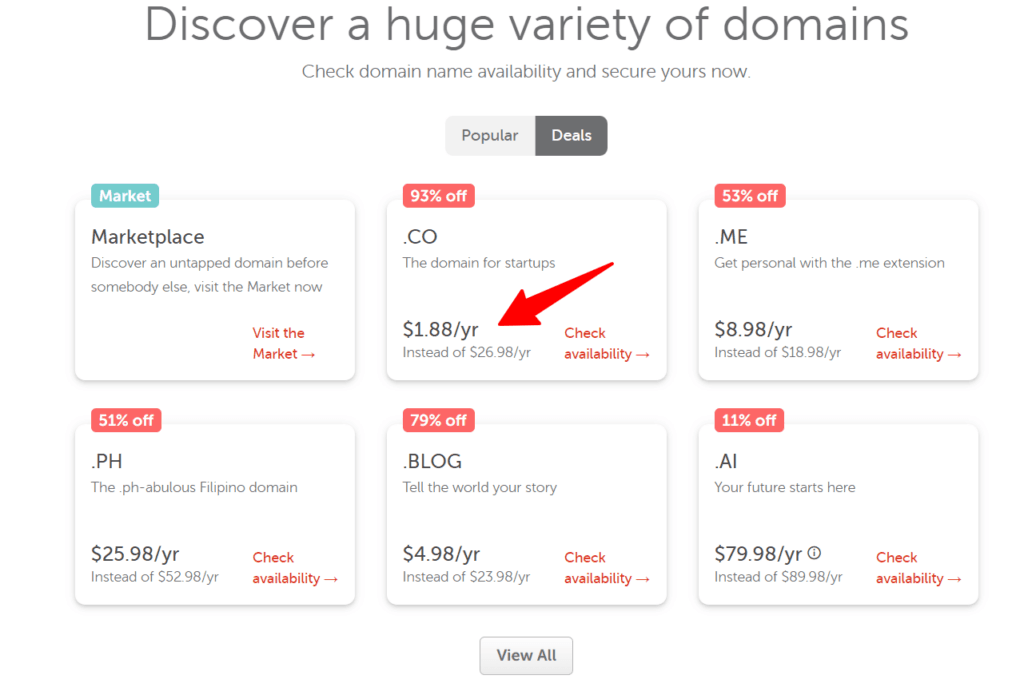
Namecheap domain registration starts at just $1.88 for the first year if you click the deals tab.
Shopify Apps
Next, consider paid Shopify apps to further enhance your storefront’s functionality.
The Shopify app store has over 8,000 apps (as of this writing). Some apps let you try the free version for a while, while others only offer a paid option.
App costs will eventually add up to the overall cost of starting a Shopify store, so it’s essential to check the available options before getting started.
Email Marketing/Automation
Although Shopify now offers transactional email marketing, you should check whether it meets your needs.
Shopify Email includes up to 10,000 free monthly emails; after that, additional marketing emails cost $1 per 1,000.
If you plan to use a third-party provider, consider the cost and factor it into your monthly expenses.
Premium Themes
Do you want to use the free or Paid Shopify themes?
If you’re going to use the free themes, there is no additional cost to worry about. Many free Shopify eCommerce themes are fast-loading, responsive, and optimized for SEO.
However, it may lack full customization, limiting your ability to further tailor your store design.
However, premium themes are better if you want a unique Shopify store design, extensive customization options, and the ability to tweak the design as needed.
Premium themes start at $100 to $360. Considering this cost will help you get a clearer picture of your estimated Shopify pricing and fees, as well as the overall cost of your Shopify store.
FAQ
Is Shopify Expensive?
Shopify pricing ranges from $24 to $399 per month for standard plans, with additional transaction fees for store orders. It could be costly if you’re a beginner and need a marketing budget to set up your storefront. However, for established business owners, Shopify pricing plans and other associated transaction fees can be managed conveniently. Plus, you can start with Shopify for free, no credit card required, making it easy to explore the platform without any financial commitment.
Can I Avoid Shopify Transaction Fees?
You can not wholly avoid Shopify fees, but you can lower them using Shopify’s built-in payment system, Shopify Pay. However, you will pay a credit card fee if you process customer orders using other payment solutions, such as Stripe or Mastercard. You can also try Shopify for free to explore the platform without financial commitment.
Which Shopify Plan is Best For Beginner ECommerce Store Owners?
The best Shopify plan for beginners is the Basic plan, priced at $32 per month or $24 per month when paid annually. It offers beginner-friendly and essential e-commerce store features. The Shopify Starter plan is the most affordable subscription, costing just $5 per month. Still, it provides limited access to store features and only allows selling via social media, in-app, and website buy-now buttons.
Are There Any Hidden Shopify Fees?
No hidden fees. Shopify is transparent about its pricing, payment structures, and transaction fees. In addition to the monthly or yearly Shopify store payments, you pay transaction fees for each customer order you process via your Shopify online store. However, your fee also depends on your payment method, country of business, Shopify plan, and other factors.
Can I Save Money on Shopify Fees?
Yes, you can save money by using Shopify’s payment methods if you reside in an eligible country, use free apps, and select only the features your store needs.
Conclusion…
Shopify isn’t the cheapest eCommerce platform, but it offers strong value for money.
You must understand Shopify’s pricing plan structure and fees to reduce costs and increase revenue.
One of the most effective ways to reduce the costs of running a Shopify store is to utilize its native payment system. Shopify Payments eliminates transaction fees, but your country may not be eligible.
You pay a transaction fee to third-party payment providers, which is added to your total product cost and the cost of running the store.
Shopify plans are not overly expensive, given the features and functionality the platform offers. And if you’re into eCommerce to make more than a thousand dollars in monthly revenue, spending $29 or even $79 every month isn’t something to worry about.
When you reach a thousand dollars in monthly revenue, things get easier. You don’t have to worry about monthly expenses, as the store pays the bills and deposits additional funds into your bank account regularly.
Still not sure if Shopify is right for you? Check other alternatives like BigCommerce, Weebly, and WooCommerce. Or read my guide on which eCommerce website builder is right for you: Shopify or Squarespace.


What a good article with all the explanation needed for beginners and the ones who wish to start it
Glad you like it, David.
Hello Adeshokan!
Your article on “Shopify Pricing and Fees” is brilliantly informative, providing a clear breakdown of the costs involved. Thanks for shedding light on this topic in such a user-friendly manner.
Wishing you continued success with your blog!
Regards.
Hi, Suleman,
Thanks for reading through, and glad you find the content informative.