

Like Instagram stories, when you share video content on Facebook, or someone tags you in a video, goes live, or shares your story, you should see who viewed your Facebook video shares.
That’s not always the case, or even possible; there are situations where you won’t see who has viewed your video, and others where you will.
So, the answer is not a yes-or-no. There are explanations, and I will explain them in this article.
First, if you’re in a hurry, here’s a short answer to how to see who viewed your Facebook video.
Who Watched My Facebook Video?
If the videos are uploaded directly to the news feed, you can only see engagement with them, such as likes, comments, and shares.
Assuming you are live-streaming, you will see live participants (people who watched your live event). And after your live stream ends, your video will look the same as standard newsfeed videos.
Though you can still see who has comments, likes, or is engaged with the video, that’s not an accurate metric for measuring the video’s actual performance.
Several people might watch the video but don’t take action, like sharing it, liking it, and leaving comments; these people won’t count when you try to see how many people watch your Facebook video.
The Facebook video story isn’t like the others; you can see who viewed your Facebook story video within the last 24 hours. So, that is like answering your questions, right?
It’s complicated to say yes, as there are more metrics you can dig up about Facebook users who have watched your videos. Let’s dig deeper.
Facebook News Feed Video
Newsfeed videos also have view counts, reach, impressions, and engagement metrics, but that’s all you can get. There is just no way to know who watched it.
Facebook has no analytics or button to get insights into viewers’ data, such as demographics, friends, or Facebook users who watched your videos, even for a second.
You can only guess how many users viewed your video based on the number of Facebook views, likes, and comments. This is your best shot at knowing who viewed your Facebook newsfeed videos.
Since Facebook doesn’t show you exactly who watched a news feed video, the most useful signal you can optimize is engagement, likes, comments, and shares.
If you’re promoting your video with a related photo or teaser post, you can strengthen early social proof with options like buy likes on Facebook post, while still focusing on earning real interactions from your audience.
Likewise, if you watch someone else’s Facebook video, they won’t know you’re doing it unless you leave a comment or react by clicking like, love, anger, or another reaction.
Facebook Livestream Video
A Facebook Live event or a streaming video differs slightly from a news feed video.
When you go live on Facebook, you can see people watching you in real-time, leaving comments or reactions. At this time, interacting with viewers is possible during live events.
However, your live-streaming video will be treated as a regular newsfeed video after the live event ends. You can no longer see who watched it, but you can still see the total number of views and engagements.
Also, remember that viewer counts consider watch time beyond 3 seconds. If the user’s watch time on your video is less than 3 seconds, it is not counted.
So, this whole thing makes it inaccurate to rely on Facebook viewer count data. Use this data as an estimate to measure the performance of your video content and engagement level.
Facebook Live Story Video
Facebook Stories are live for 24 hours and let you see who has viewed your story. You can see the Facebook user profile of the person who watched the story. The option to check their profile is even possible.
To see the list of people who have watched your story, go to your Facebook story using a desktop computer or smartphone.
Open the story you want to check, the people who watched it, and click “viewer count” in the bottom left corner of your page.
That’s it; now you can see who viewed your Facebook stories within the last 24 hours.
Assuming you want to control who can view your story, Facebook provides an easier way. In the settings, you can control who can see your stories shared on Facebook.
Here are the steps:
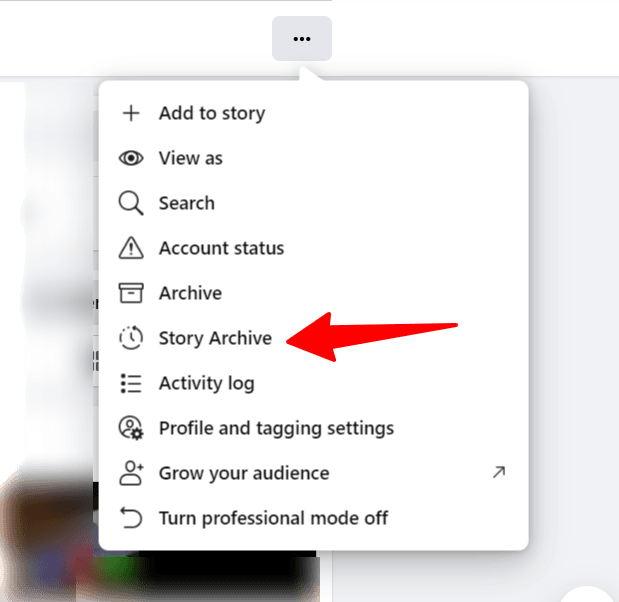
Here, you can choose who sees your stories on Facebook. There are options for anyone on Facebook or Messenger: friends only, a custom list, or to hide your story from specific people on your friend list.
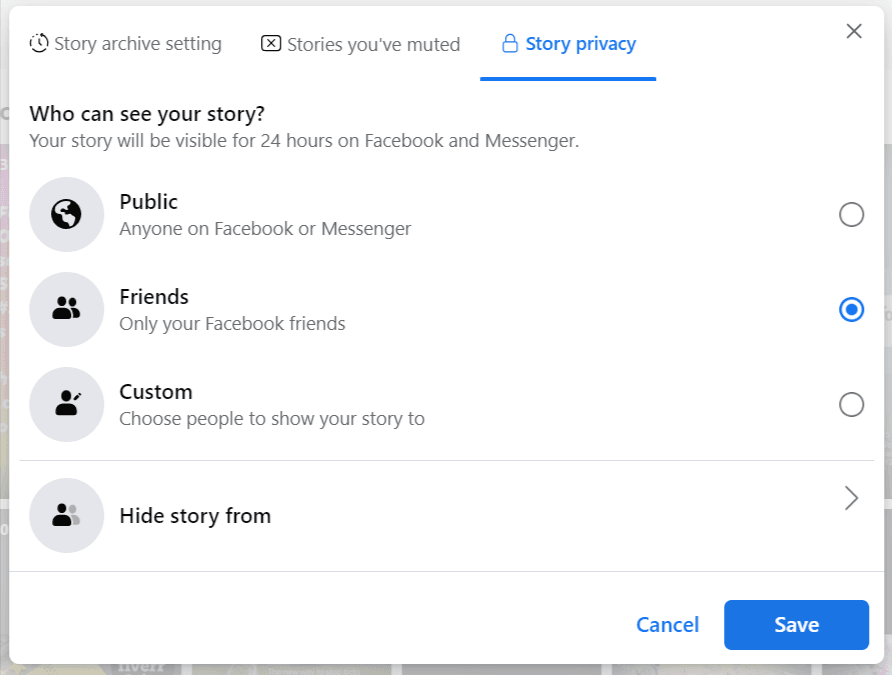
These are helpful features if you don’t want certain groups or individuals to see stories you’ve shared on Facebook. Sometimes, we want to share things we don’t want family members to see; you can set privacy to block anyone from seeing them.
Facebook also lets you set whether stories are automatically archived and mute the stories you want. Click the corresponding tab to change this setting from the default.
By default, Facebook stories are set to Friends only. But if you’ve changed this setting to Public, you may see “Other Views” on your Facebook Stories.
Other views mean people outside your friend list who watched your stories. These people are not on your friend list. In other words, your Facebook stories privacy policy is set to the public.
You don’t need to change this setting if you don’t mind anyone on Facebook watching your story videos.
However, think through the kinds of visual content you regularly share before changing these settings. If you’re uncomfortable with close family members seeing what you share, it’s best to use the Hide Story From options.
Click the option, and manually select people to block from viewing your Facebook stories.
For stories shared through Facebook Business pages, the settings are public by default. This is the ideal option if you use Facebook for business.
Why Can’t I See People Who Viewed My Facebook Video?
Privacy concerns are a major issue for most social media platforms, and Facebook must respect users’ privacy and personally identifiable data, such as names, locations, and genders.
For this reason, and by law, it is impossible to get more data about people who watched your videos on Facebook. You can not get more than view counts, reactions, and comments.
GDPR requires businesses that process user data, especially those in the European Union, to protect it.
If you are concerned about privacy and people seeing what you share on social media, the best thing is to double-check the content you share.
Also, occasionally, check the privacy checkup setting to ensure everything is as expected.
FAQ – How to See Who Viewed Your Facebook Video
More questions about who watched your Facebook stories, content/posts, or regular video content, including live streaming.
Can You Know If Someone Has Viewed Your Facebook Profile?
No, there is no way to know who viewed your Facebook profile. Facebook also says no option for you to know. However, some third-party services claim to offer this feature. You should know this is against the Facebook terms of service you agree to when you sign up.
Can Your Friends See My Saved Facebook Posts?
No, only you can see your saved posts on Facebook. And the people who published the content won’t know you saved it, either. Nobody can see what you saved to your Facebook list unless you give them access to your account.
How do I see How Often a Person Views my Videos or Stories?
You can’t see how often a person views your Facebook posts or videos. Nor can you see who has repeatedly viewed your Facebook status or videos. Facebook values user privacy on the platform, and much of the marketing data is protected to make the platform usable and friendly for everyone.
Can You Save Someone’s Facebook Video to Watch Later?
Yes, you can save other people’s Facebook posts and video content to your saved and favorite list. To do that, follow these steps: Find the Facebook video or content you want to save, and click the three horizontal dots (…). Next, click Save Post from the drop-down menu. Next, select the collection you want to save or create a new one.
Conclusion.
It is partially possible to see who viewed your Facebook video, but Facebook provides limited data to creators.
As a content creator producing visual content, tracking performance, such as views, engagements, and unique visitors, is essential. But getting beyond viewer counts and engagements isn’t possible on Facebook.
You should focus more on the engagement than the view count. If you get 10k views but 20 engagements (reactions and comments), that’s an indication your video isn’t helpful.
Low engagement signals to Facebook that people are not interested in the content. The Facebook algorithm will push your video content down in people’s news feeds, making it harder to find.
Whatever the platform, creating helpful content is important for marketing success. Focus on delivering the best quality and content people are interested in.